A Quiet Midnight in Brussels — and a Loud Decision for Europe
It was the kind of decision that arrives in the small hours: hurried phone calls, last-minute negotiations, and then — an agreement. By dawn, the European Union had charted a course that would, in a few years, sever one of the continent’s longest-standing energy umbilical cords.
“This is the dawn of a new era,” Commission President Ursula von der Leyen declared, and for many in Brussels that line carried the weight of a continent finally choosing to re-tool its future. The accord, stitched together between capital emissaries and weary parliamentarians, sets out a timetable to phase out all Russian gas imports — a dramatic step after years of stopgap measures and political tug-of-war following the war in Ukraine.
What the Deal Actually Does
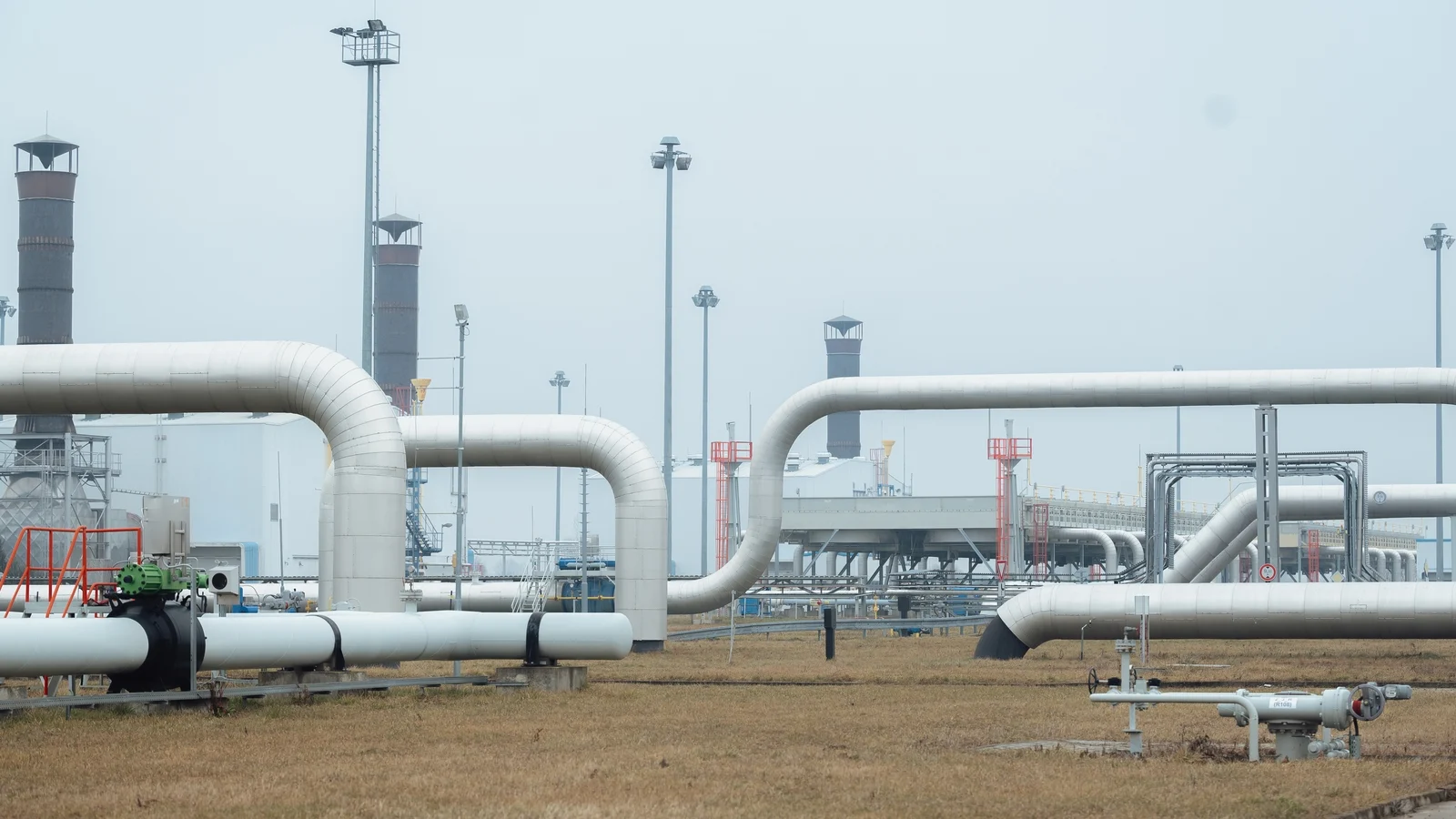
The headline is simple, the mechanics less so: the EU will move to ban long-term pipeline gas contracts by autumn 2027 and end long-term liquefied natural gas (LNG) deals by January 2027. Short-term contracts come earlier, with LNG shorn of new deals from April 25, 2026 and pipeline gas curtailed from June 17, 2026.
Those dates are conditional — storage levels, market stability and final votes in the European Parliament and member states will all play a part. The agreement also instructs the Commission to map a plan to wean Hungary and Slovakia off Russian oil by the end of 2027, a nod to the two landlocked members’ current exemptions.
Importantly for industry and lawyers, the deal allows companies to invoke “force majeure” if they need to terminate existing contracts as a legal response to an import ban. That provision gives firms a predictable legal path out; it was a practical concession that helped unlock the overnight compromise.
Key Dates at a Glance
- Short-term LNG contracts: phased out from 25 April 2026
- Short-term pipeline contracts: phased out from 17 June 2026
- Long-term LNG contracts: prohibited from 1 January 2027
- Long-term pipeline contracts: banned from 30 September 2027 (no later than 1 November 2027)
On the Ground: Ports, People, and Politics
Walk any port that handles gas in Europe — Rotterdam’s bright cranes, Zeebrugge’s long quays, Barcelona’s salt-spray terminals — and you’ll hear the same refrain: change is coming, but the logistics are immense. Terminals were busier than ever after 2022, when European nations scrambled to fill reserves before a feared freeze. LNG tankers became the new arteries, rerouting supplies from traditional pipeline routes.
“We had ships queuing like never before,” recalled Ana, a dock supervisor at a Mediterranean terminal, who asked that only her first name be used. “It was one of those strange winters when every little decision felt like geopolitics.”
Across Eastern Europe, the deal is read through a different lens. Hungary’s Prime Minister Viktor Orbán remains close to Moscow, and Bratislava and Budapest have relied on exemptions for pipeline deliveries. “Our communities still depend on those deliveries for stability,” said a local mayor in western Hungary. “This move must come with guarantees — alternative supplies, investment, jobs.”
And in the quiet of a Lithuanian village, where memories of cut-off winters and blackouts are fresh, locals expressed a mix of relief and cautious optimism. “We paid a price in 2022,” said Marija, a pensioner in Klaipėda. “If Europe can finally stand together, we will be warmer and freer.”
The Numbers Behind the Decision
To understand why the EU felt able to make this move, look at the math. Russia’s share of EU gas imports tumbled from around 45% in 2021 to roughly 19% in 2024. The continent pivoted: pipelines were replaced by LNG tankers, and new suppliers and policies cushioned the blow.
Even so, Russia remains a non-negligible supplier of LNG — about 20% of the EU’s LNG imports in 2024, which amounted to roughly 20 billion cubic meters of an estimated 100 billion cubic meters. The United States has surged as a supplier, responsible for about 45% of EU LNG imports, and that pivot explains some of the political room the EU now has to legislate.
Those shifts have real economic consequences. Estimates put imports of Russian LNG into the EU at around €15 billion in the current year — a revenue stream Moscow has relied on, perhaps now more exposed.
Risks, Rewards, and the Road Ahead
There are immediate and long-term trade-offs. In the short term, the bloc risks higher prices, supply headaches for nations still connected by older contracts, and intense diplomatic friction — not least with allies like Hungary. Storage thresholds built into the deal are a prudent hedge, intended to prevent disruptions during peak demand.
But there are structural wins too: a forced acceleration of renewable investments, a stronger push for energy efficiency, and the political benefit of disentangling security policy from commercial contracts with an adversary. “This isn’t just about cutting a supplier; it’s about changing incentives,” said Dr. Elena Marin, an energy analyst who has watched Europe’s markets for two decades. “When you remove a strategic dependency, you start behaving differently — you invest differently, you regulate differently.”
Yet the transition must be managed. New pipelines to Norway and Algeria, expanded LNG terminals in Spain and the Netherlands, hydrogen strategies and grid upgrades — they all cost time and money. Who pays? Who wins? Those are the arguments that will dominate capitals in the coming months.
Why the World Should Watch
Europe’s decision is not a local administrative tweak. It’s a geopolitical moment with global reverberations: it reshuffles energy markets, accelerates the arrival of renewables and storage technologies, and signals to other regions that energy supply chains can — and will — be weaponized in future conflicts.
What does it mean for consumers from Lisbon to Tallinn? For investors? For the climate? For the fragile economies still linked to Russian hydrocarbons? The answers are complex, but the choice to reduce dependence is a clear one: energy policy is now inseparable from national security.
So what would you do if you were making this decision for your city or country? Would you prioritize speed, security, or cost? Europe chose to prioritize independence, and in doing so has drawn a line in the sand — a line that asks citizens, businesses and lawmakers to help build the bridges that will carry Europe into the next era.
It will not be without friction. But if history teaches anything, it is that strategic shifts — messy, political, and expensive — often arrive before the markets and lives that must adapt are fully ready. The question is whether Europe’s 2027 target is a deadline or a beginning. For now, the lamps at the ports keep burning: the ships will come, the policy debates will rage, and the continent will try to do something it has rarely been able to do in unity — choose its own path.