Smoke on the Horizon: Europe Races to Guard the Sea Lanes as a Middle East War Ripples Across the Globe
There is a new kind of unease in Brussels this week — not the bureaucratic irritant of late-night dealmaking, but a visceral, maritime anxiety. Leaders from across the European Union gathered in hurried conversations after strikes and counterstrikes in the Middle East sent shockwaves through the world’s shipping lanes. What began as a regional spiral now reads like a global emergency drill: ports on standby, tankers rerouting, and markets wrestling with the prospect of a long, costly disruption.
“We can no longer treat these waters as remote,” one senior EU diplomat told me, looking past a bank of monitors showing freight routes. “The Red Sea and the Gulf are the arteries of modern trade. If you squeeze them, you squeeze our economies.”
From the Strait of Hormuz to the Port of Rotterdam
The Strait of Hormuz — a slim ribbon of sea through which roughly one-fifth of the world’s oil flows — has always been geopolitically sensitive. This month, it has grown into a choke point. Shipping through the strait has all but paused as commercial captains weigh the risk of traversing one of the planet’s most vital conduits. Insurance premiums on some routes have ballooned, and a handful of carriers have rerouted around the Cape of Good Hope, adding days and millions in fuel costs to voyages.
“We used to joke about taking the ‘scenic’ route,” said Captain Luis Moreno, who runs a refrigerated cargo line that links the Mediterranean with East Africa. “Now ‘scenic’ means ten extra days at sea and a crew more tired than they were three weeks ago.”
The immediate economic shock is visible: oil prices surged close to $120 a barrel during fresh strikes, and European gas markers spiked by as much as 30% in intraday trading. These are not abstract numbers. They turn into higher heating bills in Lithuania, pricier jet fuel for Spanish airlines, and a heavier hand on small businesses already bruised by past crises.
Where Brussels Steps In
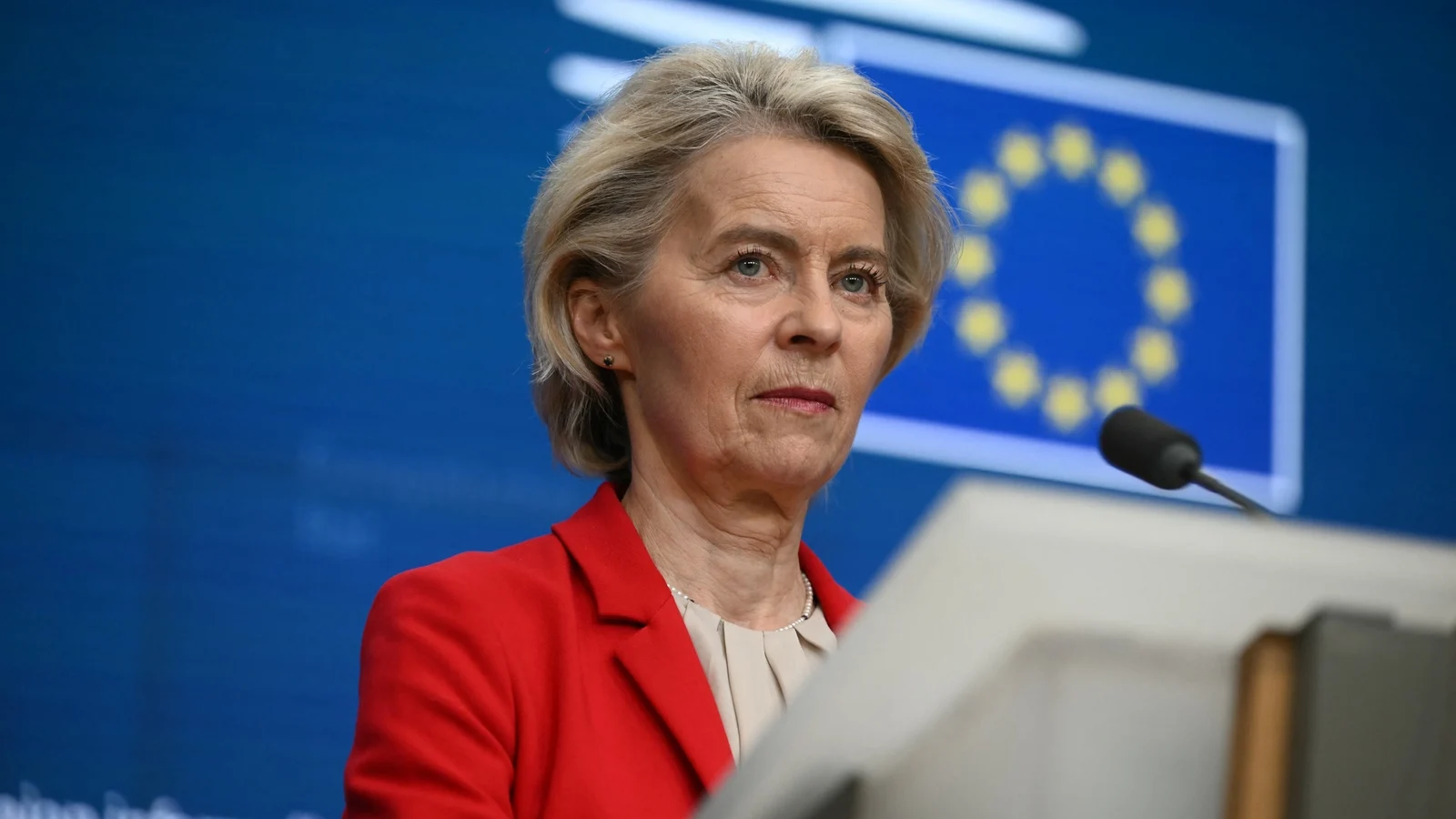
European Commission President Ursula von der Leyen told EU ambassadors that citizens are “caught in the crossfire,” pointing to an Iranian-made drone strike that struck a British base on Cyprus and to the broader displacement and trade disruption unfolding across the region.
In response, senior EU figures — including Portugal’s Prime Minister António Costa and Commission leaders — have signaled openness to reinforce the bloc’s maritime operations in the Red Sea and nearby waters. “We are ready to tailor and enhance operations to better respond to the situation,” a Commission statement said. Behind the formal phrasing, military planners are quietly mapping out options for stronger patrols, convoy escorts, and enhanced surveillance.
Anna-Kaisa Itkonen, a Commission spokeswoman, emphasized a practical reassurance: “There is no imminent oil supply shortage for Europe. Our rules require member states to maintain the equivalent of 90 days of emergency stocks.” It is a technical buffer, but one that matters when debates on rationing and energy conservation begin to surface.
On the Ground — and at Sea
Walk the docks of Limassol in Cyprus and you feel the tension differently. Fishermen who once woke to the gulls and the measure of the sea now speak of patrol boats and ship radio chatter. “We are not used to seeing the navy so often,” said Myrto Demetriou, who has sold fish there for three decades. “People worry about export permits, about supplies, about our sons who sail.”
In Rotterdam, cranes keep moving but conversations among terminal workers have an edge. “Containers are arriving late or not at all,” said a logistics manager who asked not to be named. “Some clients are asking us to pause shipments because their warehouses are full. Others need alternative routes; none of it is cheap.”
Economics, Politics, and the Risk of a Long Conflict
Valdis Dombrovskis, the EU economy commissioner, put the stakes plainly: a quick, contained flare-up might be manageable. “If the conflict stays short, the economic fallout will be limited,” he told reporters. But, he warned, a protracted war — with ongoing disruption of maritime traffic and attacks on Gulf energy infrastructure — could become a substantial inflationary shock for Europe and the world.
Imagine months of higher energy bills, delayed parts for factories, and a steady climb in the price of staples. Those are not far-fetched scenarios. The memory of the 2022 energy shock — when Russia’s invasion of Ukraine sent gas prices skyward — remains fresh in policy circles. Today’s problems arrive on top of that vulnerability: supply chain fragility, stretched reserves, and political fatigue in capitals that have been governing through crisis for years.
- About 20% of global oil passes through the Strait of Hormuz.
- EU rules require member states to hold 90 days’ worth of emergency oil stocks.
- Oil briefly neared $120 per barrel during recent retaliatory strikes.
Diplomacy in Overdrive
Behind the military manoeuvres, there is frantic diplomacy. Calls between Brussels and regional capitals, emergency meetings with NATO partners, and appeals to international shipping bodies are happening around the clock. “This is not just about ships,” said Dr. Leila Haddad, a Middle East analyst at an international think tank. “It’s about whether the rules that govern international behavior still mean anything when proxies, drones, and asymmetric strikes muddy every response.”
Von der Leyen framed the crisis as more than a regional war. “The longer-term impact poses existential questions about the future of an international rules-based system and the EU’s place in the world,” she told diplomats. “Retrenching is a fallacy.” The sentiment is clear: Europe feels pulled into a global responsibility, whether it likes it or not.
The Wider Political Landscape
At home, the EU also faces thorny politics. An ongoing €90bn support package for Ukraine has been held up in the European Parliament and faced resistance from certain member states, complicating the bloc’s ability to act in a coherent, decisive way. “Our credibility and security are at stake,” von der Leyen said, stressing that commitments must be honored even as new crises demand attention.
The tug-of-war between short-term emergency measures and long-term strategic planning plays out in dull committee rooms and on the immediate decks of the world’s ships. Both matter.
Questions for the Reader — and for Ourselves
What does it mean for a world whose commerce depends on narrow choke points when those points become battlefields? How should democracies balance the urge to protect citizens’ pockets with the need to uphold international norms? And perhaps more personally: do we, as consumers, grasp how a late delivery or a jump in the heating bill connects to geopolitics thousands of miles away?
As the EU prepares to beef up maritime patrols and as leaders talk of “tailoring” operations, the scene is one of adaptation under pressure. The real test will come not in press releases but in whether governments can turn strategic intent into practical protection — for shipping, for energy supplies, and for the civilians who find themselves, increasingly, “caught in the crossfire.”
For now, the sea keeps moving, but more cautiously. And the rest of us watch its tide lines for signs of a return to calm — or a longer journey into uncertainty.