In Paris, at the crossroads of hope and hard bargaining
There was a different kind of light over the Élysée Palace that day — not the warm gold of postcard Paris, but a hard, purposeful glare that often arrives when decisions with global consequences are on the table.
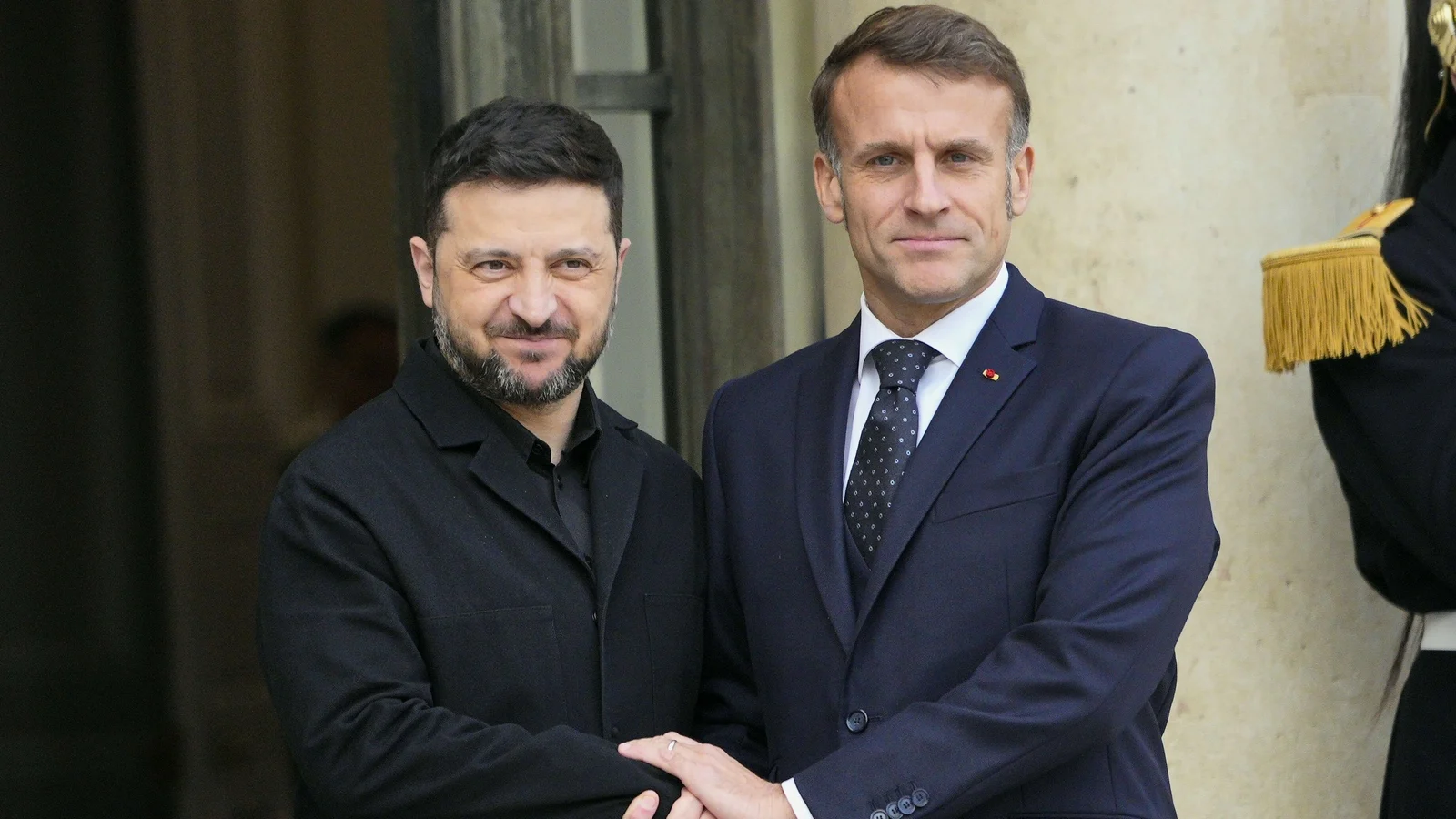
Volodymyr Zelensky arrived from Kyiv under the kind of scrutiny and expectation that only wartime leaders know. He was greeted with the usual courtesies, but more than that: a palpable sense among European capitals that Kyiv’s fate is not merely a regional matter, but a test of whether democratic nations will insist on terms that preserve sovereignty rather than reward aggression.
“We came to listen and to stand with Ukraine,” said a senior European diplomat who watched the meeting from the margins. “This is not a show of photo-ops. There are sleepless nights behind every line on those drafts.”
Agenda: sovereignty, security and territory
Zelensky spoke plainly after his discussions with French President Emmanuel Macron. He set out Kyiv’s red lines: sovereignty intact, meaningful security guarantees, and the inescapable reality that territorial concessions remain the greatest stumbling block.
“If peace means the loss of our land and the weakening of our defense, then that is not peace,” a member of the Ukrainian delegation told me, speaking in a corridor where maps and coffee cups shared equal importance.
That corridor-quiet encapsulates why the 28-point plan—which Washington floated recently and which Kyiv and its European partners now seek to rework—has become so contentious. Observers say the original draft appeared to veer towards compromises that would leave Ukraine smaller, militarily constrained and less able to host Western forces — conditions many in Kyiv view as tantamount to strategic defeat.
From Florida fairways to Moscow: a negotiation in pieces
The arc of this diplomatic week traced some improbable geography. In Florida, near manicured greens and the hum of luxury, US and Ukrainian officials convened twice to reframe the US plan. The venue — a club connected to a well-known real-estate circle — felt more like a high-stakes retreat than a government conference.
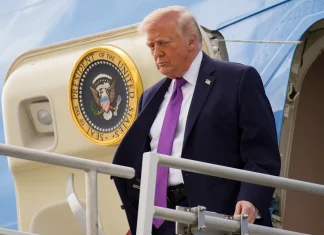
After the sessions, the plan’s steward left Florida for Moscow, a move that injected fresh urgency into already fraught talks. The envoy’s trip to meet the Kremlin underlined a sobering fact: no settlement will be durable unless Moscow, the other principal party, is at the table and ready to accept compromise.
“Negotiations are rarely linear,” said an international mediator who has worked on ceasefires in other conflicts. “You have back channels, you have envoys ferrying messages, and often you get to a place where the envelope isn’t big enough for all the demands. That’s when you either flatten the envelope or tear it open.”
Why this moment matters
There are roughly 1,200 kilometers of active front line in this conflict, and those kilometers are not inert — they are the sum of towns, homes, livelihoods and lives. As winter approaches, the stakes shift: long-range strikes against energy infrastructure risk plunging civilians into darkness and cold, while the grinding attrition on the eastern front chips away at morale and territorial control.
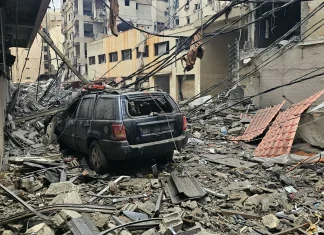
Consider Dnipro, a city that, until recently, many outside Ukraine visualized only as a waypoint on a map. When Russian missiles struck repair workshops there, officials said at least four people died and around 40 were wounded. Vitalii Kovalenko, who owns one of the shops, described the scene in language that mixed shock with weary practicality: “Everyone hit the floor. Then we counted heads. One chap was dusted with shrapnel but breathing. We are lucky in the small things.”
Fragility at home: corruption, politics and the peace table
Diplomacy doesn’t happen in a vacuum. Zelensky’s government has been grappling with its own upheaval: anti-corruption raids, resignations, and accusations that have sent ripples through the political class. His chief of staff resigned amid investigations, two ministers were dismissed, and officials in Kyiv argue over how these events should affect the peace process.
“A country that asks for guarantees must be able to show it can enforce rule of law,” said a Kyiv-based anti-graft campaigner. “But you also cannot allow a scandal to be used by opponents to derail urgent diplomacy.”
This internal turbulence feeds into a larger narrative: western capitals watch closely, and some see domestic weaknesses as leverage in negotiations. That, in turn, complicates the work of crafting guarantees that will hold when guns fall silent.
Voices from the street: fear, resolve and weary humor
Walk through Kyiv, Paris or Warsaw these days and you will hear the same mix of tones: fatigue, steely resolve and a kind of gallows humor. In a café not far from the French meeting venue, an elderly woman who fled Donetsk in 2014 stirred her tea and said, “Peace is not about stopping the noise. It is about being able to plant a tree again in your yard.”
A younger aid worker offered a different calculus: “We want peace, yes. But what price? Would you trade your child’s future for a quiet evening now?”
These are not theoretical questions in Kyiv. They shape public opinion and define what concessions are politically possible for a government whose legitimacy depends on defending its territory.
Key facts at a glance
- Front line length (reported): ~1,200 km
- Reported casualties in Dnipro strike: 4 dead, ~40 wounded
- US 28-point plan: originally included demands Kyiv brands as excessive; specifics remain under negotiation
- Diplomatic shuffle: US-Ukrainian talks in Florida; envoy scheduled to visit Moscow
Reading the tea leaves: what comes next?
There will be more talks, more airport handshakes, and more sideline briefings. The essential question — who is willing to give what, and who can guarantee those promises — is not a technicality. It is the hinge on which millions of lives swing.
Some analysts argue that the path forward requires a hybrid approach: robust security guarantees backed by international forces, clear mechanisms for reconstruction, and a phased, verifiable approach to territorial disputes. Others insist there can be no compromise on certain lands, viewing any transfer as a slippery slope toward further encroachment.
What do you think? Is there a model of peace that can hold in our age of technologically enabled warfare and resurgent imperial ambitions? Can democracies stitch together guarantees that are trusted by both a nation under siege and a skeptical aggressor?
For now, the work continues in salons and Situation Rooms, on frozen front lines and in the hearts of ordinary citizens who simply want to resume planting trees. The diplomats will craft language and the generals will measure gains and losses. And somewhere between the maps and the murmured prayers, the real test will begin: can the world construct a peace that respects borders, punishes aggression and restores hope?