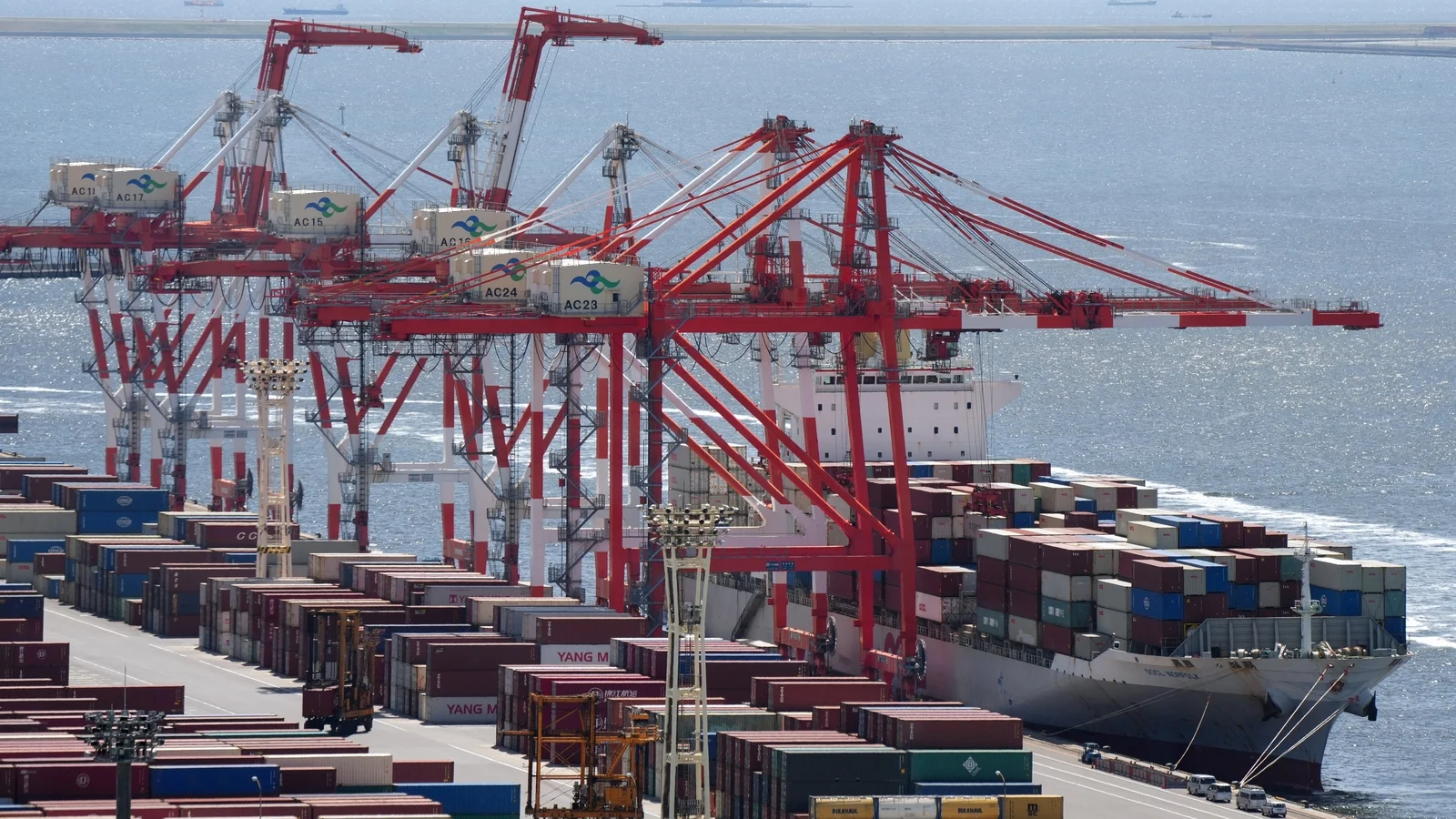
Brussels bets on certainty — but not without a safety net
On a gray spring morning in Brussels, the glass façade of the European Parliament reflected a city that never quite dries itself off: umbrellas, bicycles, and hurried suits moving toward the hem of European power. Inside, after months of anxious consultations and late-night briefings, lawmakers voted to move forward with legislation that will implement the European Union’s side of a high-stakes trade understanding with the United States.
The vote was decisive but far from unanimous: 417 in favour, 154 opposed and 71 abstentions. That tally tells you everything you need to know about this moment — an act of cautious confidence rather than wholehearted embrace.
Not a victory lap — a pragmatic pause
“This is a crucial step,” said Maroš Šefčovič, the European Commissioner responsible for trade ties with the U.S., stepping out of the chamber with a palpable mix of relief and restraint. “It delivers certainty for businesses, while giving us levers to act if Washington strays from its commitments.”
Certainty, however, has a shelf life. Lawmakers grafted on sunrise, sunset and suspension clauses — safety valves designed to make the deal conditional and reversible. The concessions are explicit: tariff reductions will be rolled back if the U.S. fails to live up to the bargain or if a surge of harmful imports destabilizes European industries. The concessions expire by 31 March 2028 unless renewed.
What was agreed — and what remains contentious
The legislation would remove several EU import duties on U.S. industrial goods and expand market access for American agricultural produce — a central plank of the Turnberry understanding signed last July in Scotland. Lobster, a sensitive symbol of agricultural and fisheries policy, will continue to cross the Atlantic at zero tariffs, a perk first negotiated with the Trump administration in 2020.
Yet the relief is not unqualified. Parliament insisted that Washington remove the steep, roughly 50% import levies it imposed on goods judged to contain U.S. steel or aluminium — a measure that has hit products from wind turbines to motorcycles. Many MEPs argued those surcharges, announced a month after the Turnberry talks, must disappear if Europe is to lower its own barriers.
Voices from the street and the factory
On the docks of Zealand, a lobster fisherman named Marc from Brittany told me, “When tariffs go down, we’ll sell a little easier. But you can’t run a boat on promises — I need stable markets and predictable costs.” His weathered hands and wry smile were a reminder that trade deals translate into livelihoods in ways politicians seldom see in briefing rooms.
At a turbine assembly plant in northern Germany, engineer Aisha Müller watched half a dozen massive blades ease onto a truck. “Our business is the green transition,” she said. “Tariffs that tax steel content are taxes on climate action. We can’t afford added uncertainty if we’re building Europe’s clean energy future.”
From outside the European Parliament cloakroom, a young policy aide from Portugal — who asked not to be named — summed up the mood: “Nobody thinks this is perfect. But there’s a recognition that, without some instrument to keep the transatlantic market functioning, both sides lose.”
Why many lawmakers hesitated
Resistance in the chamber was not trivial. Critics called the package lopsided; some said it asked too much of the EU in exchange for too little from the U.S. “This is not really an agreement,” Bernd Lange, chair of the Parliament’s trade committee, warned during the debate. Socialist MEP Kathleen Van Brempt, blunt as ever, called it “a bad deal” that fails to shield Europe from tariff threats and coercive behaviour.
The unease is rooted in realpolitik: the United States is the EU’s largest trading partner. EU exports to the U.S. reportedly climbed to a record €555 billion in 2025 — a potent reminder of the stakes. But as trade scholar Dr. Elena Rossi of the University of Milan told me, “Trade is no longer just about prices and quotas. It’s about strategic autonomy, supply-chain resilience, and the ability to accelerate decarbonisation. Those priorities sometimes conflict.”
Safeguards: sunrise, sunset, suspension
- Sunrise clause: Reductions are conditional on the U.S. fulfilling its commitments.
- Sunset clause: Concessions would expire on 31 March 2028 unless renewed.
- Suspension clause: The EU can pause the deal if the U.S. breaches terms or if a flood of imports causes severe disruption.
These mechanisms are the Parliament’s answer to a new reality: international trade can be weaponised, and allies can change tack quickly. The memory of threats to impose new tariffs over unrelated geopolitical rows has left a trace of mistrust.
Washington’s response — and the road ahead
The U.S. Mission to the EU welcomed the vote. “We appreciate the constructive approach taken by European partners,” a spokesperson said. “This is a step forward in revitalising mutually beneficial transatlantic trade.” But welcome is not commitment, and the next weeks will matter. Representatives of the Parliament and EU governments must negotiate final texts; Parliament will then vote again — likely in April or May.
That window will be a tightrope walk. Negotiators must preserve market access and wind down frictions while holding the line on strategic industries. The spectre of new American import levies or political brinkmanship means that every clause in the final text will be read as much for tone as for substance.
Bigger themes: allies, supply chains, and green policy
This debate is not only about tariffs. It is a mirror of the tension between open global markets and national efforts to protect vital industries and accelerate the energy transition. When a European wind-turbine maker worries about steel tariffs, they are thinking both about their bottom line and whether the policy environment will let them deliver clean power in time.
We are witnessing a broader trend: trade policy as a tool of geopolitics. Tariffs are no longer merely economic instruments but can be used to reward or penalise behaviour. That forces democracies to choose between economic interdependence and strategic hedging.
What should readers take away?
Ask yourself: do you want open markets that drive growth and lower prices, even if they sometimes create winners and losers within societies? Or do you want tighter control over supply chains, potentially at the cost of higher consumer prices and slower growth? There is no single right answer — only trade-offs that reflect political choices and social priorities.
For the moment, Brussels has chosen a middle path: a conditional opening, wrapped in protections. It’s a pragmatic refusal to be naïve and a modest bet that trade with the United States can be both expansive and accountable.
As the negotiators return to the drafting tables, the fishermen, turbine builders, and farmers will keep watching, ready to call foul if the protections prove empty words. “We asked for stability,” Marc the fisherman said, looking toward the horizon where the sea and sky met, “not a story that keeps changing with the tide.”
In a world where trade can be a bridge or a battleground, that simple wish feels more urgent than ever.