A Dublin Decision: When Football and Conscience Collide
On an early spring afternoon in Dublin, the city felt like a throat clearing before a big speech. Buskers played under a slate sky, commuters hugged takeaway coffees, and the smell of frying chips rose from corner shops. But beneath that ordinary hum was a quieter, knotty tension — a debate about identity, responsibility and what it means for a nation to take the field.
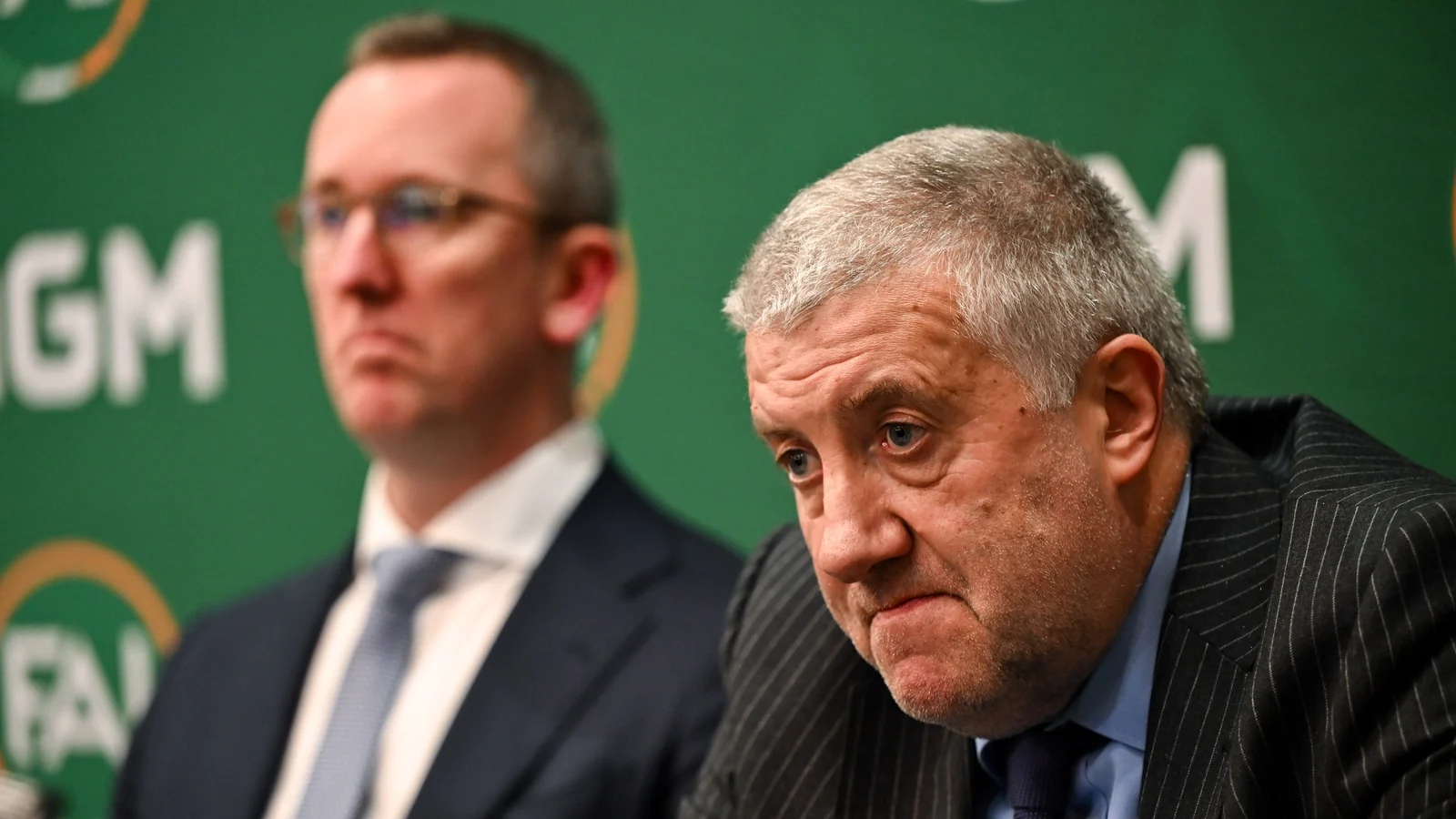
The Football Association of Ireland (FAI) has confirmed it will host Israel in a Nations League tie on 4 October — a decision that has rippled far beyond the pitch. The announcement came in a sober letter to members and was reinforced by the association’s chief executive, who said the FAI felt it had “no viable option” but to fulfil the fixture. For many, that sentence distilled the clash between legal duties, sporting realities and moral pressure from within Irish society.
From Brussels to Dublin: The draw that set hearts racing
The pairing of the Republic of Ireland with Israel was born on 12 February in Brussels, when the 2026-27 Nations League draw was made. Almost immediately, the match became a lightning rod. Inside the FAI’s halls, at clubhouses in suburbs and in kitchen tables across the country, members and supporters wrestled with something larger than a tactical plan.
“Sport is never only sport,” said Aoife Brennan, an emeritus lecturer in sports law at Trinity College Dublin. “You can’t isolate players and fixtures from the geopolitical environment in which they exist. Yet neither can a national federation ignore regulatory realities. What the FAI are describing, in legal terms, is a classic bind: comply and play, or defy UEFA and face sanctions that could harm Irish football’s future for years.”
The costs of refusal: Sporting, financial and reputational
The FAI’s letter spelled out the potential fallout in blunt terms: a forfeit would mean the loss of six Nations League points, likely relegation to League C, poorer seeding for EURO 2028 qualification and a hit to Ireland’s FIFA ranking. The board insisted that refusing to fulfil fixtures would expose the association and individual directors to “severe sporting, financial and reputational sanctions.”
Those are more than bureaucratic threats. They translate into fewer competitive opportunities for players, smaller matchday revenues for clubs, and a longer road back to the kind of major-tournament campaigns that energise a small nation’s sporting soul.
- FAI General Assembly motion (Nov): 74 votes for suspending Israel, 7 against, 2 abstentions.
- PFAI player survey: 63% of 214 respondents said Ireland should not play the fixture.
- Sporting penalty for forfeiture: loss of six Nations League points and possible relegation to League C.
Voices from the city: anger, sorrow, pragmatism
On Dublin’s Capel Street, where flags flap from lamp posts and fans gather on matchday, reactions have been wide and raw. “I can’t celebrate a team that shares a stadium with someone whose government I feel is complicit in such devastation,” said Niamh Ó Hara, a 34-year-old nurse, tapping her fingers on a glass of tea. “But I also worry about the kids who dream of playing at Aviva — they shouldn’t be collateral damage.”
At the other end of the conversation, Michael Hurley, owner of a local sports bar, took a different tack. “We’ve had bad nights before in football — losses, bans, scandals. But you’ve also got to think of the local economy. A home Nations League tie brings jobs, money, exposure. If it moves to a neutral venue, it’s a hit for all of us.”
Meanwhile, players are feeling pressure from two directions. The Professional Footballers Association of Ireland (PFAI) ran a survey of 214 professional players across the League of Ireland’s men’s and women’s divisions: 63% said Ireland should not play. “There’s a moral discomfort in the squad rooms,” one League of Ireland midfielder, speaking on condition of anonymity, told me. “We’re professionals and want to play. But many of us also have friends and family with strong views about Gaza. It’s not an easy position.”
Security, logistics and the Garda stamp
The other immediate question was safety. Could the match be hosted in Dublin without undue risk? The FAI says it consulted government bodies and An Garda Síochána, and that police are confident they can deliver a safe, secure environment. That assertion removes one potential route — a neutral-venue change based on a formal security warning — which was how Belgium’s home tie against Israel was relocated to Debrecen, Hungary, in September 2024.
“If the Garda gives the all-clear, the FAI’s legal footing to refuse is weak,” said Liam Finnegan, a solicitor specialising in sports governance. “Federations sign up to UEFA regulations that carry real sanctions for non-compliance. For directors, knowingly breaching those obligations can open the door to personal liability.”
Using the match as a platform
Conscious of the moral opprobrium and the human suffering underpinning protests, the FAI has said it will channel the home fixture into tangible humanitarian support for civilians affected by the conflict. Details are promised closer to the match.
“Actions speak louder than optics,” said Orla McKenna, founder of an Irish humanitarian NGO that has worked in the Middle East. “If the FAI can create a meaningful fundraising and awareness programme tied to the game — not token gestures but long-term commitments — that could help bridge the gap between a political stance and sporting obligation.”
Beyond Dublin: Sport, politics and global precedent
This moment is not unique. Sport has long sat at the crossroads of morality and competition. Think of the boycotts of the 1980 and 1984 Olympics, the long campaign to exclude apartheid South Africa from international competitions, or UEFA’s suspension of Russian teams in 2022. Each case forced nations, federations and fans to decide whether athletic neutrality is possible — or even desirable.
“The hard question for the Irish public is whether abstaining from a single fixture will change much on the ground,” asked historian and commentator Dara Ní Bhraonáin. “Boycotts can be powerful symbols, but they rarely change policy in isolation. What they do, though, is define who you are as a nation.”
What do we want from sport?
As the autumn fixture approaches, the conversation in Ireland will continue to be layered and loud. Will the stadium become a stage for protest? Will it raise money, attention and perhaps a measure of solace for civilians caught in conflict? Or will the sight of the national team in green merely underscore the limits of what football can do?
These are questions every reader should ask themselves: do we look to sport for absolution, for protest, or for something in between? What responsibilities do athletes and federations have when the world beyond the stadium lights is deeply fractured?
For now, the FAI has made a choice it insists is the least damaging for the future of Irish football. Yet the decision will linger in pubs, classrooms and choir halls alike — a reminder that in our interconnected world, a football fixture can mean much more than ninety minutes on a pitch.