A Quiet Town, a Loud Reckoning: The Fallout from the Novichok Inquiry
On a cool Wiltshire morning, the air over Amesbury felt ordinary in a way that made the headlines sting all the more. Pigeons shuffled on the high street; a woman swept leaves outside a charity shop. But the hush contained a rawness — the kind of collective intake of breath a town gives when it remembers that something terrible once happened here and no one was ever truly satisfied with the explanation.
That dissatisfaction has returned like an old ache after the publication of the final inquiry into the nerve-agent poisoning that claimed the life of 44-year-old Dawn Sturgess. The report pointed an unflinching finger at the Russian military intelligence agency, the GRU, and at President Vladimir Putin’s leadership; but it left the families wanting more than blame. They wanted change.
The family’s call: reflection, responsibility, and reform
“We can have Dawn back now,” her father, Stan Sturgess, told reporters with the flat, exhausted relief of someone who has spent years living with a public tragedy. “She’s been public for seven years. We can finally put her to peace.”
His words landed in the national consciousness like a bell at the end of a memorial service — equal parts grief and the desire for closure. Yet closure, the family say, must not be just a private act of mourning. “There should, there must, be reflection and real change,” the family’s statement read, calling it “a matter for real concern” that the inquiry chair made no formal recommendations to prevent a similar tragedy.
To the Sturgesses and many in Amesbury, the report stitched a narrative: a Georgian door handle smeared with a lethal chemical, a planned public demonstration of power, and a failures-in-the-gap when it came to assessing and protecting risk. But facts and sentences in a public document do not always translate into policy shifts that stop the next preventable harm.
What the inquiry concluded — and what it did not do
Lord Hughes, the inquiry chair, wrote in stark terms: the operation that led to the poisonings was “astonishingly reckless,” and he placed “moral responsibility” for Dawn’s death at the highest levels of the Russian state. He described how a GRU unit had used the attempt on former spy Sergei Skripal and his daughter Yulia as a demonstration — a message sent in a way that shattered ordinary assumptions about safety in public spaces.
But the report also stopped short of prescribing reforms. It walked through a sequence of events, named the actors, and scolded the recklessness. It did not set out a menu of actionable recommendations for protecting vulnerable people, for improving interagency risk assessments, or for compensating those whose lives had been upended. To the family, that omission feels like an unfinished sentence.
Sanctions, diplomacy, and a message from Westminster
In the hours after the report’s release, the UK government acted — not with the legislative prescription the Sturgesses had asked for, but with punitive measures aimed at the perpetrators. The Foreign Office sanctioned the GRU in its entirety, and designated 11 individuals linked to state-sponsored hostile activities. Eight of those were identified as GRU cyber officers, implicated in operations ranging from malware campaigns to disruptive incidents across Europe; another three were accused of planning plots, including an alleged terror plot targeting supermarkets in Ukraine.
- GRU sanctioned as an organization
- 11 individuals designated for state-sponsored hostile activity
- Eight identified cyber-officers targeted for disruptive cyber operations
- Three additional officers designated for alleged plots in Europe
Prime Minister Keir Starmer characterized Dawn’s death as “a tragedy” and framed the government’s response as part of a broader stance against what he described as Kremlin aggression. “The UK will always stand up to Putin’s brutal regime,” he said, calling the report “a grave reminder of the Kremlin’s disregard for innocent lives.” The UK also summoned Moscow’s ambassador, a diplomatic gesture that is both a rebuke and a spotlight.
Amesbury remembers — and asks questions
Walk the quiet lanes of Amesbury and you will hear the ordinary sounds of an English market town. Yet beneath them there are memorials: flowers long since dried, a candle still clinging to memory, conversations paused out of respect. “We’re a small place,” said a cafe owner who asked not to be named. “When something like this happens, it’s everyone’s story. It’s our friends, our NHS, the police who ran down to help. The report tells us who did it, but not always how to sleep at night.”
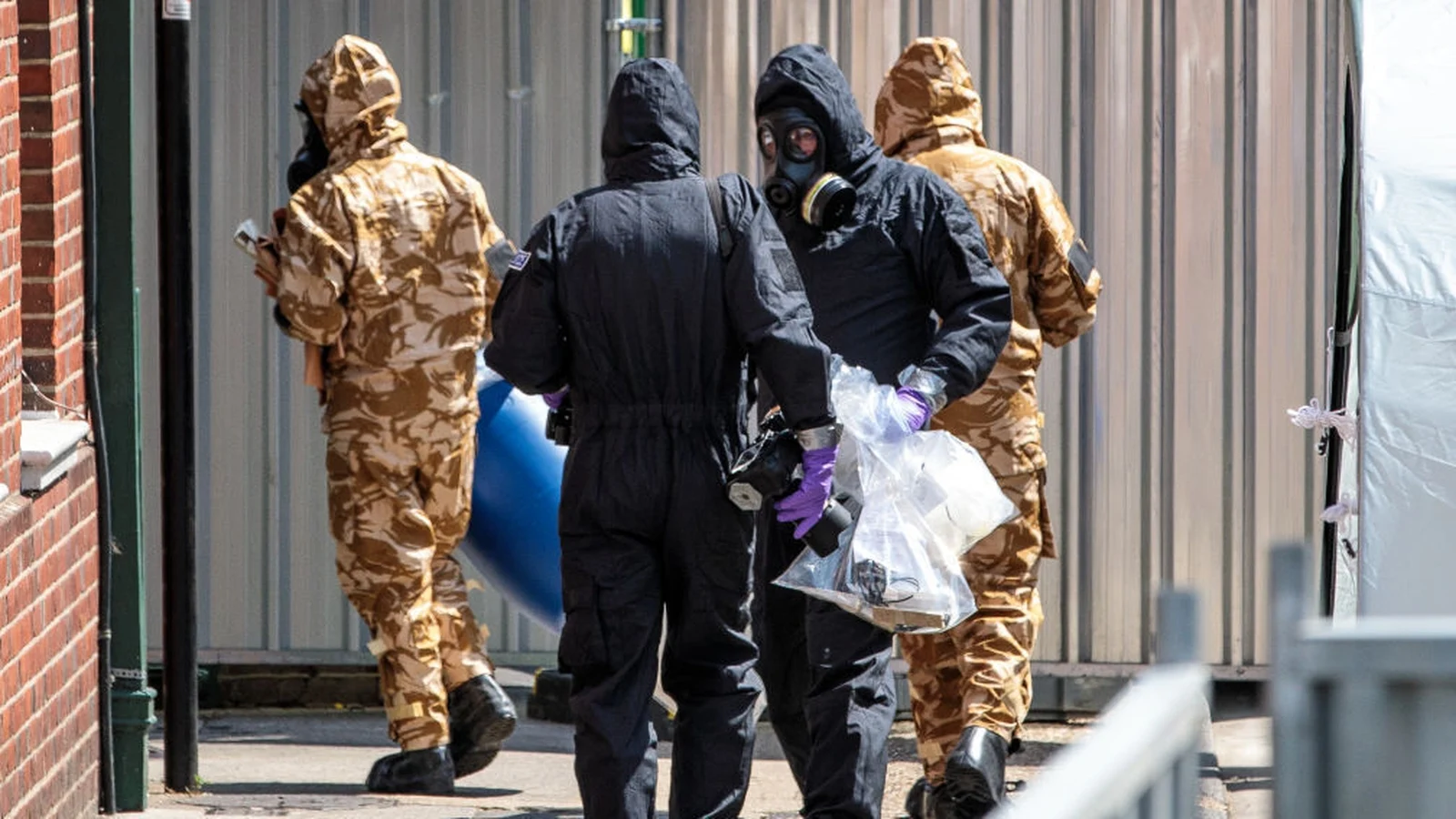
Nick Bailey, the police officer who was poisoned while doing his duty that day, survived — like the Skripals — but the costs to his health and to the community were indelible. For neighbors, the episode was not an abstract geopolitical moment but a day of sirens, of cordons, and of the smell of antiseptic that lingered in the air like a ghost.
Experts and the law
Specialists in chemical weapons law and public safety have been watching closely. “The use of a nerve agent on civil streets is a violation of international norms and domestic safety expectations,” said a chemical weapons analyst. “The Chemical Weapons Convention bans these agents and their use represents a fundamental breach of the post-war order we rely on to make public life safe.”
But how nations translate international outrage into better protection for citizens is a thorny policy question. Should every public inquiry set out mandatory reforms? If so, who ensures their implementation? These are complicated governance questions that hover over the Sturgess family’s demand for “real change.”
From a single tragedy to global implications
Why should readers half a world away care about a singular incident in a small English town? Because the story is a prism through which modern challenges focus: statecraft that disregards civilian lives, the expansion of cyber and chemical tools of influence, and fragile systems of accountability in an interconnected world.
When a spy’s residence becomes the stage for a message sent in the most obvious but most dangerous way — contamination on a doorknob — it shatters the line between war and peace. It raises the question: in an era of plausible deniability and hybrid tactics, how do societies rally to protect ordinary people who stumble into crimes of state?
And there is something else: a human truth. Public inquiries can name perpetrators, and governments can issue sanctions; neither guarantees healing. “We wanted lessons,” the family said, returning, insistently, to that point. “Not just answers.”
What now? A call to reflection, not closure
As readers, what do we do with stories like this? We test our tolerance for state violence when it’s far away; we question whether our own institutions are nimble enough to protect us; we ask if naming is enough without changing. We also remember the human faces: a daughter lost, a father who wants to rest his child from the public record, a community still sorting the ordinary from the extraordinary.
In the end, the report offered accountability in the form of attribution and sanction. It did not offer a framework for prevention. The Sturgess family’s plea — “there must be reflection and real change” — is an invitation to action. It asks governments to look not just at international culpability, but at domestic gaps and the simple things that make life safe: risk assessments, timely warning systems, coordinated public health responses.
On the high street in Amesbury, a shopkeeper paused from arranging a window display. “We live with headlines,” she said quietly. “But we live our lives between them. If this town can’t be made safer after what happened, then what good are inquiries at all?”
That question stretches beyond Wiltshire. It asks readers everywhere to consider what justice looks like when state aggression reaches into daily life — and to insist, as the Sturgess family does, that naming the wrongdoer is not the end of the story but the beginning of reform. Will we take it up?