A Day of Smoke and Silence: Inside Hong Kong’s Deadliest Residential Fire
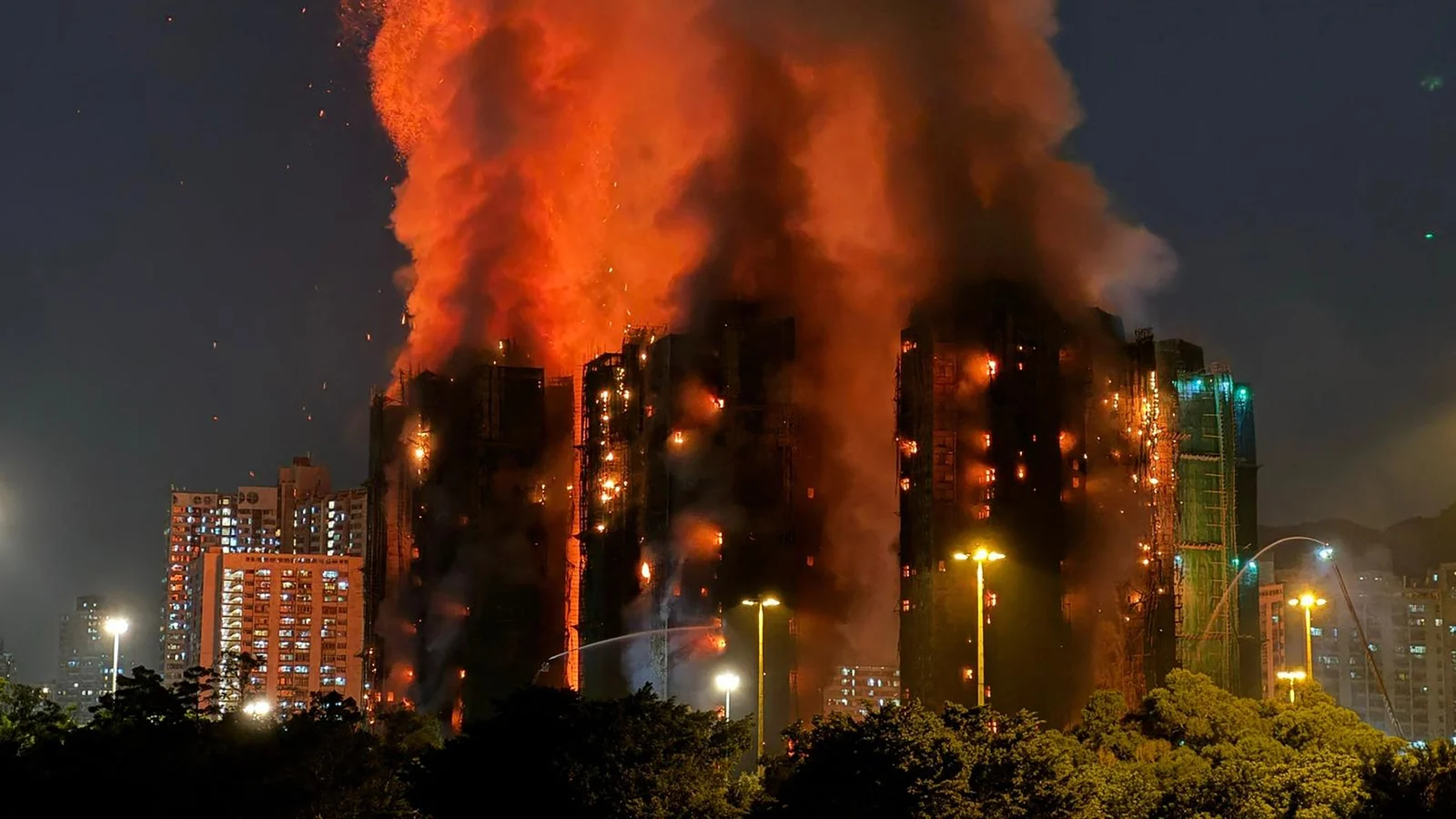
On a late November afternoon that felt like any other in Tai Po, bamboo scaffolding that usually whispered and creaked in the wind became a deadly lattice of fate. Flames climbed like ivy across foam-covered facades, netting melted away in ribbons, and a community of more than 4,600 people—many of them elderly—found themselves trapped between heat and collapsed escape routes.
By the time the smoke cleared, 168 people had died. The Wang Fuk Court inferno, which ripped through seven of the eight residential towers while they were mid-renovation, is now recorded as the deadliest residential building fire in the world since 1980. That statistic is a cold, sharp thing: a number that refuses to let the city sleep.
What the Inquiry Is Finding
In hearings that have the feel of both courtroom drama and communal exorcism, a judge-led independent committee is piecing together how so many safety nets broke at once. Counsel Victor Dawes, speaking to the committee, said the blaze had “left a scar that is hard to forget” on Hong Kong’s collective memory. He told the inquiry that “almost all of the life-saving fire safety measures failed because of human factors.” The phrase echoed in the room like a litany: human, error, omission, greed.
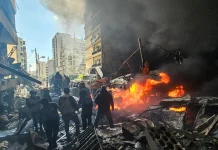
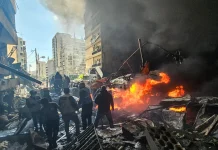
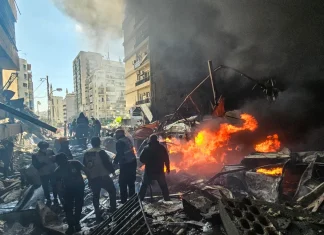
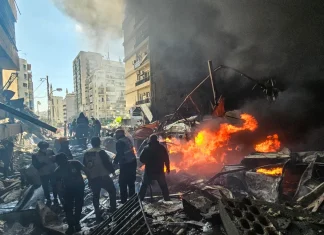
The committee has gathered more than a million documents—texts, audio, video, building plans, testimony from residents, construction workers, and firefighters—trying to stitch together the chain of events. Film shown at the hearings is harrowing: footage of flames roaring up the exterior, people on balconies watching scaffolding give way, chunks of bamboo plummeting into the street below. “There’s no fire alarm,” a voice can be heard saying in one clip. In another, residents are filmed trying to pull a fire hose into service and failing; the alarm system, where present, did not function.
Numbers that Matter
Those figures are not abstract. Of the 4,600 residents who lived at Wang Fuk Court, more than 1,700 were aged 60 or older. That demographic detail matters, because age shapes mobility, social networks and the ways people react in emergencies. It matters because Hong Kong’s skyline is stitched together with buildings from different eras, many renovated piecemeal and covered in temporary scaffolding and cladding that were not designed with every worst-case scenario in mind.
Bamboo Scaffolds and Foam Boards: A Dangerous Patchwork
Walk through any older district in Hong Kong and you’ll see the same sight: precise, balletic scaffolding made from bamboo poles tied with plastic straps. It’s an art form as much as infrastructure—a practice passed down through tradespeople who prize its strength and flexibility. But in the cold light of the inquiry, that very tradition has been re-examined.
“Bamboo itself is not the enemy,” says Dr. Mei-Lin Chan, a fire-safety engineer who has worked in East Asia for two decades. “It’s the combination: foam insulation, plastic netting, flammable temporary facades, and the way modern renovations are hurried. You can get a perfect storm of combustible materials wrapped around an old building and a single ignition source becomes unstoppable.”
The committee described the Wang Fuk blaze as a “facade fire” resulting from multiple compounding factors: renovation materials that may have accelerated flame spread, scaffolding that fell and blocked escape routes, and systems—alarms, hoses, sprinklers—that were inoperable or absent. Early footage and testimony showed firefighting crews hampered by falling bamboo, while residents found their escape routes cut off within half an hour of the alarm being raised.
Voices from the Site
Outside the courtroom there is grief and anger braided together. A former resident, who asked to be called Auntie Wong, described the day through the filter of memory and mourning. “I lived on the seventh floor for twenty years,” she said. “We took care of each other. We played mahjong downstairs, we bought fish from the wet market next door. That afternoon, we couldn’t hear alarms—only the crackle. My neighbor ran to the stairwell and there was black smoke, and then bamboo came down like a curtain. I still dream about that curtain.”
A young firefighter, speaking with his helmet tucked under his arm, offered a sentence that landed like concrete: “We train for worst cases, but you can’t prepare for everything. When the scaffold comes down in front of you, people’s lives are literally on the other side.”
Legal and Criminal Threads
The inquiry will consider whether fire safety standards were inadequate, whether construction practices contributed to the disaster, and whether government oversight failed. Meanwhile, the criminal justice system has begun its own reckoning: police have arrested 38 people on charges including manslaughter and fraud, and Hong Kong’s Independent Commission Against Corruption says it has detained 23 individuals tied to consultants, contractors and members of the owners’ corporation.
- More than 4,600 residents lived in Wang Fuk Court at the time of the fire
- Over 1,700 residents were aged 60 or older
- 168 people died in the blaze
- Police arrested 38 people; ICAC detained 23
Beyond One Building: Bigger Questions
As readers, we are invited to ask uncomfortable questions. How do cities—especially dense, vertical ones like Hong Kong—balance tradition and safety? When renovations are driven by economics and speed, what is lost? The Wang Fuk Court fire is not an isolated story of tragedy; it is a mirror held up to urban life around the world where aging buildings, informal practices, and hurried renovations collide.
London’s Grenfell Tower fire in 2017 is an echo in the distance—72 people died there, and policy, regulation and public anger followed. The differences in materials, context and governance do not erase the similarities: both disasters highlighted how external cladding, poor oversight and social vulnerability can combine to catastrophic effect.
Local Color, Global Lessons
Tai Po is a place of contrasts: traditional markets selling lotus roots and roast goose sit a few minutes’ walk from high-rise apartments and riverside promenades. In the weeks after the blaze, the neighborhood’s usual rhythms were interrupted by vigils, offerings of jasmine tea to the bereaved, and volunteer groups setting up help centers for displaced families. “People brought instant noodles, blankets, donated phones,” said Kelvin Lam, a community organizer. “It’s the small acts that hold a place together when everything else seems to fracture.”
Those gestures matter. But so does policy. The inquiry’s work, slow and procedural as it may seem, is also a moral audit—an attempt to translate grief into reform. Will Hong Kong tighten inspection regimes, change the rules for temporary works, or enforce stricter penalties for contractors who cut corners? Will other cities take note?
What Comes Next
The hearings are expected to call government officials, former residents, the directors of construction firms and members of the Wang Fuk Court management committee. For families, no legal finding can fill the empty chair at a dinner table. For the city, the inquiry is an opportunity: to redesign systems that failed, to make a space less likely to swallow its own people.
So I ask you, reading this from wherever you are: what would you want your city to do for the most vulnerable among you? How much do we tolerate the gap between tradition and safety until it becomes deadly? The answers will be different across contexts, but the questions are universal.
In the end, the smoke may have cleared from the courtyard, but the questions remain in the air. The inquiry is not merely about assigning blame; it is about converting sorrow into safeguards. It must be rigorous, relentless, and finally humane—because a city’s safety is measured not only in compliance paperwork, but in the quiet ways neighbors care for neighbors when scaffolding falls and alarms fail.