When the Northeast Went Silent: A Storm That Stopped a Region
By dawn the city wore an unfamiliar hush. The usual honk of Manhattan taxis, the distant roar of commuter buses, the flurry of luggage carts at airport terminals — all muffled under a blanket of heavy white. Streets that were full of life the night before lay buried; front steps vanished, mailboxes became tiny periscopes, and tree branches bowed like bowing elders. For thousands of travelers, the morning began not with a gate announcement but with a text: your flight has been cancelled.
This was no ordinary snowfall. A Nor’easter swept the northeastern United States overnight, dumping more than two feet in parts of Rhode Island and nearly a foot and a half across stretches of New York City. Central Park recorded roughly 50cm (about 20 inches) of snow — the most at the city’s official reporting station in over a decade — while Rhode Island’s TF Green International Airport reported a staggering 83cm (about 33 inches). The storm’s sheer volume halted planes, trains and traffic, and plunged hundreds of thousands of homes and businesses into darkness as power lines succumbed to the weight.
Air Travel: A Patchwork Recovery
Airlines scrambled through the night and into the morning, issuing cancellations by the thousands and circulating tentative plans to get back in the air. Nine transatlantic flights to or from Dublin and one to Shannon were among those cancelled, impacting Irish travelers and transits that depend on tight connections.
“We’re working around the clock to restore schedules safely,” said an airline operations director who asked not to be named. “The physics of getting crews, aircraft and ground crews back in sync after a blizzard aren’t trivial — you can’t just flip a switch.”
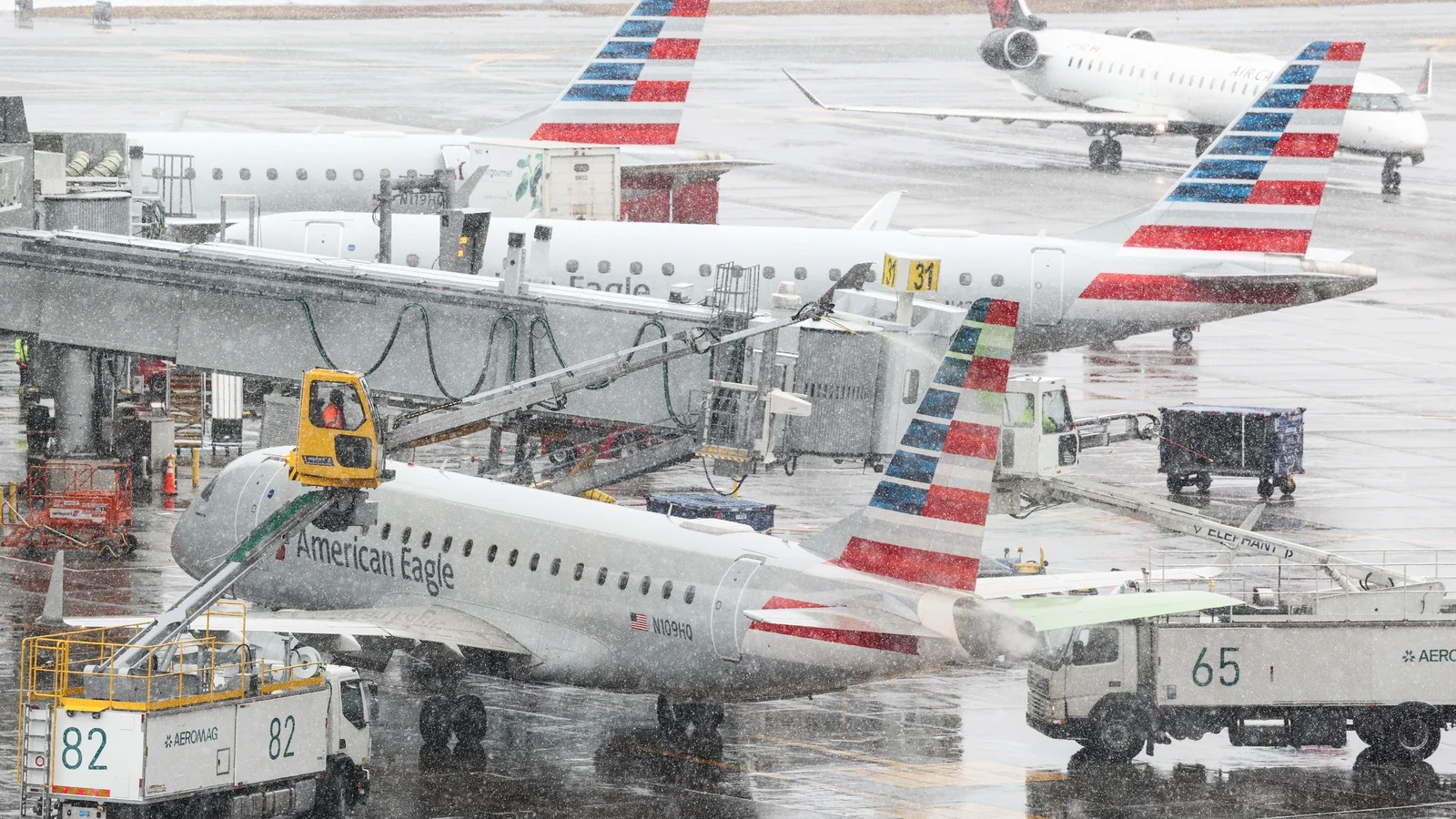
The picture at the airports was uneven. New York’s trio of major airports — JFK, LaGuardia and Newark — and Boston Logan bore the brunt of the cancellations, while other carriers that have fewer flights tied to the Northeast fared slightly better. Southwest Airlines, for example, canceled about 7% of its network operations yesterday — a relatively light hit, in part because the carrier has less exposure in the hardest-hit corridor. By contrast, JetBlue cancelled roughly 80% of its flights for the day, a number reflected in FlightAware’s near-real-time tracking, while American, Delta and United each reported roughly a fifth of their departures grounded.
“Our plan is to start ramping up operations as conditions permit,” a Southwest spokesperson said. “Safety is our north star.” United and Delta released similar cautious notes: crews would be recalled, but travelers should expect delays even as operations resume.
Numbers That Matter
- Central Park snowfall: ~50cm (about 20 inches)
- TF Green (Rhode Island): ~83cm (about 33 inches)
- JetBlue cancellations: ~80% of flights (about 1,600 cancellations through tomorrow, per FlightAware data)
- American/Delta/United cancellations: ~20% each on the worst day
- Southwest cancellations: ~7%
- Power outages and business interruptions: hundreds of thousands affected across multiple states
On the Ground: People, Plows and Peril
Downshovel and downshift: that’s how the routine of the morning felt. Commuter rail was disrupted. Amtrak cancelled dozens of services between New York and Boston and on other northeast lines. State authorities in Rhode Island prolonged travel bans, and Massachusetts instituted restrictive measures for nonessential driving in some counties. Boston public schools stayed closed another day, extending an involuntary holiday for families that now balance snow piles with childcare and remote work.
“We woke up to an absolute whiteout,” said Maria Hernandez, who lives in a fourth-floor walk-up in Astoria. “My neighbor grabbed a shovel and we dug out the stoop together. Out here, the snow brings people together, even while it keeps them apart.”
On the highways, highway patrols issued stern warnings and checkpoints to enforce temporary bans on nonessential travel. “We don’t want to see cars stranded on the shoulder, creating needless rescues,” said a state trooper at a press briefing. “If it’s not essential, wait it out.”
Plow drivers — faces flushed from the cold, coffee steaming in disposable cups — became the unsung heroes of the morning. “You get real close to the city when it’s quiet like this,” said Dion Johnson, who has been running a municipal snow plow for 12 winters. “You feel every crackle. And you learn to watch for people who’ll try to clear a path and then get stuck. We’re here for them.”
Local Color: The Human Side of the Blizzard
There is a particular flavor to New England snowfall. At a diner in Providence, the coffee tasted deeper than usual, as if the roast itself had thickened to match the weather. In a small Irish pub near Dublin Airport, staff wiped down the bar and kept the lights on for stranded transatlantic passengers, offering Irish stew to anyone whose flight had been called off. In Boston neighborhoods, snow angels appeared in front yards like brief, joyful signatures — statements that said, we’re still here.
“When the roads close you notice what matters,” reflected Dr. Hannah Lee, a sociologist who studies urban resilience. “Communities come forward, networks of neighbors re-emerge. The storm is a stress test — and it’s teaching us about the fragility and the strength of our systems.”
Why It Matters Beyond the Headlines
Storms like this are not just weather events. They touch global supply chains, delay business travel and complicate the movement of people around the world. A cancelled flight to Dublin is more than an itinerary hiccup; it can be a missed surgery consultation, a delayed wedding, a business deal pushed into limbo. For the many hub airports in the Northeast, ripple effects will be felt internationally for days.
Climate scientists note that while a single storm cannot be declared the result of climate change, the frequency and intensity of heavy precipitation events have increased in many regions. “Warmer air holds more moisture,” said Dr. Priya Nair, a climatologist. “When storms tap into that moisture, there’s more fuel. It’s one reason cities in the Northeast are investing in better infrastructure and emergency planning.”
Practical Takeaways for Travelers and Residents
- Check directly with your airline before traveling — cancellations are often updated faster than third-party sites.
- Allow extra time (or choose not to travel) — roads and public transport may remain disrupted even after the snow stops.
- Keep essentials with you: chargers, medications, water, and warm layers.
- Be considerate of clearance crews — don’t park in snow emergency zones and clear sidewalks where safe to do so.
Looking Forward
By late morning many airlines had sketches of recovery plans: staggered restarts, pre-positioning crews, and the slow, careful reintegration of aircraft into service. But officials warned that operations would be measured, not meteoric. There is a human cost to rushing: fatigued crews, unsafe taxiways, and the chaos of cancelled connections.
So what should we take away from a morning when a storm could make a city pause? Perhaps this: our infrastructure remains vulnerable, our communities remain resourceful, and our travel plans — fragile as paper in a storm — can teach us to plan with humility. The snow will melt. Flights will resume. The bigger question is whether we will invest in systems that make those disruptions less frequent, less painful, and less unequal.
As the plows grind on and the last stranded travelers make their way to new planes, we are left with small, human scenes: a mother lifting a child over a snow drift, a barista handing off a thermos with a smile, a pilot muttering a weary laugh as ground crews wave them toward a cleared runway. The storm was loud enough to stop a region. But it also brought into relief what keeps cities moving: people, persistence, and, at the end of the day, cooperation.