Raiford at Dawn: The Quiet End of a Long-Running Case
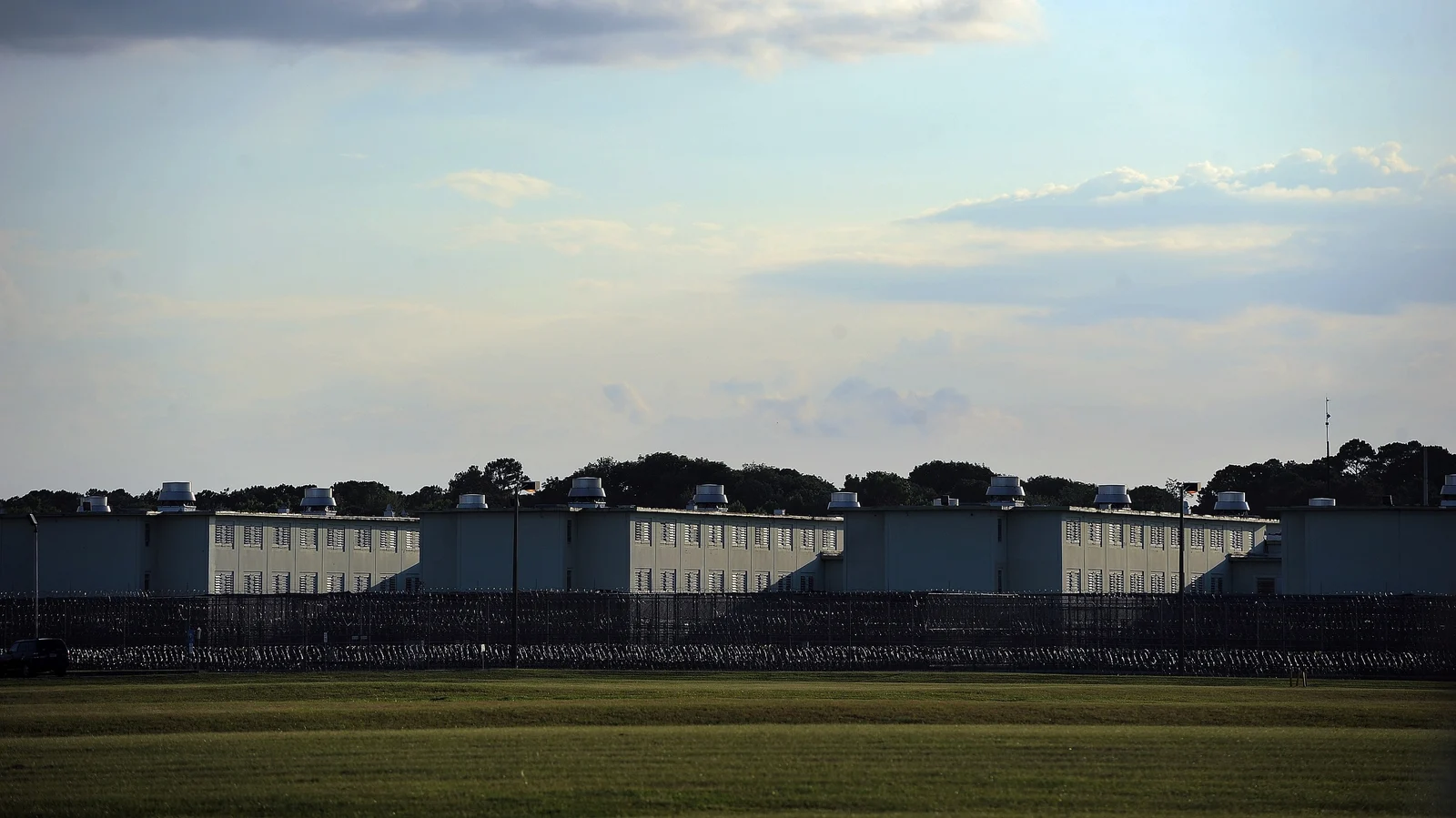
Before the sun fully rose over the pine-lined horizon near Raiford, Florida, the state prison’s routinely monitored corridors were charged with a different kind of stillness — a hush that feels heavier than usual. It’s the kind of silence you can almost hear. At 53, Billy Kearse was put to death there by lethal injection, the Florida Department of Corrections announced, closing a chapter that began with a 1991 traffic stop and a fatal scuffle that left Officer Danny Parrish dead.
“We carried out the sentence as ordered by the court,” said a spokesman for the corrections department, his voice measured and practiced for the scrutiny that follows these moments. Outside the compound, the usual hum of the interstate and the caw of distant birds seemed to go on as if nothing of consequence had occurred. Inside, however, legal locks turned, last appeals were logged, and people who had watched this case unfold for decades exhaled, for better or worse.
The human faces behind the headlines
For the family of Officer Parrish, the news landed like relief. “We lost Danny the day he pulled into that driveway,” said Linda Parrish, speaking at a modest memorial a few blocks from the sheriff’s office. “Every birthday, every holiday — there’s an empty chair. Today, we feel a little less hollow.” Her voice cracked and steadied in the same breath; grief and closure are complicated companions.
On the other side, the memory of Kearse’s humanity hangs in different contours. “We fought for his life because no one should have to die without the system examining every shadow of doubt,” said Marcus Reed, who for years led Kearse’s appeals. Standing outside a courthouse that has seen more than its fair share of similar battles, Reed pressed his palms together. “There were questions about what led to that night — old tests, witnesses who changed their minds. We asked for mercy. We hoped for compassion.”
By the numbers: a country grappling with the meaning of punishment
Statistics give a cold frame to an otherwise deeply personal story. This execution marked the fifth carried out in the United States so far this year and Florida’s third. Last year, the U.S. executed 47 people — the highest total since 2009, when 52 were put to death.
- Florida reportedly conducted 19 executions in 2025, the most of any state.
- Alabama, South Carolina and Texas each reported five executions the same year.
- Of last year’s executions, 39 were by lethal injection, three by firing squad, and five by nitrogen hypoxia.
Those numbers are sharp. They slice into a national conversation about the death penalty that has been growing louder: who is sentenced to die, under what circumstances, and whether the state should wield such an irreversible power at all.
Methods, controversy, and international concern
Lethal injection remains the most commonly used method in the United States, but the past few years have seen jurisdictions experiment with — and revive — other techniques. The use of nitrogen hypoxia, a method that replaces oxygen with nitrogen gas, has attracted particular condemnation. United Nations experts have denounced nitrogen hypoxia as cruel and inhumane, saying it crosses lines of accepted human rights practice.
“There is an ethical boundary that should never be crossed,” said Dr. Aisha Mbaye, a human-rights scholar who has studied methods of execution. “States that promise ‘humane’ capital punishment are trying to paper over an act that is inherently final. Methods change, but the consequence does not.”
Where the U.S. stands — and where it might be heading
The map of death penalty policy in America is uneven. Twenty-three states have abolished capital punishment outright. Three others — California, Oregon, and Pennsylvania — have moratoriums in place, effectively pausing executions while legal or political reviews continue.
At the federal level and in some states, political leaders have expressly supported capital punishment. President Donald Trump, for instance, has called for its expansion “for the vilest crimes,” a stance that keeps the instrument of death within political debates even as other courts and legislatures pull back.
“The public wants justice, but the devil is in the details,” observed Vanessa Ortiz, a criminologist at a university in the Southeast. “Reckoning with capital punishment isn’t simply about retribution. It touches on racial disparities in sentencing, the fallibility of evidence, and whether state power should end a life that, once gone, allows no correction.”
Local color, national echoes
In towns like Raiford and the small communities that ring the prison, the debate is not abstract. People speak in practical, often raw terms. At a diner where breakfast is served all day, patrons argued over coffee and biscuit plates.
“If someone killed your boy, wouldn’t you want them to pay?” asked James Holloway, a retired trucker who wore a faded sheriff’s cap. His answer was immediate, the kind that comes from lived experience and community memory.
Opposite him, Celia Mendez, a schoolteacher, shook her head. “What about mistakes?” she asked quietly. “What about families torn apart twice — first by a killing, then by another when the state kills? There’s a cost no one counts for.”
Questions that linger
As readers, what are we supposed to feel when the state meets out its most severe punishment? Is closure achievable by legal decree, or is it a private thing unbound by public rites? When a society opts repeatedly for executions, what does it say about how we imagine justice?
These are not rhetorical flourishes. They are practical, pressing questions that ripple through policy rooms and living rooms alike. They ask us to balance the scales — not just with data and precedent, but with empathy for victims and an honest appraisal of the judicial system’s imperfections.
Closing thoughts
The day the state carried out Billy Kearse’s sentence, life elsewhere — in neighborhoods and kitchens and courtrooms — continued in its uneven rhythms. A law was enforced. A family breathed a different kind of breath. Advocates on both sides, seasoned by campaign signs and court dockets, sharpened their arguments for the next case.
When the sun finally climbed higher over Raiford, the long debate about capital punishment kept turning, a machinery of law and memory and moral questioning that will not be settled at the end of a single needle. Where do you come down? What do you believe justice looks like when the penalty is irrevocable?