In the shadow of the courthouse: Nicolas Sarkozy’s return to the dock and what it reveals about power, memory and modern France
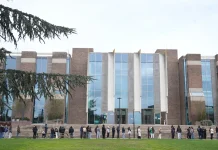
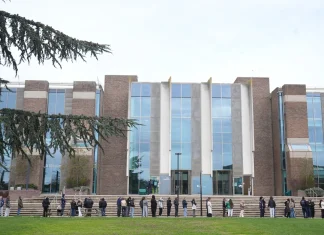
On a rain-slick morning in central Paris, a snaking line of readers—some curious, some hostile, some nostalgic—waited outside a bookstore that had put out a new memoir and a dozen reporters had staked out a courthouse entrance. The drama felt cinematic: a man who once strode the Élysée Palace gardens in a suit tailored to give the impression of effortless command is, once again, measured by the slow, precise machinery of justice.
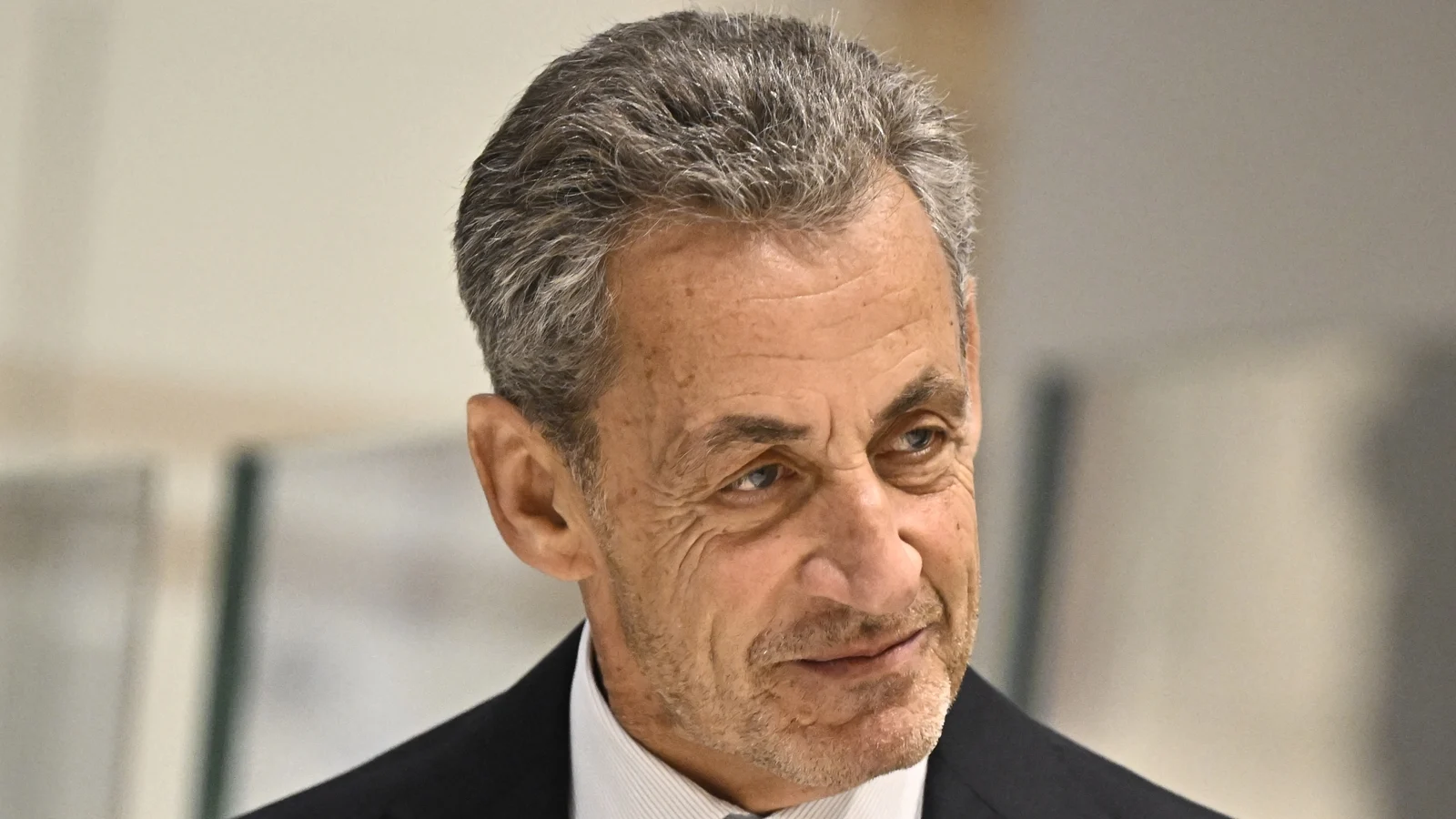
Nicolas Sarkozy, France’s president from 2007 to 2012, is back at the appellate court in Paris to answer allegations that reach into the shadowy corridors between money and political ambition: accusations that he or his associates sought funding from Muammar Gaddafi’s Libya to bankroll the campaign that propelled him to power in 2007.
The stakes and the scene
The trial’s legal stakes are stark. A lower court last year convicted Sarkozy of criminal conspiracy in what the judges said was an effort to acquire Libyan money for his presidential run; he was handed a five-year sentence, part of which was meant to be spent behind bars. He served a short jail term—a rare moment in modern European history when a former head of state actually tasted incarceration—then appealed. The retrial at the Paris Appeal Court has reset the scale: Sarkozy, now 71, returns once more cloaked in the presumption of innocence.
“I’ve lived through revolutions and seasons of hope,” said Mireille, who runs the pâtisserie on Rue de Rivoli and had watched cameras roll past her door for three days. “But seeing a former president in handcuffs—ça secoue. It shakes us awake.”
For many French citizens, this case is not just about one man. It is a probe into how democracies police ambition, and how economies of influence can circle the globe. Prosecutors say aides, acting on Sarkozy’s behalf, struck a deal in 2005 with Libya’s leader to provide cash for the campaign that made him president two years later. In return, Gaddafi reportedly expected help in mending an international reputation stained by the 1988 Lockerbie bombing, which killed 270 people, and the 1989 downing of UTA Flight 772 over Niger, which killed 170 passengers and crew.
A grip on facts
Here are the elements the court will weigh:
- Prosecutors allege a 2005 agreement between Sarkozy’s circle and the Libyan regime for illegal campaign funding.
- A lower court found Sarkozy guilty of criminal conspiracy but did not establish that the funds were actually received or spent on the campaign.
- Sarkozy has appealed the conviction and argued he is innocent; the retrial restores his legal presumption of innocence until proven otherwise.
- He faces other legal judgments and has two definitive convictions in separate cases, one of which involved influence-peddling and another related to the financing of his 2012 re-election bid.
Voices in the capital
In the foyer of the Palais de Justice, a man named Ahmed, who works as a tour guide, shrugged as he watched TV vans roll in. “We are a country of laws,” he said. “If a leader broke the law, he must answer for it. But I also think, does this trial heal the wound, or does it open a new one?”
Legal scholars are split. Céline Moreau, a professor of public law at Sciences Po, said, “This is emblematic of a maturing democracy. No one is above legal scrutiny.” Yet she cautions that high-profile trials can also skew public understanding: “Courtrooms seek facts, not revenge; the public seeks catharsis.”
Polls suggest the French public is ambivalent. Trust in institutions in France has wavered: a sizable minority of citizens see trials of former leaders as either warranted accountability or politically motivated witch-hunts. Democracy, it seems, answers hard questions slowly.
The personal and the performative
Last winter, Sarkozy released a short book about his brief stint in prison, Diary of a Prisoner. It sold briskly; scenes of devoted admirers queueing outside bookshops were replayed on French TV, a tableau mixing sympathy with spectacle. In the slim volume he writes about the tedium and indignity of detention—poor food, the noise, the small humiliations—while also sketching a political future that hints at alliances across the right flank of French politics.
Carla Bruni, the former first lady—singer, model, and a public figure in her own right—stands beside him in public perception. Both she and Sarkozy face a potential separate trial over allegations that they attempted to bribe a key witness in the Libyan financing investigation, a charge they deny. The presence of celebrity in this drama—paps jostling at the gates, the hush of a crowd at a book signing—adds layers of irony: a private pain played out under merciless public light.
Hard facts, soft consequences
To frame the moment globally: France’s prison population is roughly in the six digits—about 120,000 inmates as of recent years—yet incarceration of a former European head of state remains a rarity. Around the world, democracies have increasingly put former leaders on trial—South Korea’s Park Geun-hye, Brazil’s Lula da Silva and others—which speaks to a broader trend toward accountability. But these legal reckonings also reveal the fragility of political legacies.
“What we’re witnessing is not simply the fall of a politician,” said Raphaël Dubois, a historian of modern France. “It’s a civic moment: the republic insisting on the rule of law. But it’s also a narrative moment—the way a country tells itself about power, privilege, and the cost of ambition.”
Broader questions, local textures
Walk the arrondissements and you’ll find small signs of this contest between law and lore. A retired teacher in Montparnasse will reminisce about Sarkozy’s energetic campaign rallies: “He promised dynamism—he was a hurricane,” she said. A young activist outside the courthouse carried a placard that read, “Justice, not vengeance.” These are not just political opinions; they are the lived textures of a democracy wrestling with its past.
How should societies hold leaders accountable without slipping into perpetual recrimination? How do we measure a political life—by achievements or by legal judgments? And when a former leader writes a memoir about time behind bars, who is the audience: the faithful, the curious, the historians who will try to stitch a larger narrative from fragments?
What’s next
The appeal retrial will stretch over weeks, with witnesses, documents, and legal arguments that will be parsed by editors, talk-show hosts, and citizens on the street. The verdict will not simply close a court case; it will be another chapter in France’s long debate about the nature of public service and the limits of personal loyalty within public life.
As the trial unfolds, consider this: what do we want from our leaders? Not only brilliance or charisma, but transparency, an adherence to rules, and a capacity to weather scrutiny without collapsing the institutions they once led. Some trials teach history; others shape futures.
Will France find closure? Or will this be another turning point in a cyclical politics that feeds on scandal and reinvention? Stand outside the courthouse, or inside a local café—listen to the voices—and you’ll sense that the answer is still being written.