Acquittal in Uvalde Case Reopens Wounds: A Town, a Trial, and the Question of Accountability
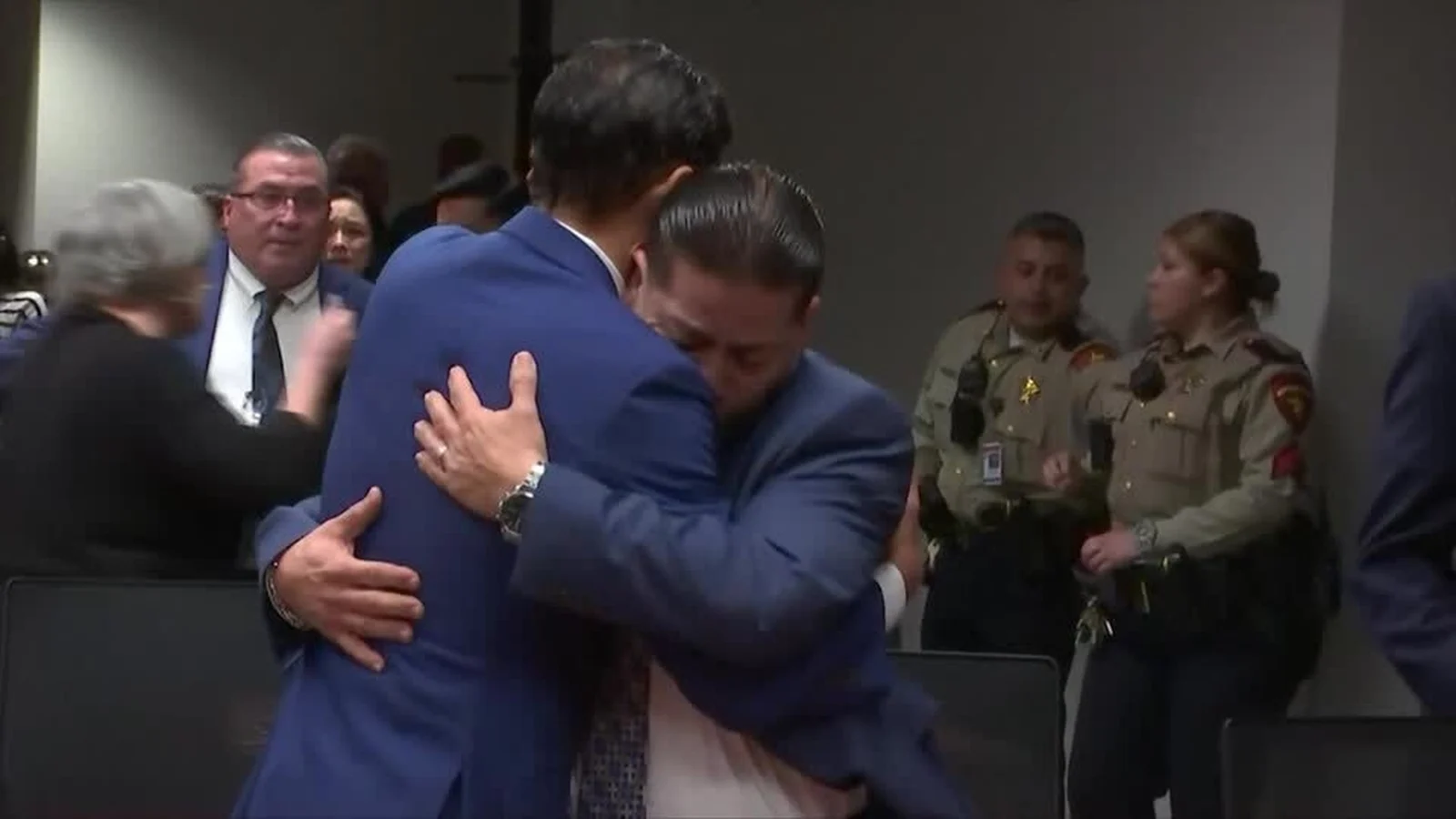
The courtroom exhaled before the word fell. When the verdict was read, Adrian Gonzales — the 52-year-old former Uvalde school district officer who stood at the center of a national debate about policing and public safety — bowed his head and pressed his palms to his face. Around him, lawyers offered pats on the shoulder. In the gallery, parents and siblings of the children and teachers killed at Robb Elementary sat frozen: some trembling, some wiping away tears, others staring as if trying to steady themselves against a wind that will not die down.
A jury in Corpus Christi found Gonzales not guilty on all 29 counts of criminal child endangerment, each count carrying a possible two-year sentence. After more than seven hours of deliberation, that verdict closed one chapter in a story that began in the small, sunbaked town of Uvalde, Texas, on 24 May 2022 — a day when 19 students and two teachers were murdered in one of the deadliest school shootings in American history.
What the trial centered on — and what it leaves unsettled
Gonzales was among the earliest of more than 400 officers who arrived at Robb Elementary that afternoon. Prosecutors argued that officers waited — for 77 minutes, in the government’s reckoning — before entering the classroom where the gunman had barricaded himself. In that gap, the assault on the children and teachers continued. The charge against Gonzales was not that he pulled the trigger; it was that his failure to act put children in immediate danger.
“They have decided he has to pay for the pain of that day and it’s not right,” defense attorney Jason Goss told jurors in closing, framing his client as one individual unfairly burdened with collective blame. Special prosecutor Bill Turner countered with a different moral calculus. “You can’t stand by and allow it to happen,” Turner told the jury, asking them to see Gonzales’s alleged inaction as criminally culpable.
Gonzales said he could not see the shooter and denied freezing; he insisted he did not leave the scene when response teams were organizing. The jury’s not-guilty finding suggests it did not find the prosecution’s case proved to the standard required in criminal court — beyond a reasonable doubt.
Courtroom scenes and small-town reverberations
The trial was convened hundreds of kilometers from Uvalde itself, in Corpus Christi, after defense lawyers argued a fair trial would be impossible in a town still raw from grief and outrage. Jurors came from across the region, and the 19-day trial played out under intense public scrutiny. Families of the victims traveled to attend, and the courthouse hallways hummed with raw emotion: whispered prayers, clipped legal strategizing, and the occasional, heartbreaking quiet.
Outside the courthouse, a neighbor who did not want to be named said, “Uvalde changed overnight. The people who live here are not just statistics — they’re mothers, fathers, teachers. There’s sorrow and a demand for answers.” A retired law enforcement trainer in Texas, speaking on background, told me, “This kind of prosecution is unusual — rare. The law penalizes certain failures, but proving criminal intent or gross negligence in the fog of a mass-casualty incident is hard.”
Facts, figures, and the bigger American conversation
Some details of the Uvalde response are undisputed: more than 400 officers responded, the gunman was a former student, and the gunman was eventually neutralized by officers after the delay. State and federal reviews concluded that officers allowed the shooter to remain inside a classroom while they debated tactical options — a lapse many officials, including then–Attorney General Merrick Garland, later said cost lives.
This case sits at the intersection of three national fault lines: policing practices and accountability, grief and the search for justice by victims’ families, and the broader debate over gun policy and public safety. In recent years, public-health data has underscored what many already felt in their bones: firearm deaths are a major—if not the leading—cause of death among American children and teens. That reality feeds the urgency and anguish that follow tragedies like Uvalde.
Only two people have been criminally charged in connection with the shooting: Gonzales and former school district police chief Pete Arredondo, who faces similar charges and has pleaded not guilty. The specter of systemic failure, not just individual error, has loomed over reviews of that day’s law-enforcement response.
A community’s rituals of remembrance
Walk Uvalde’s streets and you will find memorials and small altars — stuffed animals, crosses, hand-lettered signs — evidence that the town has tried to stitch meaning onto a wound. Locals speak of neighbors hanging on to rituals: shared meals, communal prayer services in Spanish and English, and school classrooms repurposed as spaces for counseling. “We keep going for the kids who are still here,” said a teacher who moved back to Uvalde after the shooting. “Everything we do is for them.”
At the same time, families who lost children have pushed for accountability. Some insisted that criminal charges were necessary to prompt broader reforms; others feared the trial would only deepen trauma. The tension between collective institutional responsibility and individual culpability is at the heart of what this trial attempted to resolve — but did not, ultimately, settle.
Legal nuance: why prosecutions of police are rare and difficult
Prosecutors who bring charges against officers face a steep evidentiary climb. Criminal statutes typically require proof of a person’s culpable state of mind or a level of gross negligence that goes beyond split-second poor judgment. As one criminal law scholar explained to me, “Courts and juries allow reasonable mistakes in chaotic situations. To convert those mistakes into crimes usually requires a showing of conscious disregard for human life.”
That standard is both legal and cultural. In communities across America, police are often given the benefit of the doubt in moments of crisis; at the same time, trust can be eroded when mistakes compound into tragedies. Which is why trials like Gonzales’s are watched not only as criminal adjudication but as moral reckonings.
Questions that linger
After the verdict, many in Uvalde and beyond asked: What does justice look like after a mass shooting? Is criminal prosecution the right mechanism to address systemic failures? How do communities hold institutions accountable without further fracturing the trust needed for public safety? These are not questions with easy answers.
“We wanted answers. We wanted to see accountability,” said a parent of a child killed at Robb Elementary, voice breaking. “But we also want truth — and truth is complicated.”
- Robb Elementary attack: 19 students and two teachers killed (24 May 2022)
- Gonzales: acquitted on 29 counts of criminal child endangerment
- Jury deliberation: more than seven hours
- Officers on scene: over 400; delay before entering classroom: 77 minutes (as reported in investigations)
A larger story of grief, law, and the search for reform
The Gonzales verdict will almost certainly not be the last word in the public discourse around Uvalde. For the families who lost children, the ache remains — as raw as it was three years ago. For law-enforcement leaders and reform advocates, the case raises structural questions about training, command, and crisis decision-making that do not fit neatly into criminal statutes.
And for the wider public—citizens, voters, policymakers—the trial is a prompt to ask hard questions: How should societies balance legal standards with moral urgency? How do we prevent such tragedies in the first place? Which changes are administrative and cultural, and which require the force of law?
In the quiet that follows courtroom drama, communities like Uvalde get back to the lifework of living with loss. They also keep pushing for changes they hope will stop history from repeating. “We didn’t come here for spectacle,” said a community advocate. “We came here to tell the world: look at us, hear us, and do better.”
How will we answer that plea? That is the continuing story — not only of Uvalde, but of a country still grappling with how to keep its children safe, and how to hold institutions accountable when they fail.