Across a Winter of Discontent: Iran’s Latest Uprising and the Voices from Its Streets
On a cold night in the west of Iran, a funeral march lit up like a constellation of low flames—candles held by hands wrapped in scarves, faces lit by grief and fury. The slogans were sharp, the cadence familiar to anyone who has watched Iran’s recent cycles of protest: defiance braided with sorrow. “Enough,” a woman cried, her voice cutting through the winter air. “They have taken too much.”
What began as a shopkeepers’ strike in Tehran on December 28 has rippled into a larger movement, rolling through towns and provincial centers and returning, for many, to the memory of the mass mobilizations of 2022–23. Officials and rights groups now say at least 12 people—including members of the security forces—have died since the unrest began. Local monitors report hundreds of arrests. And while the scale has not yet eclipsed the last nationwide upheaval, the geography of this new anger is striking: it burns brightest in western provinces with large Kurdish and Lor populations.
From a Shopkeeper’s Strike to a Patchwork of Protests
The flashpoint was deceptively small: shopkeepers in Tehran closed their shutters to protest rising costs and what they said were suffocating economic policies. The strike tapped into a deeper vein of frustration. Within days, protesters were chanting not only about wages and prices but about leadership and accountability. “It started over bread and ended up asking for dignity,” said Arman, a 28-year-old teacher who travelled from Kermanshah to take part in a demonstration.
Human Rights Activists News Agency (HRANA), based in the United States, tallied that protests have occurred in 23 out of Iran’s 31 provinces and have touched at least 40 cities, most of them small and medium-sized. Rights groups headquartered in Norway—Hengaw and Iran Human Rights—reported deadly clashes in the western Ilam province. Hengaw said Revolutionary Guards opened fire in Malekshahi county, killing four Kurdish residents and wounding dozens. Iran Human Rights gave a similar toll: four dead and around 30 injured.
Authorities say that some members of the security forces also lost their lives during attempts to storm police buildings. Both sides show footage and count bodies; both sides grieve and accuse the other of violence.
Where Minority Grievances Meet Economic Pain
Western Iran has long been a complex tapestry of languages, cultures and historic grievances. Kurdish and Lor communities there often feel marginalized in national politics and economic planning. That sense of exclusion can turn ordinary protests—about food, fuel, or salaries—into something more combustible.
“We are not asking for independence,” said Rana, a 44-year-old shopkeeper in Ilam whose son attended a funeral over the weekend. “We are asking to be treated like human beings. To have our children go to school and for my husband to come home at night.” Her voice was raw, part anger and part exhaustion.
Human rights organizations also allege that authorities raided hospitals to seize bodies, a practice families say is meant to prevent public mourning from crystallizing into larger demonstrations. Funerals in the region have become both a ritual of mourning and a political act; mourners chant the names of the dead and the slogans against Tehran’s leadership, a rhythm that echoes recent history.
Tehran and the Cities: Quiet Streets, Loud Tension
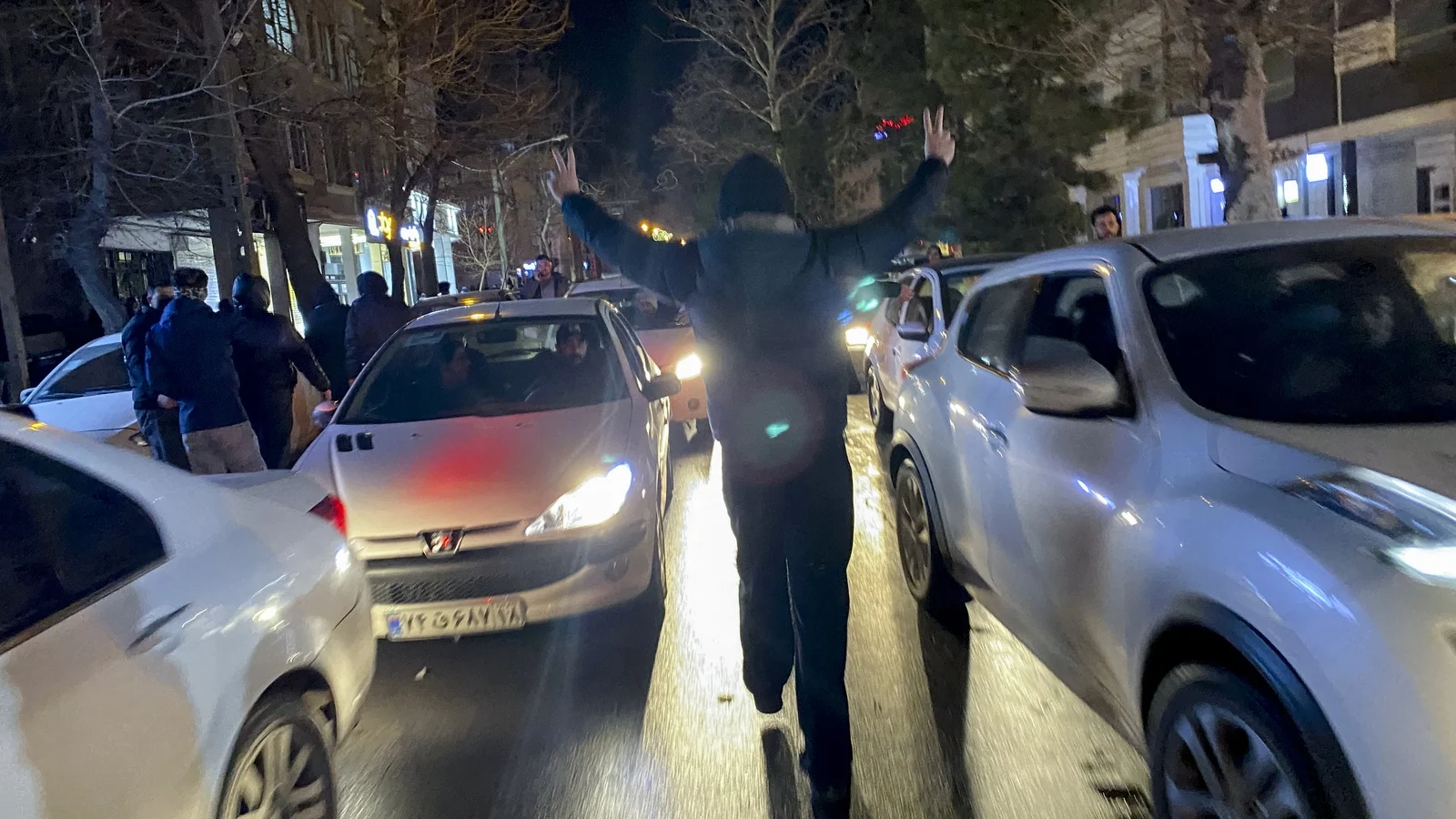
In the capital, streets were oddly subdued. Most shops remained open, but major intersections were glutted with riot police and security forces. What was notable was not mass crowds in central squares—though there were pockets of defiance—but the scattered nature of demonstrations across districts in the east, west and south.
“You could see that something had shifted,” said Mina, a student in Tehran who spoke to me over the phone. “People are more careful, but they are also more ready. They whisper the same slogans we used in 2022. Everyone knows the risks, but they also know the stakes.”
Video verified by independent observers showed security forces using tear gas to disperse groups in central Tehran during the daytime. HRANA reported that at least 582 people were detained across the country during the first week of unrest.
Voices from the Ground
“They took my brother away at dawn,” said Hassan, a young man from a small town outside Shiraz. “I don’t know where he is. We just want him to come back.” His fear was contagious—later, his neighbors gathered at the municipal square, murmuring about bail, lawyers, and the price of silence.
“What you see now is the result of years of cumulative pressure,” said Dr. Sara Nouri, a sociologist who studies social movements in Iran. “Economic hardship can be an accelerant, but it’s the social fractures—the sense of exclusion and the memory of recent crackdowns—that determine how protests become sustained.”
International Echoes and Political Calculations
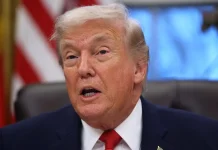
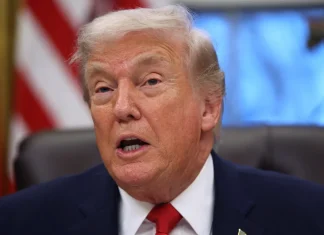
The unrest has not gone unnoticed abroad. U.S. political figures and leaders in the region have voiced support for the demonstrators; comments from high-profile politicians have ranged from vocal backing to ominous threats. Former U.S. President Donald Trump was quoted as saying America was “locked and loaded” should Tehran harm its protesters, while Israeli Prime Minister Benjamin Netanyahu publicly expressed solidarity with the demonstrators, suggesting they might be “taking their destiny into their own hands.”
Iran’s leadership faces a compounded challenge. Supreme Leader Ayatollah Ali Khamenei, now in his late eighties and at the helm since 1989, presides over a polity that is still recovering from a summer conflict with Israel. The June confrontation—brief but intense—reportedly damaged nuclear infrastructure and cost the lives of some security figures, shaking the aura of invulnerability that often surrounds Iran’s security elite.
Counting Costs and Asking Hard Questions
The government has offered a modest concession: a monthly allowance equivalent to roughly $7 for the next four months, intended to ease immediate pain. For many protesters and analysts, that is not enough. “Seven dollars is an insult,” said Fatemeh, a nurse from a provincial city. “It is like handing a bandage to someone who needs surgery.”
What will end this wave? Will it plateau, like past cycles have, or will it gather momentum, drawing in students, public servants and the urban poor? History suggests both outcomes are possible. The 2022–23 movement, ignited by the death of Mahsa Amini in custody, demonstrated the potency of a unifying symbol. This current wave lacks a single galvanizing image, but it has a more diffuse power: chronic economic pain, minority grievances, and a younger generation less willing to bear both.
So where does that leave the reader—watching from afar or reading on a phone in a quiet living room? Consider the human faces behind each statistic: the shopkeeper who closed early to keep bread on the table, the mother who wrapped her child’s feet to keep out the cold, the student who murmured a slogan and felt the weight of a state looking back. These are not just numbers; they are pulses.
As the world watches, the ambiguous calculus of repression and concession will play out in city squares and hospital corridors. For now, the streets of Iran hold both grief and a brittle hope. And amid the smoke and the chanting, the question that will test the political order is simple: how much will people endure before they insist on more than mere allowances?
If you are reading this, ask yourself: what does it take for a society to bend—not break—under pressure? And when it bends, who decides how it straightens again?