When Silence Was Broken: A Woman’s Memoir That Refused to Hide
There are books that act like bandages—soft, private, meant to cover wounds. And then there is the sort of memoir that rips the bandage off, letting light and air into a room that for too long has been shut. “A Hymn to Life,” the new memoir by Gisele Pelicot, falls squarely into the latter category. It is at once tender and unflinching: a survivor’s ledger of what happened in her own home, and a call to a nation—indeed, to the world—not to look away.
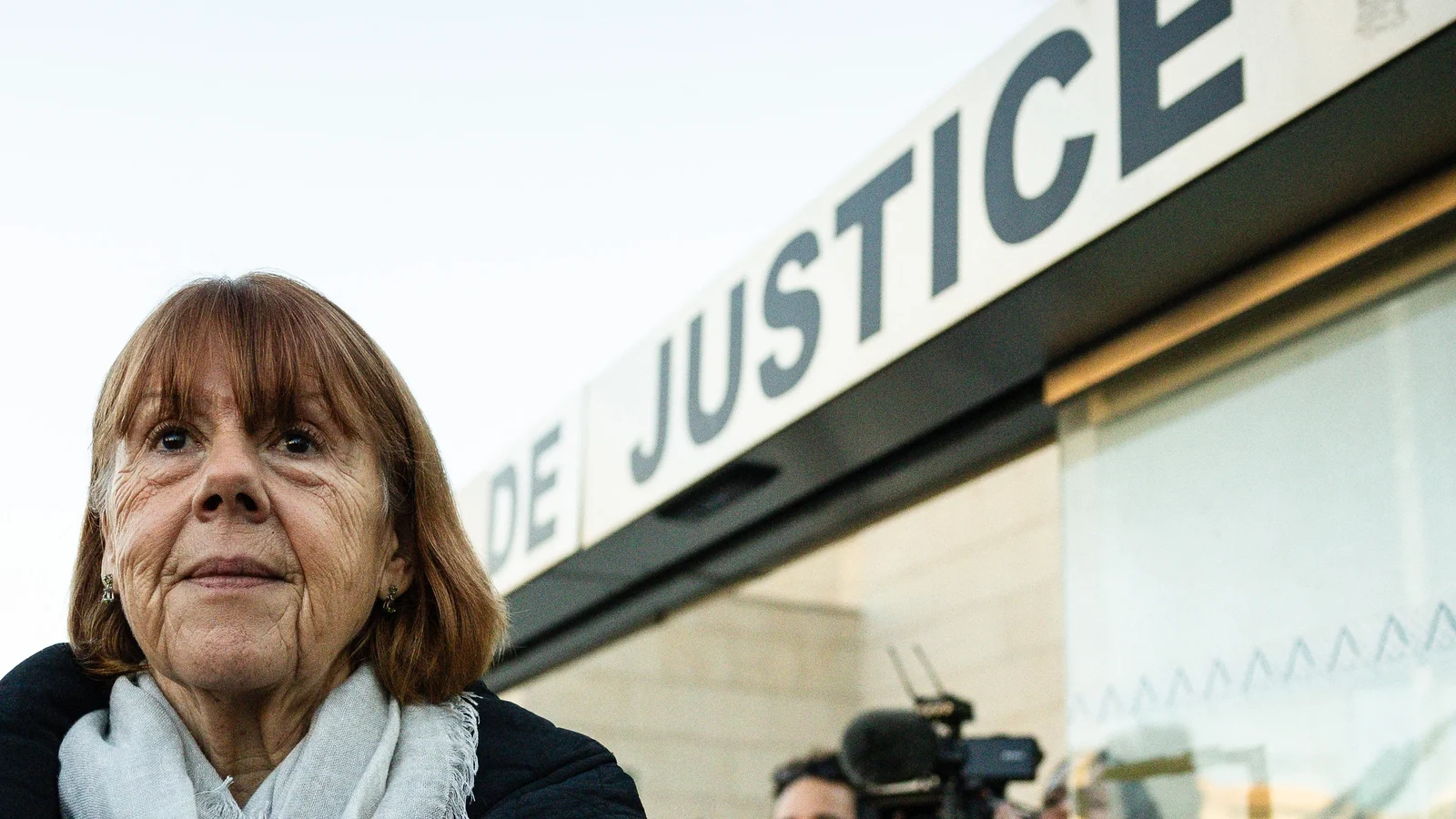
Ms. Pelicot was 73 when she decided the time for concealment had ended. In a country where privacy and reputation often carry a weight of their own, she waived the anonymity normally granted to victims in sexual crimes. She wanted faces revealed, questions asked, and the ordinary neighbors who populate our shared lives made to reckon with the possibility that atrocity can hide behind polite curtains.
The Moment the World Changed for Her
Imagine waking one day to a precise, unbearable truth. In Ms. Pelicot’s account, she is shown grainy photographs by investigators—images of herself, unaware and vulnerable, in her own bed. An officer reads out a number, not a tally of bills but of assaults: dozens. “More than I could imagine,” she writes, “a figure that made my whole life tilt.”
When she returned to her house that first day after the revelation, she performed an ordinary ritual: she hung her husband’s laundry on the line. That domestic choreography—shirt by shirt, peg by peg—became a quiet, gutting image. “I looked like a dog at the gate,” she writes. The pastoral scene of a rural French afternoon masked an inner landscape that had been violently transformed.
From Private Horror to Public Trial
The ensuing legal drama was staggering in its scope. Her husband, Dominique Pelicot, and scores of other men were brought before the courts. The trial drew attention not because it was sensational, but because it cut through a taboo: how a woman’s home—a place commonly associated with safety—could be turned into a scene of repeated violation without anyone’s intervention.
“This case forced us to ask: what do we mean by consent, and how do we protect the most vulnerable among us?” said Amélie Durand, a lawyer specializing in family and sexual violence in Paris. “The law can grind slowly, but high-profile cases like this shine a light that lawmakers find difficult to ignore.”
Letters, Voices, and the Strange Comfort of Strangers
One of the most striking images in Ms. Pelicot’s memoir is the bundle of letters she received each day during the trial—handwritten pages folded and passed along by friends and strangers. Some came from a woman in Marseille recounting a parallel assault from thirty years earlier; others were simple notes from young students saying, “We believe you.”
“Those letters were oxygen,” Ms. Pelicot writes. “The newspapers were full of names and verdicts, but the letters were full of presence. They were human hands reaching in.”
An activist who campaigned outside the courthouse remembers the scene vividly. “People stood in the rain to let her know she wasn’t alone,” she said. “You could feel the city change temperature that week.”
Love, Resilience, and the Question of Revenge
No story of trauma is only a story of pain. Among the darker chapters of Ms. Pelicot’s life, she describes a tender, unexpected revival of love. Through mutual friends, she met a man who treated her as someone worthy of ordinary joys: dinner, laughter, little foolish things that remind you of being alive.
“I wasn’t looking for anything,” she writes, “but one evening I felt light-headed with happiness. I realized I had been afraid—to be seen, to be loved—and then I chose to be brave.”
She uses the language of “revenge” in a way that surprises: not as retaliation, but as reclaiming belief in humanity. “My revenge is to trust again,” she says. “Once it was a weakness. Now it is my strength.”
Local Color: Small-Town France Under Scrutiny
The story is not only about the courtroom. It is a portrait of place: the way a village square fills on market mornings, the scent of warm bread from the boulangerie, the silent rows of houses with shutters closed. The case forced neighbors to confront what they had assumed—or refused—to see.
“We always thought we knew our neighbors,” said Jean-Marc, who runs a cafe near the courthouse and asked to be identified by his first name only. “This case made people look twice at every porch and every handshake. That’s painful, but necessary.”
Facts, Figures, and the Broader Picture
Ms. Pelicot’s memoir arrives at a moment when the world is re-examining how societies respond to sexual violence. The World Health Organization estimates that about one in three women globally have experienced physical or sexual violence at some point in their lives. In Europe, surveys over the past decade have shown that sizable numbers of women have experienced some form of sexual violence since the age of 15.
In France, the fallout from high-profile cases has led to renewed debate in parliament and among civil society groups about consent laws, protective measures for victims, and the anonymity afforded to complainants. While legal reform moves at different paces in different places, the message of Ms. Pelicot’s book is universal: survivors must be heard, believed, and protected.
Why She Gave Up Anonymity
Many survivors choose anonymity to protect themselves and their families. Ms. Pelicot chose the opposite path. “If I hid, then the faces of the men who did this would disappear into the background,” she explains. “I wanted people to look, to question, to have that uncomfortable moment of recognition: that the neighbor next door could be capable of terrible things.”
Some legal scholars argue that public testimony can help shift public opinion and accelerate policy reform. Others worry about the emotional cost to the survivor. Ms. Pelicot acknowledges both. “It cost me dearly,” she admits, “but silence would have cost more.”
Invitation to the Reader
Reading “A Hymn to Life” is not a passive act. It asks you to examine your own assumptions: What do you do when a friend confesses something unlikely? How do you respond when a community secret surfaces? Are you willing to let discomfort be the catalyst for change?
As a global community, we must grapple with how structures—legal, social, cultural—either protect or fail those who are most exposed. Ms. Pelicot’s story is a local tragedy and a global lesson. It shows how a single voice, given room and respect, can alter a conversation that affects millions.
Final Thoughts: The Work That Remains
There is no tidy ending to this memoir. Pain does not fold neatly into narrative closure. But there is something bracing about a woman who, at 73, decides to step into the public light to demand accountability and to reclaim a life. “A Hymn to Life” is both an account of unspeakable harm and a hymn—imperfect, human, insisting—about the stubborn, ordinary business of survival.
Ask yourself: when the next story like this appears in the headlines, will you look away, or will you listen? When a neighbor seems off, or a workplace rumor surfaces, who will speak up? That, perhaps, is the memoir’s most urgent legacy: it turns private grief into common responsibility.