When Diplomacy Meets a Raid: Ireland, Venezuela and the New Geography of Uncertainty
From an ornate conference room in Beijing to the sun-baked avenues of Caracas, one event has rippled across hemispheres: the dramatic capture, during a military raid, of Venezuela’s president. It is the sort of headline that bends the world’s attention toward questions that don’t admit easy answers—about sovereignty, about justice, and about how small and medium states navigate a crisis when great powers move.
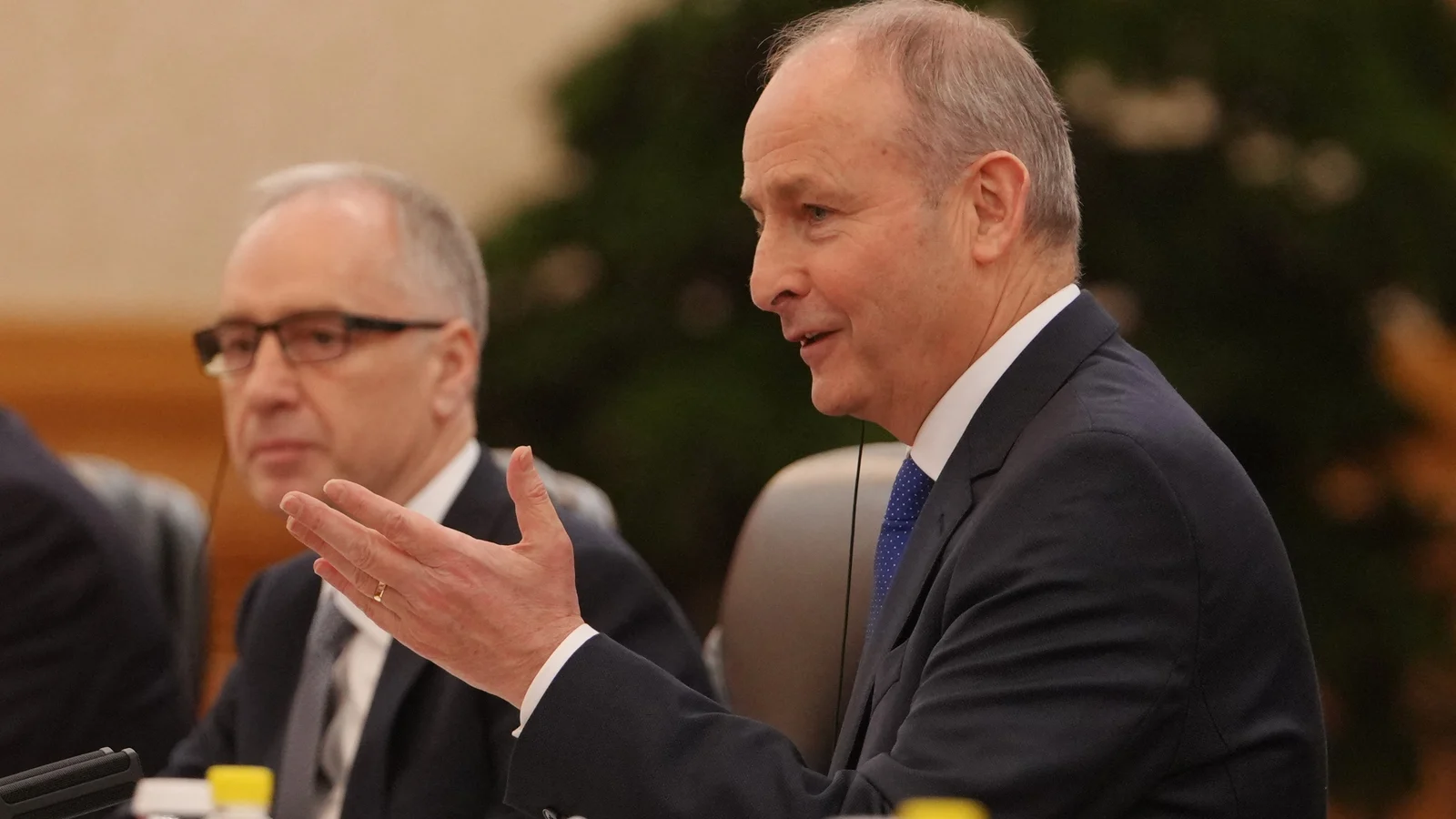
On a four‑day official visit to China, Ireland’s Taoiseach found himself answering those questions in real time. He did not mince words about the Venezuelan leadership, calling it oppressive and a source of regional instability. At the same time, he stressed that Ireland’s preference had long been for a peaceful handover decided by Venezuelans themselves. Those twin notes—moral clarity and pragmatic restraint—have become the leitmotif of many European capitals as they reconcile human rights concerns with the realities of global trade and diplomacy.
Beijing, Diplomacy, and the View from Dublin
It is an odd image: a leader from a small Atlantic nation, framed against Beijing’s winter sky, offering commentary on an incident that unfolded thousands of miles away. “We never recognized the legitimacy of that government,” he said, sketching the contours of a long-standing Irish stance. “But our aim has been to see a democratic transition fuelled by the Venezuelan people, not by foreign boots or quick, disorderly change.”
He also pushed back on any notion that Ireland might retreat from ties with the United States. “Dialogue is key,” he said. “We export roughly 90% of what we produce to global markets. We cannot turn inward. Engagement—consistent, values-driven engagement—has to be our approach.”
That balancing act—between standing up for international norms and maintaining the economic relationships that sustain livelihoods back home—is a familiar one for small open economies like Ireland. It is also a reminder that geopolitics no longer plays out only among superpowers; the reverberations touch factory floors in Cork, universities in Limerick, and ports in Rosslare.
Caracas: A City Between Fear and Hope
Back in Venezuela, the raid has deepened an already pervasive uncertainty. For many who remained in Caracas after years of economic collapse and mass migration, the sight of troop movements revived old fears. “We’ve lived through blackouts, empty shelves, and the constant worry for our children,” said María, a teacher who has taught in the same barrio for a decade. “If this brings change, we’ll welcome it—but not if it becomes another wound.”
Across town, a taxi driver who asked to be called José laughed bitterly when asked what he thought the raid might change. “They always tell us there will be a better tomorrow,” he said, “but tomorrow keeps taking from us. I want security for my family, not another political story on the evening news.”
Venezuela is, by many metrics, a nation in crisis: its economy has shrunk dramatically over the past decade, millions have left—UN agencies estimate more than seven million Venezuelans have sought refuge abroad in recent years—and everyday life has been upended by hyperinflation, shortages, and a collapsing public health system. Yet the country also sits atop one of the world’s largest proven oil reserves, a paradox that has made it both geopolitically significant and tragically vulnerable to exploitation and mismanagement.
Washington’s Response and Caracas’ Offer
Following the raid, the U.S. administration signalled a pivot: officials suggested they would work with whatever authority remained in place in Caracas to tackle narcotics trafficking and to reopen the country’s oil sector. That posture—less about immediate elections and more about stabilisation and economic access—reflects a broader, often transactional approach to foreign policy.
In turn, Venezuelan acting leadership sought to recast the episode as an opportunity. In a social media statement, the acting president called for respectful relations with the United States and invited collaboration on development projects framed within international law. “Our people deserve peace and dialogue, not war,” the statement read—an evocation of weary populations across the region who yearn for stability but fear external interference.
Voices from the Ground and the Diaspora
Beyond official statements, the human chorus is messy and diverse. A Venezuelan nurse working in Madrid spoke of relief tinged with skepticism: “If this helps us send medicine back home and get family members the care they need, I’ll be grateful. But history has taught us to question quick fixes.”
Meanwhile, an Irish export-manager in Dublin, whose company ships medical devices worldwide, said the episode underlines the economic tightrope his sector walks. “We depend on predictable trade lanes,” he said. “When geopolitics becomes volatile, supply chains and small jobs are the first to feel the shock.”
What This Means for International Order
There are larger, structural questions here. When a powerful nation intervenes—overtly or covertly—in another country’s leadership, it prompts debate about the validity of state sovereignty, the role of international law, and the limits of moral authority. Do harsh regimes forfeit sovereignty? Who gets to draw that line? And can a return to normalcy be built on cooperation with actors who themselves may be tainted by human rights abuses?
Experts caution against simplistic narratives. “We have to be careful not to romanticize transitions imposed from the outside,” says Dr. Elena Ruiz, a scholar of Latin American politics. “Sustainable peace usually requires internal buy-in, institutional reform, and economic rebuilding. External actions can catalyse change, but they can also entrench divisions if not paired with robust, multilateral strategies.”
Paths Forward: Practical Steps and Moral Choices
So where do we go from here? There are no easy recipes, but several pillars emerge as essential:
- Protect civilians and ensure humanitarian access to medicines, food, and basic services.
- Prioritise multilateral approaches—through the UN, regional bodies, and neutral mediators—to legitimise transition processes.
- Stabilise the economy in ways that address corruption and uplift ordinary citizens, not just corporate interests.
- Keep channels open for dialogue between nations, even when disagreement is profound.
These may sound like platitudes when headlines scream with drama. But the slow, often unglamorous work of rebuilding institutions and trust is what determines whether a country emerges on the other side with the rule of law intact or fragmented and resentful.
Closing Questions
As citizens of an interconnected world, what responsibility do we bear when a crisis plays out continents away? How do we weigh the instinct to act against the wisdom of restraint? And how do we ensure that the people most affected—the teachers, nurses, small-business owners—are the ones whose futures are prioritized?
The capture in Caracas has raised those questions again. It has also offered a reminder: geopolitics is not a chess game of capitals; it is a lived reality for millions. For Ireland, for China, for the United States, and for the people of Venezuela, the choices in the coming days will reveal whether diplomacy can be more than rhetoric—whether it can become the steady hand that guides a nation toward a future its citizens choose for themselves.