A Small Town Shattered: Remembering the Children Lost in Tumbler Ridge
The mountains around Tumbler Ridge hold secrets the earth has kept for millennia: fossils, ancient tracks, the slow hush of spruce and cedar. On a bright weekday morning this week, those same slopes witnessed a different kind of silence — a silence that spread through a town of roughly a few thousand people like a winter fog.
It began like any other school day. Backpacks were zipped, hugs were given, and parents waved their children onto buses and into classrooms. By afternoon, eight lives had been taken, including five children and a beloved teacher at the local secondary school. Two more bodies — a woman and an 11-year‑old boy — were later found at a nearby residence. The numbers read cold on a page; the reality is a town that will not be the same.
Names and Faces
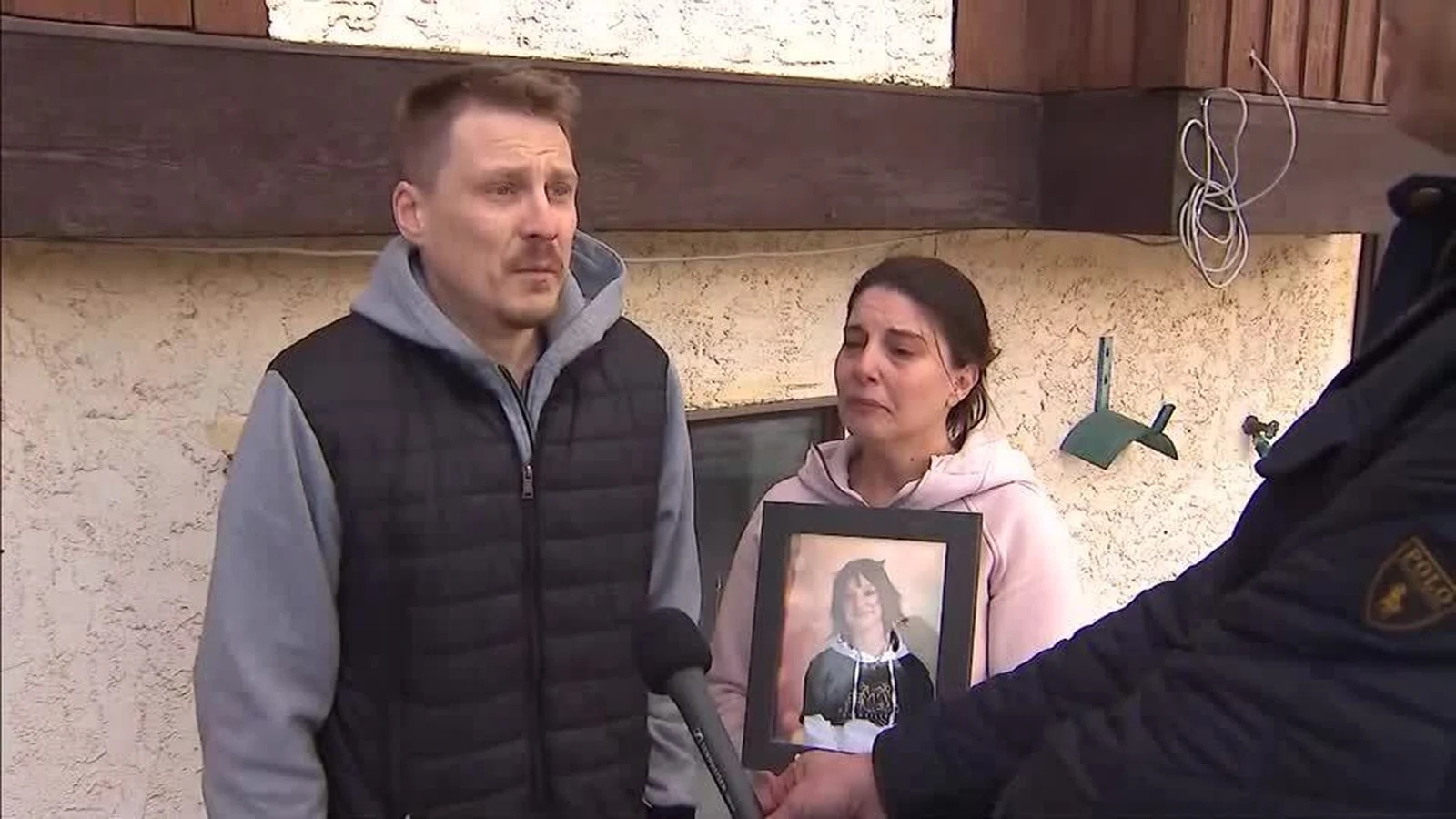
Among the dead was 12‑year‑old Kylie Smith, a girl her father remembers as “a light in our family.” Lance Younge told me how that morning he saw Kylie off with her brother Ethan, not knowing it would be the last time he would watch his daughter walk away. “She loved art and anime,” he said, his voice cracking under the weight of ordinary memories now forever sacred. “She wanted to go to school in Toronto. She was thriving in high school. She was the last person who ever deserved this.”
Ethan, who survived by hiding in a small utility room, will carry the memory of that morning with him always. Mr. Younge also spoke of a teenager he called “a hero named Maddie,” who performed CPR on Kylie in a desperate bid to save her. “She did everything she could,” he said. “We told Maddie she was brave. We told the kids were brave.”
Abel Mwansa, another parent, described his 12‑year‑old son — also named Abel — as a boy who loved school so much he once cried when his father suggested home schooling. “I raised him to respect his elders, to be strong, to work hard, and to always put a smile on your face,” Mr. Mwansa wrote on social media. “Seeing your child murdered at this age is heartbreaking.”
Community in Mourning
By nightfall, hundreds gathered in the town’s main square, a circle of candles and breath visible in the cold air. People stood shoulder to shoulder beneath the same peaks where children had played soccer, where families had picnicked on summer nights, where grandparents passed down stories about the first miners and the first fossil hunters.
“This is like one big family,” Mayor Darryl Krakowka told the crowd, his voice steady and soft. “If you need a hug, put your hand out. Reach out to your neighbour.”
Kevin Matthews, a resident of more than twenty years, summed up what many felt: “Nearly everyone in this town knows someone who is grieving. The path forward is to be with grieving families — to show up.”
What Happened
Police identified the shooter as 18‑year‑old Jesse Van Rootselaar. Authorities say she killed her mother and stepbrother before attacking her former school. The assailant later died; investigators have said the death appears to be self‑inflicted. As the town waits for forensic details, the focus for many residents has been simple and immediate: hold the community together and honor the children who will never grow up.
Lance Younge pleaded with media and the public to shift the gaze away from the perpetrator. “These kids were lost before they got to become teenagers,” he said. “So let’s put their pictures up and remember them, not this murderer.” His words echoed the growing chorus of families and friends who want memorials, not notoriety, for the person who committed this act.
Beyond One Town: Questions for a Nation
Canada does not experience mass shootings with the regularity of some nations, but when they occur the pain is no less profound. The country’s darkest mass shootings — the 1989 École Polytechnique massacre that claimed 14 women, and the 2020 Nova Scotia rampage that killed 22 people — remain etched in the national memory. Each tragedy forces a familiar, difficult conversation about gun access, mental health systems, and the way communities support one another.
What does safety look like in a town where everyone knows everyone? How do you reconcile the familiarity of a place with the knowledge that violence can arrive at any door? These are not local questions alone — they are questions for every small town and large city where parents send children out the door with hope rather than fear.
Voices from Experts and the Street
“Communities like Tumbler Ridge are resilient, but resilience doesn’t mean invulnerability,” said Dr. Maya Patel, a psychologist who specializes in trauma. “After an event like this, the immediate needs are grief support, clear communication from authorities, and long‑term mental health resources. These towns will need sustained help, not just moments of sympathy.”
At the vigil, an elderly neighbour wrapped a wool blanket around a shivering teen. “You learn to rely on each other,” she said, pulling her jacket tighter against the night. “We share tools, baby‑sit, bring casseroles. Now we share the sorrow.”
Remembering the Small Things
When a child’s life is cut short at 12, what remains are the small, incandescent details: a favourite anime character, a sketchbook half full of drawings, a dream of moving to a city she’d only seen in glossy postcards. These fragments are what families clutch to keep their children alive in memory.
“She was a beautiful soul,” Lance Younge said of Kylie. “She loved art. We just loved her so much.”
In the days to come, Tumbler Ridge will collect flowers and candles and ribbons. There will be fundraisers and casseroles and community meetings. There will be therapy groups and quiet people who cannot find the words. And there will be questions about how to prevent another morning like that — how to make sure that the next generation has schools that are truly safe, and systems that notice when a young person is in distress.
How to Help — A Few Practical Steps
- Reach out to local organizations offering grief counselling; many towns set up central support hubs after tragedies.
- Donate to verified family funds through official community channels rather than unvetted pages.
- Volunteer time or skills — from organizing vigils to offering childcare — can be as valuable as money.
- Press for sustained investment in mental health and school safety, rather than short bursts of attention.
Leaving the Reader with a Question
How will we, as neighbors, voters, colleagues, and citizens, choose to act after the grief settles into new rhythms? Will we let the story fade, or will we insist that the names of Kylie, Abel, and the others be more than headlines — that they be the impetus for change?
In Tumbler Ridge, people are lighting candles and holding tight to one another. They know how to make community out of quiet places. Perhaps the most meaningful tribute we can offer is not a headline that fades but a steady gaze at the work that must follow: supporting survivors, honoring lives cut short, and building systems that keep children — and all of us — safer.
“We will remember them,” Mayor Krakowka said at the vigil. “We will lean on each other. That is how we move forward.”