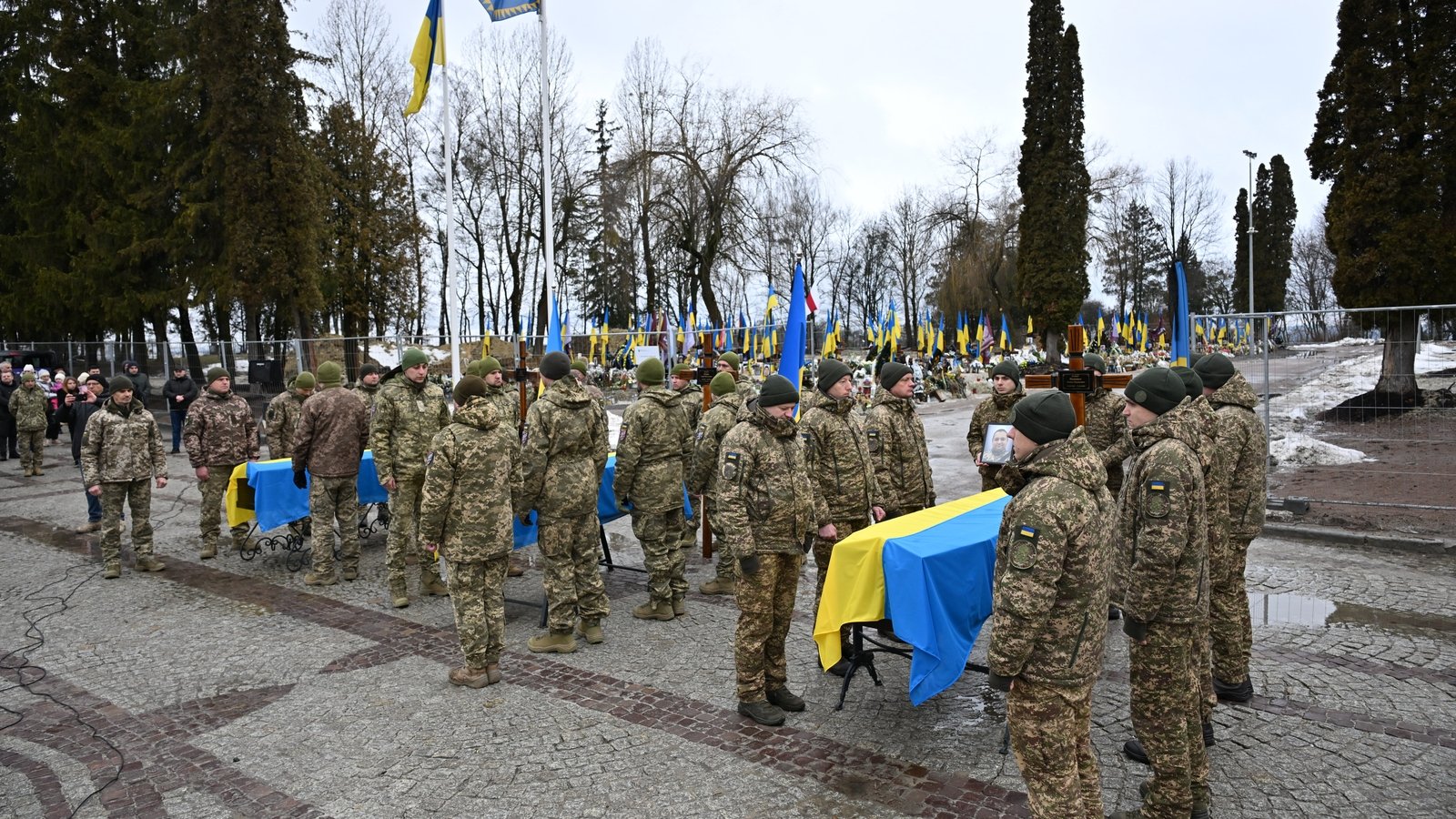
Where Memory Grows: Lviv’s Lychakiv Cemetery and the New Geography of Grief
There is a roadside rhythm to Lviv that softens the shock of the war: trams click and sigh along cobbled streets, café doors open to the smell of freshly roasted beans, and the old city breathes in bell tolls and conversation. Then you turn a corner, climb a low hill, and the ornate gates of Lychakiv Cemetery fold the living world away.
On a gray Sunday last month, the cemetery felt like a ledger of the young. Rows upon rows of wooden crosses — some leaning, some newly painted — mark graves of people born in the 1980s and 1990s, men and women who had plans, loves, jokes. They had been soldiers, volunteers, drone technicians, fathers, sons, daughters. More than a thousand of them who have fallen since the full-scale invasion began are interred here, their names carved into the city’s memory.
A place that has run out of space
“We filled the old military section last December,” Kolya Shevchenko, a city official who oversees the cemetery, told me, tracing a path between headstones. “We had to open a new plot, right here, because the losses have not stopped.”
He speaks without flourish, which makes the facts all the sharper. The wooden crosses that now mark the newest graves were never meant to be permanent. They are immediate, raw — a place-holder until society can make something sturdier of memory.
City authorities say they will replace those makeshift crosses with permanent headstones. Designs have been drafted to reflect the religious diversity of Ukraine’s armed forces: Orthodox, Catholic, Jewish and Muslim markers, each intended to offer a proper shape to remembrance.
One grave, one life: Ostap’s story
At the center of the cemetery’s newest section there is a bench that looks like it has been there forever. A woman sits there every day. Olga Smolynets comes to visit her son Ostap’s grave seven days a week.
“He loved fishing and reading,” Olga says, fingers worrying the edge of a scarf. “Since he was a child he was curious about space. He’d watch documentaries, anything about the stars.”
Before the war, Ostap worked in an internet shop in Lviv. He volunteered after the invasion and was first posted near home to protect the Druzhba oil pipeline, a critical artery. Later he became commander of a drone unit. In September 2024 — a week before his thirty-second birthday — he was killed defending a town in the Donetsk region.
“He wanted to fix things,” Olga says. “To make them better. That was his whole life.”
Her grief is private, but not isolated. Mourners who gathered last Sunday spoke of sons who loved soccer, brothers who were bakers, friends who wrote poetry. They told stories with stubborn tenderness. “We joke about him skipping breakfast,” one woman said, and then her voice broke and she laughed, a small, human sound amid the big machinery of war.
Counting the uncountable
Official tallies can’t fully capture what is happening here. Ukraine’s ministry of defence does not publish current, comprehensive figures on killed and wounded personnel. President Volodymyr Zelensky told France 2 last month that roughly 55,000 Ukrainians had been killed in combat since the beginning of the full-scale invasion — but he also said many remain classified as missing.
On the other side of the front, reporting and verification are even more fragmented. Mediazona, an independent outlet working with the BBC’s Russian service, has verified 200,000 Russian soldiers’ deaths. Western military intelligence estimates, meanwhile, have suggested Russia may have lost as many as 1.2 million soldiers since February 2022. The margins between these figures are wide. The truth sits somewhere between the certainties and the silences — and that is where families live every day.
The toll beyond numbers
What does a city do when the number of dead becomes an infrastructure problem? Lviv is adapting. New plots are being prepared; wooden markers will be exchanged for carved stone. There are plans for multi-faith headstones — and debates over where public money should go when hospitals and schools also need rebuilding.
“We’re trying to honor each person,” Kolya told me. “But honor takes time and resources. The city is tired, but we must do this right.”
A military historian I spoke with, who asked to remain anonymous, reminded me that cemeteries are how nations write themselves into permanence. “When a society buries its dead, it shapes a narrative,” they said. “Those narratives can bind communities together — or they can fracture them, if memory is mishandled.”
Local color and the rituals of mourning
In Lviv, mourning comes with particular gestures. People leave small cups of coffee by headstones, or old paperback novels. Spring-blooming chestnuts shade the avenue, and on warm days the cemetery smells faintly of honey and mowed grass. Priests and volunteers walk the rows, offering blessings in several languages; a rabbi came last month to bless a Jewish gravesite newly filled, and a Muslim cleric offered prayers for another.
“We try to make space for everyone,” a volunteer named Marta told me, arranging a bouquet of wildflowers. “These are not just soldiers. They were brothers, neighbours, teachers.”
What do we do with so much loss?
It is a question that will resonate far beyond Lviv. The cemetery’s wooden crosses are symptomatic: of lives interrupted, of a country making room for the consequences of a geopolitical struggle that has reshaped Europe. For families like Olga’s, the choice between burial and memory is not abstract — it is daily care, a slow pilgrimage from kitchen table to grave.
As you read this, consider the small gestures that hold a society together: the bench where a mother sits, the gardener who trims the grass, the volunteer who keeps a list of names. How do communities sustain compassion when grief is so commonplace? How does a generation of children grow up with so many empty chairs across their tables?
Closing
Lychakiv Cemetery is more than stone and soil. It is a living archive, a place where the quiet work of mourning is done in full view. The city is planning permanent headstones; the designs will reflect faith and identity. But the essential memorial is already there, in the daily rituals that Olga and others perform — in the fishing tales and the space documentaries, in the way a mother calls her son’s name into the afternoon wind.
We can read the numbers and debate strategy and geopolitics. Or we can sit for a moment and imagine that bench in Lviv, and the small, fierce resilience of a community that keeps coming back to mark a life, to tell the story, to say: we remember. What would you carry to a grave to remember someone you loved?