Ravenous Fog, a Cliff Road, and a Bus That Didn’t Make It: A Night in Guatemala’s Highlands
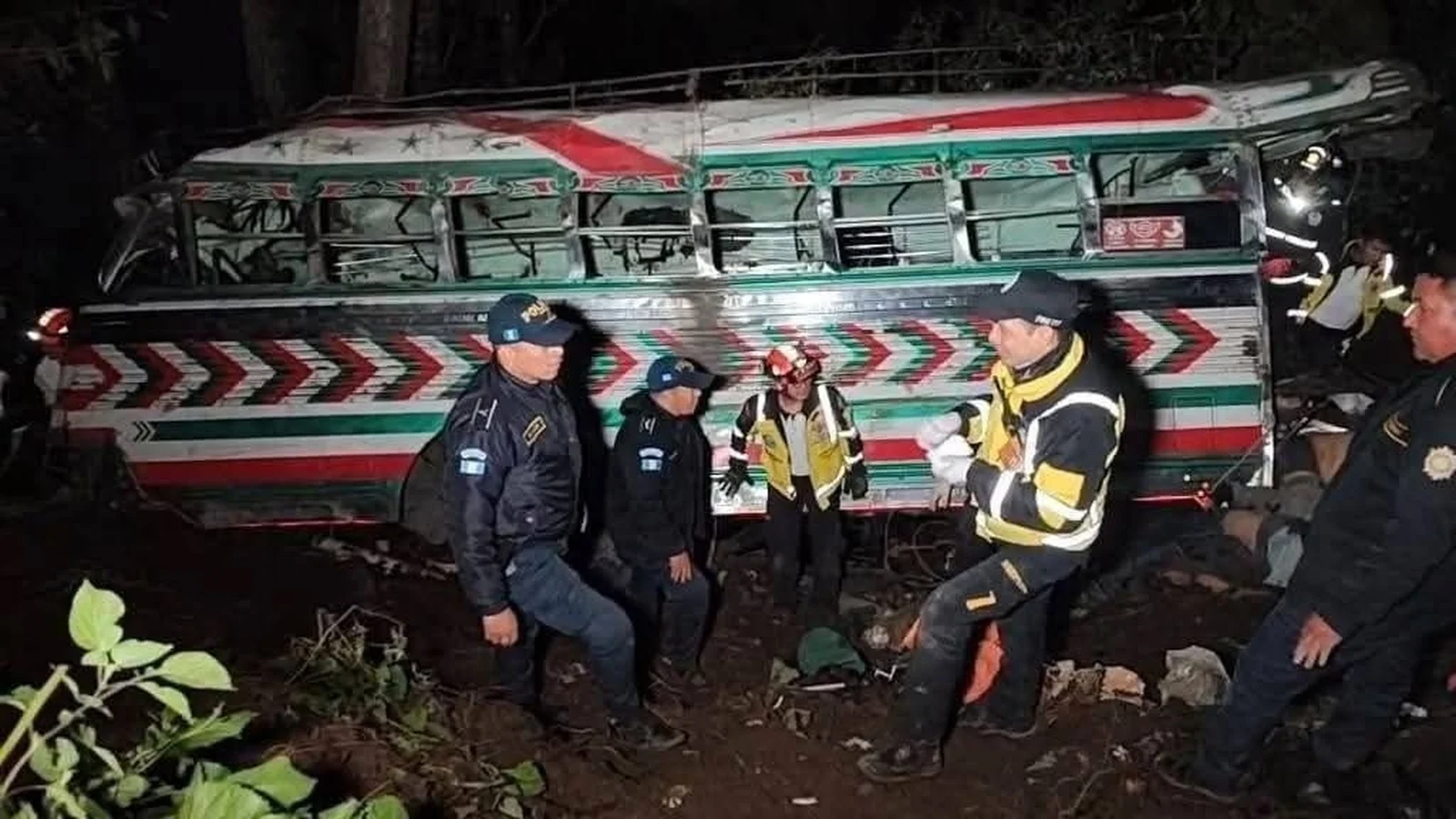
They found the wreckage snuggled in the ribcage of a ravine, half-swallowed by mist and broken glass. A passenger bus that had been threading the Inter-American Highway — the long, vital spine of Central America — came apart at a bend in Sololá, a mountainous department where the road shoulders drop away like old promises.
By the time first responders finished counting, 15 people were dead and 19 more were being rushed to nearby hospitals with injuries ranging from minor to critical. A fire service spokesperson later specified the toll as 11 men, three women and one child. Social media from the scene showed firefighters wedged inside twisted metal and rescuers hauling survivors up a steep, muddy slope as police cordoned off the highway.
What Happened in the Fog
The exact sequence is still under investigation. Local authorities and witnesses describe the ubiquitous early-morning fog that clings to these hills, reducing visibility to little more than a car’s headlights. “This road is beautiful and treacherous,” said Maritza Chuy, who runs a small eatery in a lakeside village near Panajachel. “You can’t see the turn until you are on it.”
Drivers in Sololá speak of microclimates — pockets of cloud that appear without warning — and of a narrow, serpentine highway that was built long before modern safety engineering. “You have to be careful every time you drive here, even if you’ve done it a thousand times,” said a bus driver who asked not to be named. “A second of distraction, or one patch of fog, and it’s over.”
Rescue and the Human Cost
Images released by the fire department showed the bus crumpled against boulders at the bottom of the ravine as firefighters and volunteers worked through the night. The injured were transported to clinics and hospitals in Sololá and neighboring towns. Local health workers, many of whom were also grieving neighbors and relatives, readied operating rooms and crowded hallways.
“We did everything we could for those who came in,” said Dr. Ana López, an ER physician at a regional hospital. “Every injury is a person: a mother, a father, a child. We need more ambulances, better road signs, and a culture of prevention.”
Beyond the Crash: Patterns and Pressures
Road safety in Guatemala is not just a matter of isolated tragedies. It is the product of geography, poverty, and an aging transport network strained by increasing demand. The Inter-American Highway — part of the greater Pan-American route that connects continents — threads through highlands and valleys, carrying commuters, produce, tourists, and freight. Where engineering is thin and enforcement even thinner, accidents occur with painful regularity.
Road traffic injuries are a significant public health challenge across Latin America. In Guatemala, where rural populations rely heavily on public and informal transport, crashes are among the leading causes of emergency admissions. Every year, thousands of people lose their lives or are left with life-changing injuries on roads that a generation ago were designed for far fewer vehicles.
Voices from the Valley
At the market in Santiago Atitlán, a woman named Rosa clutched her woven shawl and spoke of fragile livelihoods. “People travel this road to sell their corn, their textiles, their crafts,” she said. “A bus is not just a bus. It is how we connect to our children’s schools, to doctors, to work.”
A volunteer rescuer, Carlos Martínez, sat down on a rock with soot on his hands. “We don’t want names in the headlines,” he said softly. “We want safer roads. We want warning lights where fog is common and guardrails where the cliff is hungry.”
What Could Make a Difference?
There is no single answer, but a combination of infrastructure investment, public education, and sensible regulation can reduce the toll. Simple interventions — reflective signage, rumble strips, guardrails, weather-activated warning systems — have saved lives elsewhere. Better driver training and limits on nighttime passenger services on risky stretches could also be meaningful.
- Improve fog-warning systems and install reflective road markers in high-risk areas.
- Strengthen enforcement of speed limits and vehicle maintenance checks for passenger transport.
- Invest in emergency medical services and quicker response times in rural areas.
- Promote community-led safety programs, especially in indigenous and rural regions.
Experts note that the cost of proactive measures is almost always smaller than the social and economic toll of frequent accidents. “Prevention is not a luxury,” said María Elena Rivas, a transport safety researcher. “It’s an investment in people’s lives and livelihoods.”
Local Color: Life on the Highlands Road
Sololá’s slopes are vivid with color — traditional woven skirts (cortes) and huipiles patterned with ancestral motifs, small altars at crossroads, and the early-morning stalls selling hot tamales and coffee. On good days, the lake below mirrors the sky and volcanoes loom like sentinels. On bad days, that beauty becomes a hazard: a sudden bank of cloud can turn the road into a silent, dangerous narrowway.
“My father used to say the road has two moods: generous and jealous,” laughed an elderly man in a market stall, though his voice softened when the subject turned to the crash. “There is joy here, and also risk. We must hold both in our hands.”
Looking Outward: Local Tragedies, Global Lessons
This crash is a local sorrow, but it also feeds into global conversations about safe mobility, climate and infrastructure resilience, and equity. Mountainous and rural roads worldwide — from the Andes to the Himalayas — share similar vulnerabilities: dense fog, landslides, narrow shoulders, and long distances to medical care.
What should an international community that values connectivity and safety take from this? Perhaps that progress is not just about paving roads, but about designing them for people; not just about moving goods, but about protecting lives. The bus that fell into the ravine was carrying more than passengers: it was carrying a community’s fragile promise of opportunity.
Questions to Hold as We Remember
As you read this, ask yourself: How do we value the lives of those who use the world’s most dangerous roads? What would you change in your own community if a stretch of highway regularly claimed lives? And — most urgently — what will authorities do now, in the wake of this grief, to keep another bus from slipping off a misty curve?
The names of the dead and injured will enter local memory, woven into family stories and market conversations. For now, Sololá is staying awake, watching the highway and the sky, counting lessons and losses. The fog will lift, but the questions it leaves behind are heavy and clear.