A Shattered Dawn on the Pas‑de‑Calais Line: When a TGV Met a Truck
The sky was the same pale, Breton gray that blankets northern France in early April. But the morning air between Béthune and Lens carried an unfamiliar sound: a long keening of sirens, the metallic cough of emergency lights, and the low, stunned murmur of a town waking to the impossible sight of a high‑speed train with its nose crumpled like a tin can.
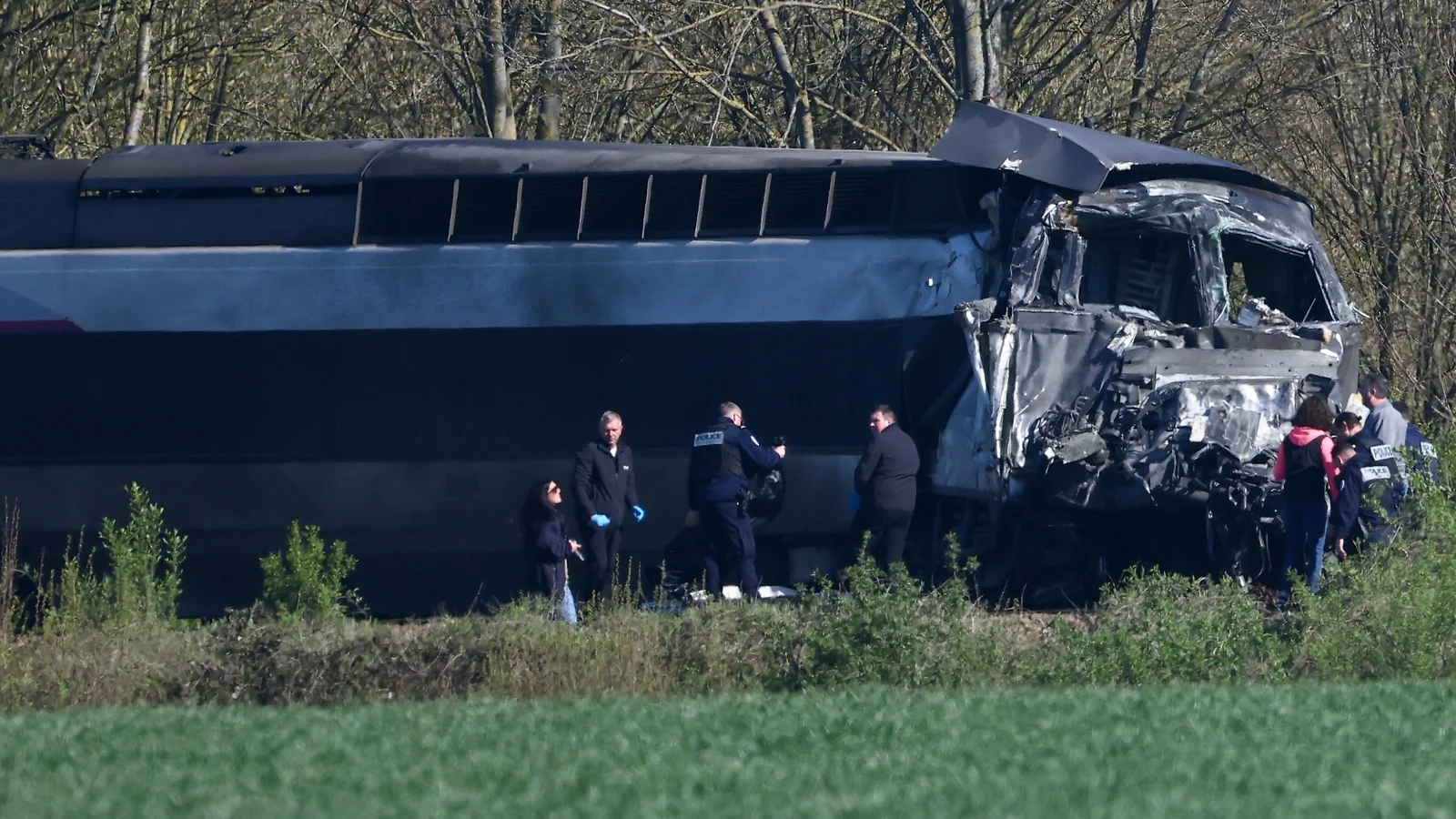
At around 7 a.m., a TGV—France’s pride of speed and engineering—collided with a heavy truck at a level crossing between the two mining towns in Pas‑de‑Calais. Officials later confirmed the driver of the TGV was killed. Two people were critically injured and at least 11 more suffered less severe injuries. Early reports had suggested as many as 27 were hurt before the figures were revised.
The scene
Photographs shared on social media by a Sud‑Rail union representative showed the mangled bow of the train, its aerodynamic silhouette warped and scarred. “The nose is crushed. I’ve never seen anything like it,” a union official told a regional reporter. Police investigators, firefighters and SNCF technicians ringed the wreck as dawn yielded to a cold, clinical daylight.
Traffic was stopped for miles. Commuters, who often rely on the TGV to stitch together long commutes between Lille, Lens and Paris, gathered at closed platforms with coffee cups in hand and the same question in their faces: how did this happen?
“I heard the crash from my bakery,” said Marie Dubois, who has run her boulangerie in Béthune for three decades. “The whole oven shook. We all ran outside. You don’t expect a train like that to… to be like a car accident. It sounds wrong to say.”
Details officials have released
Authorities said the truck was carrying military equipment. A judicial source told reporters the lorry driver was taken into police custody. Transport Minister Philippe Tabarot posted on X that he was heading to the scene “with the head of the SNCF,” and promised a thorough investigation. The SNCF said rail services between Béthune and Lens would remain suspended “at least for today,” with contingency plans being activated for stranded passengers.
So far, investigators have released only fragments: the collision site, the cargo type, the custody of the truck driver. The precise sequence—signals, barriers, speed, and human decisions—remains under scrutiny.
Why this feels so jarring
France’s TGV is not just a train. It is a national symbol. Since commercial service began in 1981, TGVs have reimagined distance in France, turning what was a daylong or overnight journey into a matter of hours. The technology enthralled a generation: the sleek carriages, the smooth vaulting between cities, and a few memorable world records—the V150 test train recorded 574.8 km/h in 2007—have cemented the TGV’s legendary status.
But that reputation for safety and speed can make an accident feel especially surreal. “High‑speed rail has an enviable safety record compared to road travel,” says Dr. Claire Martin, a transport safety expert at the University of Lille. “That’s why when a TGV is damaged it’s a shock—not just because of the scale, but because our mental model of these trains is that they’re invulnerable.”
Crossings, cargo and risk
One of the most pressing questions—already being asked by investigators and citizens alike—is why a heavy military transport was on the crossing at that moment. Level crossings, while less common on dedicated high‑speed lines, still exist on certain lateral and connecting routes. And when large, slow vehicles intersect with rail traffic, the margin for error narrows drastically.
“There are several thousand level crossings across France,” Dr. Martin explained. “Many were built decades ago, before modern traffic volumes. The intersection of road and rail is always a point of risk, and coordination between road planners, military logistics, and rail operations has to be meticulous.”
Fire captain Julien Moreau, who helped secure the site, focused not on blame but on response. “Our first priority was the people,” he said. “We worked to stabilize the injured, to search, to make sure the area was safe. The train’s front end took a lot of the force—that likely saved lives. But we’re also seeing the consequences of one catastrophic moment.”
People in a paused region
The immediate cultural aftershocks were small and telling. At a café near Lens station, commuters stared at a muted television as announcements ticked across the screen. A nurse named Amina, who uses the TGV weekly for hospital shifts in Lille, said she felt the country’s reliance on fast travel in her bones.
“If the trains stop, life doesn’t,” she said, stirring her coffee slowly. “We will find cars, we will find buses. But it is like losing a limb. For some people, it’s more than convenience—it’s their livelihood.”
Local shopkeepers spoke of a town that still carries the memory of the coal pits, of community resilience passed down through generations. “Our towns are built on movement—miners, traders, commuters,” said Ahmed Belkacem, a tram driver from Lens. “When transport stops, everything slows. You feel the halt in the shops, in the schools.”
Questions for the future
As investigators comb the wreckage—and as officials promise accountability—the incident raises larger questions about infrastructure and policy. How should military convoys be routed? Are level crossings on secondary lines being managed to modern standards? How do we reconcile the pressing need to move heavy equipment with the safety of passenger services?
Beyond immediate causes, this accident nudges at global themes: the challenge of maintaining aging infrastructure in a time of constrained budgets; the necessity of integrating multiple modes of transport safely; and the human cost when systems designed for efficiency confront real‑world unpredictabilities.
What comes next
For now, the investigation will be technical and painstaking. For families and commuters, it will be emotional and disruptive. For a nation that has long prided itself on the speed and reliability of its rails, it will be a moment of hard questions.
“We will learn from this,” Minister Tabarot wrote. “We will understand what happened and we will act so that those affected receive support.”
But beyond official lines, a quieter reckoning will take place in living rooms and cafés: about how we move, what we value, and who pays the price when the machines we trust falter. As the people of Béthune and Lens begin to tally the day’s losses—human, logistical, and psychological—their resilience will be measured not only in repairs to metal, but in the small daily acts of putting life back together.
What do we ask of our public infrastructure? And how much risk are we willing to accept in the name of speed? These are not abstract policy questions: they are the ones being answered right now, in the slow, careful work of investigations and in the quieter conversations over morning coffee in towns along the Pas‑de‑Calais line.
We will watch—and listen—as the facts come into focus. For the people directly affected, a dawn that began with routine commutes has become a lasting, unshakable memory. For the rest of us, it is a reminder that even the most advanced machines are part of human systems, and that those systems demand both vigilance and compassion.