In Geneva’s cold light, a narrow window opens — but time is not on anyone’s side
Geneva woke up this week to grey skies and a string of diplomatic footsteps that felt, at once, hopeful and hurried. In a quiet room inside a neutral hotel, envoys from Tehran and Washington — shepherded by Oman and watched closely by the International Atomic Energy Agency — sat down for talks that some in the corridor called the most consequential pause since last summer’s flare-up.
“We made progress, but there is still work to be done, and the problem is that we don’t have much time,” Rafael Grossi, director general of the IAEA, told French television. The tone of his voice carried the precise mix of relief and anxiety you hear from someone who knows how close a fragile accord can come to slipping away.
What the talks actually mean
At first glance, Geneva looks like just another diplomatic waypoint — glass towers, shuttle buses and translators shuttling between doorways. But these exchanges are threaded into a larger, far-reaching tapestry: a nuclear standoff, a contested spiral of strikes and counter-strikes, and an uneasy balance in a volatile region. The immediate subject was narrow and technical — verification, access for inspectors, and concrete steps to limit Iran’s nuclear activities — but the stakes are existential for many involved.
IAEA inspections have been strained. Tehran has, according to officials at the agency, suspended some cooperation and at times blocked inspectors from reaching sites damaged during a 12-day conflict last June. Those sites, struck in the wake of Israeli and US operations, are now part of a bitter tug-of-war over evidence, accountability and credibility.
Behind the diplomats’ clipped memorandum language are real, practical hurdles: how to restore inspector access to sensitive locations, how to write guarantees that are verifiable, and what limits — if any — Tehran would accept on its uranium enrichment. These are not questions you resolve with slogans; they require forensic detail, technical timelines and a willingness to accept mutual face-saving measures.
A fragile dialogue, not yet a deal
“We are starting to talk about concrete things, about what we have to do,” Grossi said. If that sounds like small progress, it is — but sometimes small steps are the only route out of a precipice.
One western diplomat who asked not to be named told me, “There is a real willingness on both sides to avoid catastrophe. But willingness doesn’t erase complexity. This is not a negotiation you can wrap up over coffee.” A Tehran-based analyst agreed: “Negotiations that touch on national pride and security are like tightrope walking above a crowd that wants you to fall for its own reasons,” she said.
On the ground: voices from Tehran, Geneva and beyond
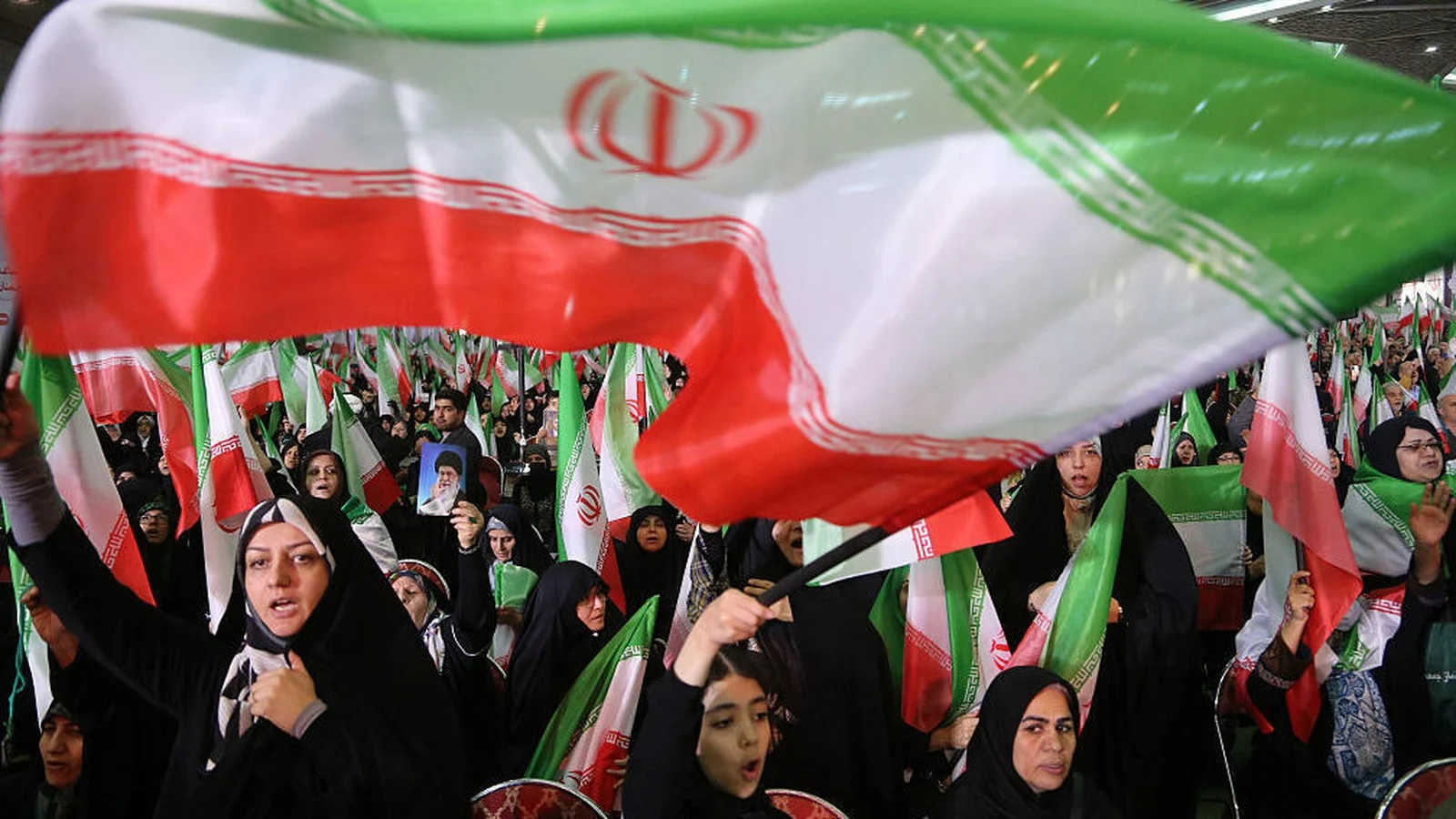
In Tehran, attitudes are as varied as the city’s neighborhoods. In the bazaars where saffron and pistachios billow in sacks, traders I spoke with were cautious. “We want peace,” said Reza, a carpet merchant near the Grand Bazaar. “We do not want war. But we also want respect. Any deal must not feel like surrender.”
Outside the foreign ministry, a young activist who has been involved in recent anti-government protests offered a different vantage. “We are negotiating with diplomats while people are still being silenced at home,” she told me. “A deal that secures a government’s power without addressing human rights will be hollow for many of us.”
In Geneva, Omani mediators — who have quietly carved a reputation as deft brokers in regional disputes — moved between rooms with a singular aim: keep the conversation alive. “Oman wants to facilitate, not dictate,” said an Omani official. “Our role is to create space where trust can be rebuilt.”
At the agency headquarters, inspectors and scientists were less rhetorical and more pragmatic. “Verification is about paperwork, seals, remote sensors and inspector access — not grand speeches,” one IAEA technician told me. “If we can go back in and we can account for what’s there and what is not, the worst fears begin to recede.”
Numbers that matter — and why they matter
To understand what hangs in the balance, a few technical facts help. Over recent years, Iran’s stockpile of enriched uranium has grown beyond the limits set by the 2015 nuclear accord, and Tehran has enriched to higher levels — including up to roughly 60% purity at times — a threshold much closer to weapons-grade than the previous 3.67% cap. Those moves have been documented repeatedly by the IAEA and are at the heart of why the international community watches Tehran so closely.
Meanwhile, military posturing has not paused. Washington has warned Tehran that it’s “wise” to reach an agreement; other officials have publicly suggested that all options remain on the table. U.S. deployments to the region have been stepped up in recent months, a shadow that adds urgency to a diplomatic timetable said to be moving toward mid-March for increased force posture.
Why this moment matters globally
Ask yourself: why should a farmer in Kenya, a teacher in Madrid, or a shopkeeper in Jakarta care about a diplomatic back-and-forth in Geneva? Because the ripple effects of escalation are global. An open conflict in the Gulf could spike energy prices, disrupt shipping through the Strait of Hormuz — through which about 20% of the world’s seaborne oil passes — and send shockwaves through fragile political systems everywhere.
More than that, the talks are a test of whether multilateral institutions and quiet diplomacy can still function in an era dominated by threats, social media spectacle and domestic political pressure. If an agreement is possible, it could reaffirm the utility of patient, detail-oriented diplomacy. If it fails, it will expose how quickly dangerous confrontations can reassert themselves.
What to watch for next
The immediate horizon is procedural but consequential. Iran is expected to submit, or at least outline, a written proposal that would sketch out how it envisions avoiding a wider standoff. Washington’s internal meetings are on a tight schedule: national security advisers reportedly convened to prepare for possible scenarios, and officials have indicated that some force deployments would be in place by mid-March.
Watch also for the domestic politics that will shape any outcome. Leaders on both sides face constituencies that reward toughness. Diplomatic flexibility can be painted as weakness. Yet, paradoxically, it is often the recognition of mutual limits — what neither side can afford — that makes compromise feasible.
Closing thoughts: a choice between urgency and patience
There are moments in history where the decision to continue talking is itself the most consequential act. Geneva’s rooms are not empty of history; they are full of it. The arc of these negotiations will be written in footnotes and in the memory of those who felt the consequences on their streets.
So what do you want to hope for? A measured accord that restores inspectors and stalls an arms race, or a confrontation that redraws maps in blood? Diplomacy asks us — and the actors involved — to choose patience over panic, detail over drama, and verification over rhetoric.
For now, the chat has become a conversation. Whether it becomes a binding agreement remains unknown. But in a world that too often mistakes movement for progress, that first cautious opening is worth watching closely.