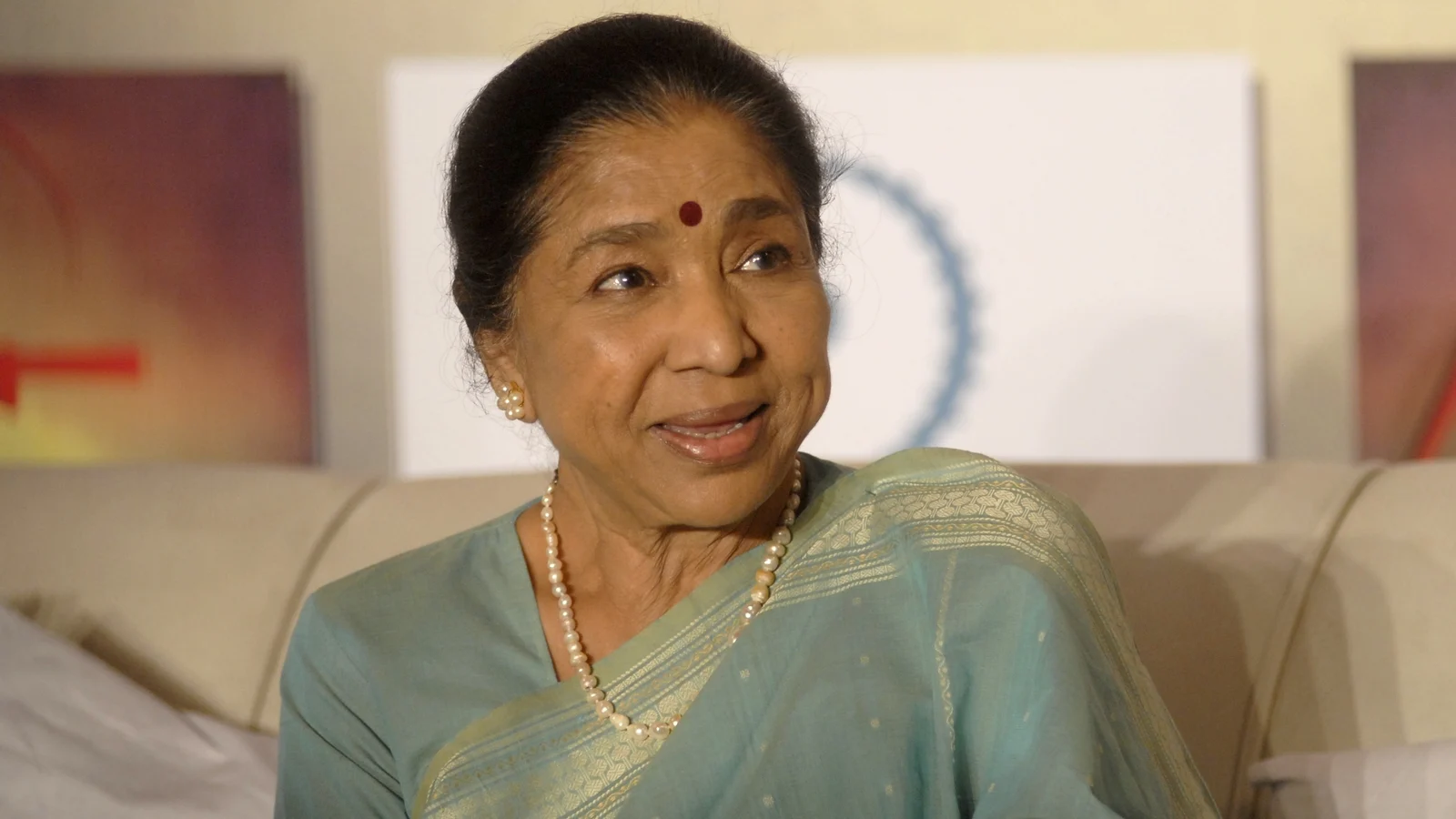
Asha Bhosle: The Last Note of a Once-in-a-Lifetime Voice
When the city of Mumbai woke to the news, a song that had played in a million homes seemed to pause mid-phrase. The voice that made lonely trains sound cinematic and everyday kitchens bloom with melody had dimmed. Legendary playback singer Asha Bhosle—whose timbre threaded through Indian film music for seven decades—has died in Mumbai at the age of 92, her family announced.
Her son, Anand Bhosle, spoke quietly to waiting reporters outside Breach Candy Hospital: “My mother passed away today. Her last rites will be held tomorrow at Shivaji Park in Mumbai.” It was the kind of simple, final sentence that leaves a stadium of memories echoing in its wake.
More than a singer: a living archive of sound
To call Asha Bhosle prolific is to understate the obvious. Across a career that began in the shadow of hardship and the glow of radio’s golden age, she recorded more than 12,000 songs in multiple Indian languages—work that reads like an audio atlas of modern India. Pop, ghazal, qawwali, bhajan, cabaret—you name the style, and she had likely sung it, folded it into a film, and sent it into millions of living rooms.
“Her range was her rebellion,” says Dr. Sunita Rao, a musicologist in Pune who has spent decades studying Indian film music. “While many singers found a comfort zone, Asha delighted in leaving it. She could whisper romance one moment and deliver satirical fire the next.”
That restless curiosity meant collaborators were as diverse as her repertoire. She won India’s highest cinematic honor, the Dadasaheb Phalke Award, in 2001 and earned two Grammy nominations later in life. She also crossed borders: in recent years she lent her voice to international projects and lent her name to restaurants—Asha’s—in cities from Dubai to London, blending the flavors she loved with the music that made her famous.
Born into song, tempered by life
Born on 8 September 1933 into a musical family, Asha began singing as a child alongside her elder sister, Lata Mangeshkar, who herself is remembered as India’s “nightingale.” But comparison was never Asha’s destiny—if anything, it sparked her independence. Her early life was marked by economic precarity and a turbulent marriage at the age of 16, episodes that would harden a voice both resilient and playful.
“My mother sang to survive, and she sang to celebrate,” says a long-time neighbour from the Bandra neighborhood, wiping a hand across his eyes. “She would sing while cooking. She taught us that music is not just for big nights; it is for small, stubborn joys.”
The soundtracks of lives
Watch an old Hindi film and you will hear Asha: the breathy flirtations, the sly comic timing, the hushed confessions. Her songs didn’t merely externalize a character’s feelings—they became private anthems for listeners. Teenagers made mixtapes with her melodies; train compartments swelled with her refrains; weddings sprinkled her classics through their playlists.
“I grew up with her songs as the background to everything important,” says Meera Pillai, 48, a software engineer in Chennai. “When I hear her voice, I can smell my grandmother’s perfume and see my father ironing shirts for Sunday mass. That’s the power of playback singing in India—it becomes part of the architecture of memory.”
What playback singing means—and why she mattered
To step back is to see a larger cultural mechanism. Playback singers are rarely onscreen stars; they are the invisible singers who give actors emotional weight. In India’s film ecosystem—one of the largest in the world—these voices shape popular imagination. Asha excelled in the craft of inhabiting characters through song, sometimes eclipsing the actors’ own performances with a single well-placed trill.
Consider these markers of her cultural footprint:
-
Recorded output: Over 12,000 songs spanning film, non-film and regional languages.
-
Awards: Recipient of the Dadasaheb Phalke Award (2001) and multiple national honors.
-
International collaborations: Worked with global artists and featured on projects that reached western audiences, expanding the vocabulary of Indian pop culture.
Voices from the street to the studio
Outside Shivaji Park the morning after the announcement, small altars of marigolds had already appeared. A street vendor, who sells tea and soft buns near the cremation ground, pressed a hand to his chest and said, “She sang my wedding. She sang my divorce. She sang my son’s first day of school. She was the soundtrack to my entire life. We owe her so much.”
In a recording studio in suburban Mumbai, a young composer—who grew up listening to Asha on his parents’ cassette player—explained why her style endures. “She could make a lyric feel like gossip or like prayer,” he said. “Today’s artists sample beats; Asha was sampled by memory. Her phrasing can’t be replicated because it was her life.”
Loss felt across continents
Expressions of grief and tribute flowed quickly beyond India’s borders. Prime Minister Narendra Modi posted on X that he was “deeply saddened” and noted her extraordinary musical journey that “enriched our cultural heritage and touched countless hearts across the world.” Fans in London, Dubai, New York and Singapore lit candles in community halls where her songs had once bridged distances between immigrants and the homeland.
International music platforms reported spikes in streams of her classic tracks within hours of the announcement; an uncanny testament to how a single artist can bind generations and geographies.
Why this matters now
Asha Bhosle’s passing invites reflection on what we lose when icons fade. It’s not just an archive of recordings—that is a gift to historians—but a living way of teaching new artists about risk, range and reinvention. In an era when algorithmic playlists often favor predictability, Asha’s career is a reminder that curiosity is a renewable resource.
What happens to cultural memory when the people who carry it are gone? Who will teach young singers to bend a vowel so an entire line becomes a confession? These are not rhetorical questions. They confront the institutions—radio, film, music schools—and families that choose what gets passed on.
Final notes
Her death, reported to be after admission for extreme exhaustion and a chest infection, closes a chapter that began in the radio rooms of pre-independence India and stretched into the digital playlists of the 21st century. As the city prepares for her final rites at Shivaji Park, the air will carry not just ritual smoke but the unmistakable echo of her voice—playful, daring, intimate.
So sit for a moment and press play on a playlist that includes Asha Bhosle. Listen closely. Notice the small things: a laugh tucked into a line, the way a syllable stays on the tongue like a secret. Grief for icons is always mixed with gratitude. Today, as Mumbai—and the world—remembers, ask yourself: which voices in your life have become your witness? Who will you keep singing?