Silivri’s hush: a mayor, a mock cell and a nation holding its breath
The morning air outside the Silivri courthouse tasted of sea salt and strong tea. Small flags fluttered in a thin wind that carried the sound of distant traffic and the guarded cadence of police radios. Supporters had set up a makeshift encampment beside a painted wooden replica of a jail cell — a theatrical echo of the real thing, a reminder that one of Turkey’s most visible politicians had been spending his days behind bars.
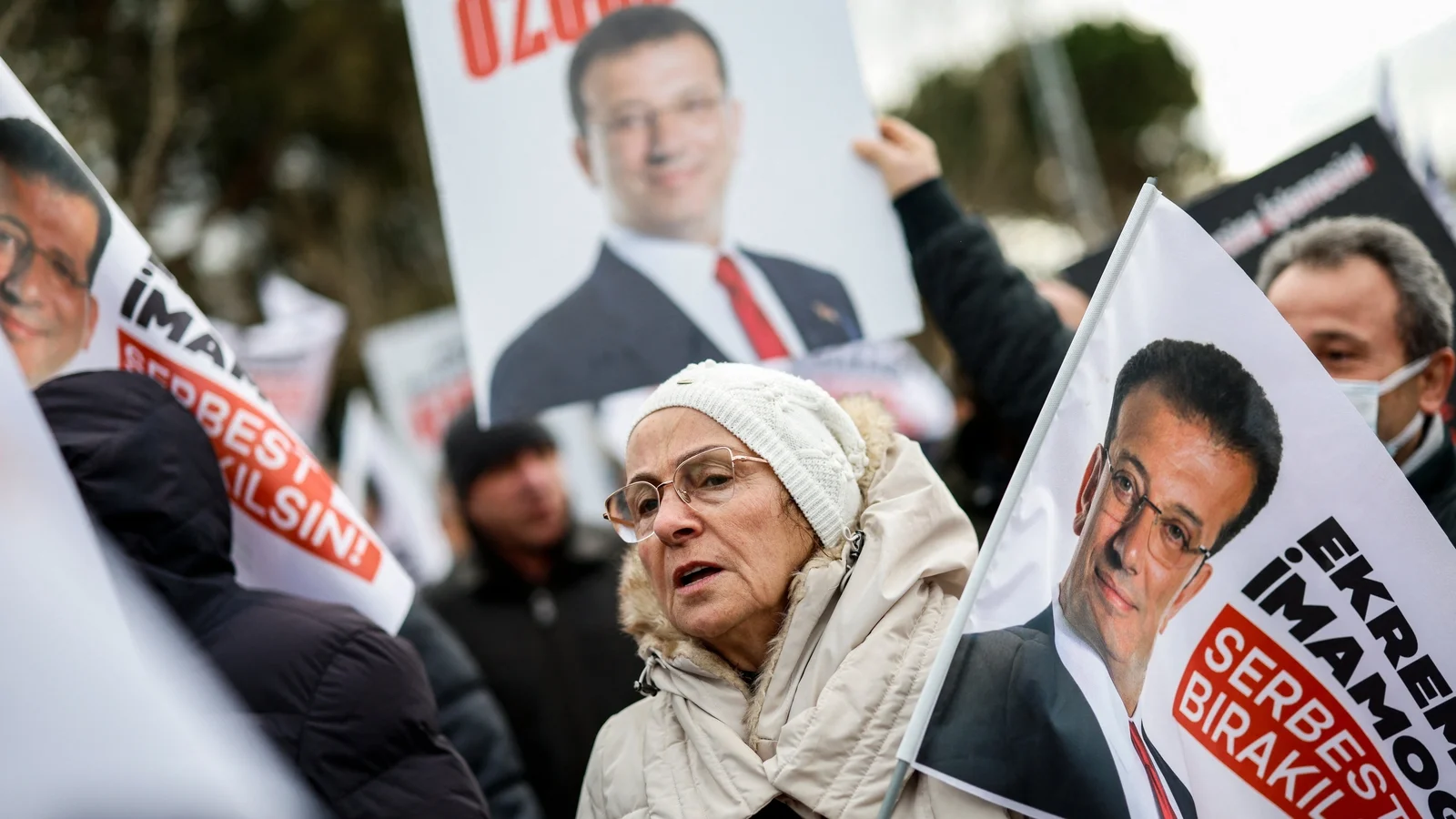
When Ekrem İmamoğlu, once the charismatic mayor of Istanbul, arrived for the opening of what prosecutors call a sweeping corruption trial, cheers rose from the gallery. “We are proud of you!” some shouted. Others waved photographs: the mayor’s face in the centre, surrounded by images of 15 other municipal leaders from his Republican People’s Party (CHP) who are also in detention. The scene felt less like a court appearance and more like a political pilgrimage.
Fifteen minutes of theatre, then silence
What was supposed to be a landmark hearing dissolved into chaos in under a quarter of an hour. The judge announced procedural details and then said İmamoğlu would testify near the end — a move that drew open derision. “Let me speak now,” the mayor protested, his voice steady but urgent. The judge refused. “Shame, shame,” the crowd chanted back.
The session ended abruptly moments later when a defence lawyer complained that the witness list — and the order of witnesses — had already appeared in a pro-government newspaper but had not been turned over to the defence. The judge cleared the courtroom and suspended the hearing until the afternoon. For many in the packed gallery, it was confirmation of what they had suspected: this was not a routine judicial matter but a high-stakes political showdown.
The charges, the numbers, the weight of a 4,000‑page indictment
Prosecutors accuse İmamoğlu of 142 offences — from graft and embezzlement to spying — and want a sentence that, on paper, totals 2,430 years. The indictment runs nearly 4,000 pages and names more than 400 defendants, painting a portrait of what prosecutors describe as a sprawling criminal network driven by an “octopus-like” web of influence.
Those statistics are jaw-dropping. But beyond the numbers is a human story: a popular politician who rode to prominence after upset victories in Istanbul now finds himself fighting for liberty and political survival. Arrested on 19 March last year the day he was officially named the presidential candidate for the CHP, İmamoğlu has not been free since.
Quick facts
- Charges: 142 alleged offences
- Indictment length: nearly 4,000 pages
- Defendants named: more than 400 people
- Prison term sought: 2,430 years
- Prohibited protests: within 1km of the courthouse
Voices from the court square
“This trial is not about corruption,” said CHP leader Özgür Özel as he stood in the press scrum outside Silivri. “It is a conspiracy designed to remove a political rival.” His words were sharp, the tone of a man accustomed to political combat.
Among the supporters camped near the mock cell, Fatma, a schoolteacher in her 40s, described the atmosphere: “We brought our children because they should see what is happening. We cannot let fear be the last syllable in our country’s story.”
An Amnesty International representative issued a blistering statement. “This prosecution bears the hallmarks of an attempt to intimidate political opponents of the government and silence wider dissent in the country,” she said, calling it part of a pattern of “weaponised” justice. Human Rights Watch echoed the concern, arguing that due process is being used as a tool of political exclusion.
On the other side, a government-aligned legal analyst told a Turkish broadcaster that the judiciary was simply doing its job. “No one is above the law,” he said. “All allegations must be investigated, and fairness requires that accusations be tried in court.”
Local color: tea, chants and the ache of Istanbul
Istanbul itself feels like a city stretched between worlds. Ferry horns, the clack of tram lines, and tea-sipping men on benches continue as they always have. The Bosphorus reflects a sky that seems indifferent to politics. Yet the trial exposed the split that pulses through neighbourhood cafés and office elevators: friends debating whether İmamoğlu is a saviour or a showman, colleagues whispering about the future of their jobs, families wondering whether a presidential election could redraw the map of power.
There is also ritual in the resistance. People brought simit — sesame-seeded rings of bread sold from carts — and offered them out. Elderly women tucked small Turkish flags into the folds of their scarves. A band of young activists sang protest songs, their voices raw but hopeful. These are the textures of civic life that statistics cannot capture.
What’s at stake beyond one man
Why do these court proceedings feel like more than a domestic legal dispute? Because İmamoğlu is widely viewed as one of the few politicians who could challenge President Recep Tayyip Erdoğan in a national election expected in the next two years. His arrest the day he was named the CHP’s presidential candidate sent shockwaves through opposition circles and raised urgent questions about political fairness.
Analysts point to two legal obstacles for İmamoğlu’s potential candidacy. First, the criminal case itself, should it result in convictions, could disqualify him. Second, there is a separate lawsuit claiming his university degree is invalid — a constitutional requirement for presidential candidates. Even the possibility of being barred has forced the opposition to prepare contingency plans; many expect Özgür Özel to step into the candidacy if İmamoğlu cannot run.
Patterns, context and a global question
International observers see this trial in a wider pattern: around the world, legal systems are increasingly being used as levers in political contests. The Turkish case is not unique in that sense, but its scale — hundreds of defendants, thousands of pages of indictment, years-long prison terms sought — makes it a dramatic example.
So ask yourself: in an era where courts are meant to protect rights and hold power to account, what happens when the courts become battlegrounds themselves? How do voters trust the rule of law when justice appears selective?
What might come next
The trial resumed later that afternoon after the earlier suspension. But suspensions, delays, and procedural controversies are unlikely to calm the larger storm. With protests restricted within a 1km radius of the courthouse, supporters found other ways to make their presence known. At the encampment, a man in his 60s held a sign that read simply: “We will vote.”
For Turkey and the millions who watch it with both hope and apprehension, the outcome will carry weight far beyond Silivri. It will test the resilience of civic institutions, the stamina of political movements, and the capacity of a society to resolve fierce disagreements without eroding the foundations of democracy.
Whatever one’s politics, the image endures: a crowded gallery, a mayor waiting to speak, a judge’s gavel hanging in suspension, and a nation asking itself what justice, and leadership, should look like in a turbulent time.