When Warnings Were Whispered and Went Unheard: A Community Trying to Make Sense
On a summer morning in Southport, the smell of sea salt and fried dough can still hang in the air. Families stroll the promenade; children tumble on the playground. It is a place that sells itself as safe, small-town comfortable, a coastal town with an old-fashioned pier and a modern sting of coffee shops. It was, until a routine Saturday workshop turned into the kind of tragedy that bends a town’s spine.
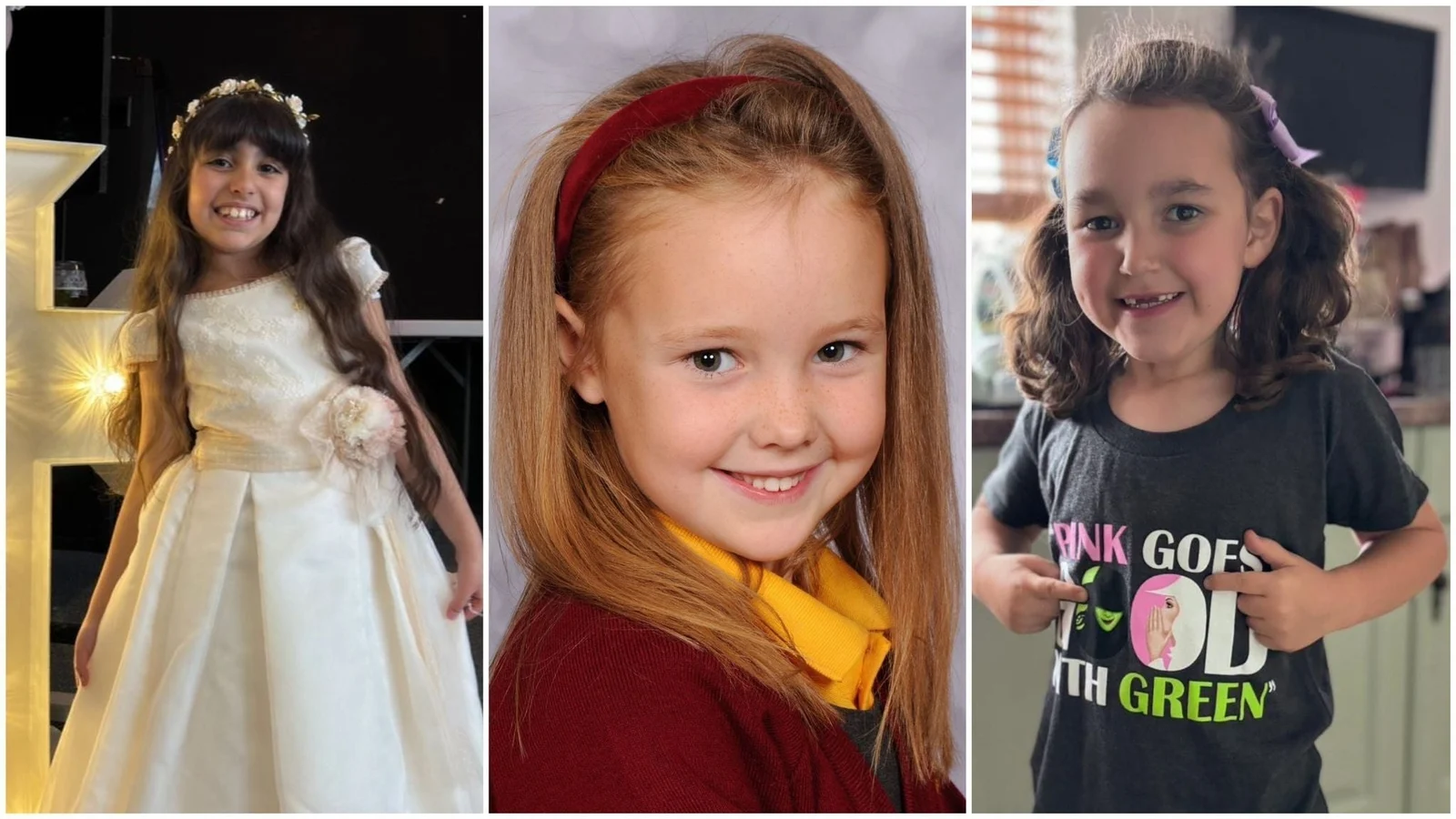
On 29 July 2024, three little girls — nine-year-old Alice da Silva Aguiar, six-year-old Bebe King and seven-year-old Elsie Dot Stancombe — were killed during a Taylor Swift–themed dance class at The Hart Space, a community arts venue. The attacker, then 17-year-old Axel Rudakubana, also wounded several other children and adults. He has since been sentenced to at least 52 years in prison.
That bare chronology, however, misses the terrible arc leading up to that day. A public inquiry has now concluded what many in the town had felt in their bones: this was not a spontaneous act sprung from nowhere. It was the end point of a series of missed signals, muddled responsibilities and failures by individuals and institutions to act decisively.
“He’d shown the danger before”
Adrian Fulford, who chaired the Southport inquiry, described an unrelenting and avoidable pattern. He points to an episode in 2019, when a teenage Rudakubana attacked a pupil at his former school in Formby with a kitchen knife and a hockey stick. That incident led to a referral order — a community sentence — but according to the inquiry, it should have been the watershed moment for everyone involved.
“When someone lights a flare this bright, you don’t put it in a drawer,” said Dr. Nina Patel, a forensic psychologist who reviewed the inquiry documents. “There were concrete indicators of escalating risk: weapons, violent online obsessions and a history of troubling behaviour. These should have triggered a sustained, joined-up response.”
But they didn’t. Between 2019 and 2024, Rudakubana was referred to the anti-terror Prevent programme on three occasions. Each referral was closed. Agencies passed responsibility back and forth in what the report likens to a “merry-go-round” of assessments and hand-offs — until it was too late.
Parents, professionals and the gap between them
The inquiry was unambiguous about the role of parenting. The teenager’s parents, Alphonse Rudakubana and Laetitia Muzayire, who moved to the UK from Rwanda, were described as having created “significant obstructions” to professional engagement, failing to set boundaries and not reporting escalating risk. In a remote testimony, the mother said, “There are many things that Alphonse and I wish we had done differently… For our failure, we are profoundly sorry.”
Local residents expressed a mixture of sorrow and frustration. “We all try to help our kids, but it’s never easy,” said Denise Carter, who runs a nursery near The Hart Space. “Sometimes families need support. Sometimes they need pressure. It felt like neither happened properly here.”
Yet responsibility cannot be placed on families alone. The inquiry found a “fundamental failure” at an organisational level. Schools, social services, mental health teams and counter-extremism programmes often operated in silos. When one agency closed a file, the others assumed the issue was being managed. The result was a boy whose dangerous trajectory went uninterrupted.
Online poison, offline consequences
Perhaps the most chilling detail to emerge from the inquiry was the extent of Rudakubana’s online life. Tablets seized after the attack contained downloads ranging from an Al-Qaeda training manual and histories of Nazi Germany to documents on conflicts in Rwanda, Sri Lanka, Somalia and South Sudan. Police also found purchases of machetes and ingredients for ricin — a lethal poison.
“We are increasingly seeing radicalisation and violent fantasy seeded and nurtured online,” said Professor Michael Grant, an expert in digital extremism. “Young people who are isolated or distressed can slide into echo chambers that normalise violence. The platforms are global, borderless. Our responses remain painfully local and reactive.”
The inquiry recommended that phase two examine whether authorities should have the ability to monitor or restrict a child’s internet access when that child poses a clear risk to others — a fraught suggestion that raises civil liberties questions even as it responds to a stark reality.
At the crossroads of autism, vulnerability and accountability
Rudakubana had a diagnosis of autism spectrum disorder. The inquiry found that, rather than being a lens that sharpened understanding and response, the diagnosis was sometimes used as an excuse to downplay his behaviour. Agencies “repeatedly tended” to attribute his actions to autism, thereby reducing the perceived need for intervention.
“Autism can be accompanied by difficulties with impulse control, understanding social cues, or sensory overload,” said Dr. Sara Mbatha, a child psychiatrist. “But it is wrong and dangerous to allow such a diagnosis to become a blank cheque. We need nuanced assessments that consider neurodiversity while still protecting the public.”
What the report proposes — and what it asks us to reckon with
The inquiry’s two-volume report — 763 pages and 67 recommendations — points to reform. One central idea is creating a single agency or structure to oversee children deemed to be at high risk of serious harm. The goal: no more referrals that evaporate into limbo.
Other recommendations include improved multi-agency communication, earlier and sustained interventions, better training on online radicalisation and a push for families to be actively engaged rather than sidelined. They also press for a national conversation on how to balance children’s rights with public safety when internet access and toxicity are involved.
- Recommendation highlights: establish a single oversight agency for high-risk children
- Strengthen monitoring of online activity for those assessed as high-risk
- Improve cross-agency accountability and information sharing
These are practical steps. But they are also moral questions. When should society override a parent’s wishes? When should privacy give way to protection? Who decides what level of intervention is justified?
Beyond Southport: a mirror for broader trends
Southport’s pain is local, but the reflections are national and global. England and Wales recorded tens of thousands of offences involving knives and sharp instruments in recent years, underscoring a wider knife crime problem. Meanwhile, experts warn that youth mental health pressures, the ease of access to violent content online and fragmented public services create a combustible mix.
“This wasn’t just one boy’s story,” said community leader Jamal Roberts. “It’s the story of when systems let the most vulnerable float between them. We have to stitch those systems together — not for reports, not for headlines, but for the kids in our communities.”
What can readers do — and what should we ask of our leaders?
As you close this piece, ask yourself: how would we act if the warnings were about our child, our neighbour, our school? What structures would we demand? Whose job is it to keep children safe when families falter and agencies fumble?
There are no easy answers. But the inquiry’s stark conclusion — that lives might have been saved with different choices — is a clarion call. It asks for better systems, clearer lines of responsibility, and a willingness to face uncomfortable trade-offs between liberty and safety. It asks, too, for a kinder, more resourceful society that supports struggling families before they hit crisis.
In Southport, there will be memorials and small acts of remembrance. There will also be a pressing test: will the town, and the institutions that failed it, turn grief into genuine change? Or will life return to the promenade’s gentle rhythms while the systemic failures slip back into the background, waiting to be discovered by the next tragedy?
We owe the names of Alice, Bebe and Elsie more than sorrow. We owe them a reckoning — and a better future for the children still here to dance at community halls and dream under a coastal sky.