In a Mountain School Turned Shelter, Life Waits — and So Do Memories of Home
The building in Aintoura looks like a faded postcard of another Lebanon: pale concrete, shuttered windows, the kind of long, low classrooms that once smelled of chalk dust and boiled rice. Now it smells of diesel and stew, the warm, acrid tang of makeshift cooking on hotplates, and the faint, persistent perfume of people trying to make a life inside a place that never meant to be a life.
On a rainy morning, Omar Toni Azar walks barefoot through a corridor where the old blackboard still hangs crooked on the wall. He guides a tray of tea past a cluster of children who play with a battered football. He speaks softly, with the kind of careful patience that comes from running a home for strangers and for neighbors at once.
A family-run refuge that never left the war
Omar and his parents opened this shelter in 2006, when missiles once again crossed the border between Israel and Lebanon. In the years since, the concrete school has been called a shelter, a makeshift hospital, a storage depot, and now, an overcrowded refuge for families who have fled homes scattered along the south and the hills.
“Right now there are about 160 people living here,” Omar told me as he handed a cup of tea to an elderly woman. “Some rooms have two families. Some rooms have four. There are two rooms where six, seven families share one space. Imagine thirty people sleeping where four beds used to be. It is heavy.”
He shrugged, as if shrugging could translate the weight of it into something manageable. “But we are family. We feed them. We give them room,” he said.
Daily rhythms in a place between home and nowhere
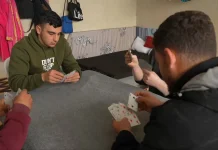
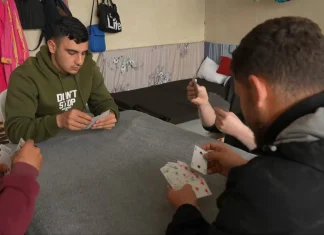
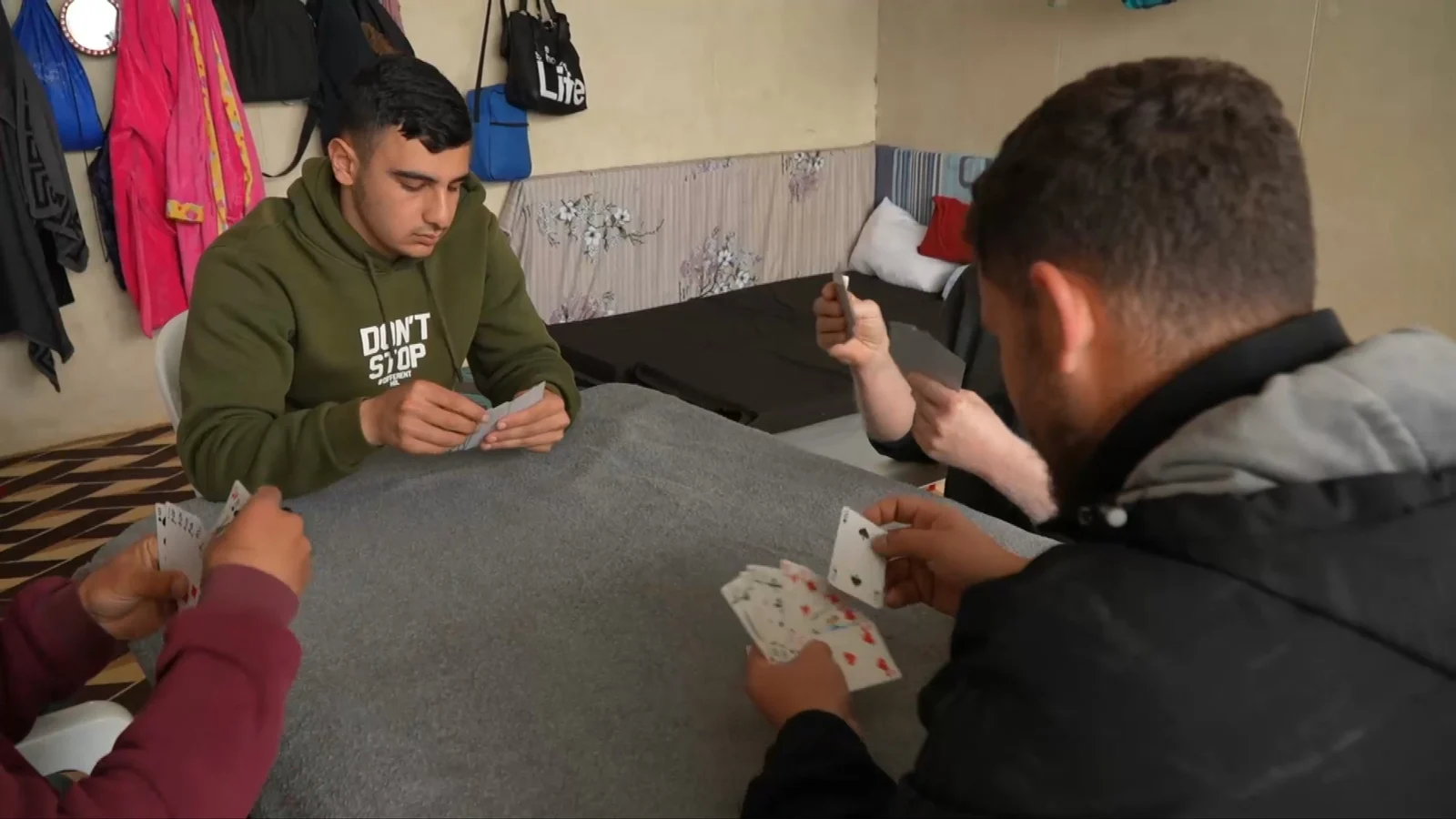
Inside, life knots itself into small rituals. Men cluster at a battered table and play cards, the slap of plastic and paper a tiny rebellion against headlines and horror. Children braid each other’s hair, whispering secrets in Lebanese Arabic. Someone boils chickpeas on a stove that was never meant for the volume of pots piled beside it.
“We try to keep normal. The kids need to laugh,” said Fatima Khoury, a volunteer teacher at the shelter who hands out worksheets on old lesson plans. “They draw houses every day. They draw the sun. They draw the sea. When I ask them where is your home, they point at the sky because they cannot see it yet.”
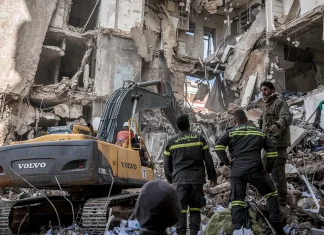
Phones are everywhere. Every screen is a map back to what people fled. Scrolls of videos show churches smashed, homes reduced to rubble, families gathered around ruins. It is as if memory and media have braided themselves into a single, unbearable archive.
“My friends died” — the human cost
Abdallah Nazzal, 37, sat me down and pressed his phone into my hands. The video was grainy, filmed at night: a village street, buildings blackened, a car overturned. The soundtrack was the distant rumble of larger strikes.
“This is my village,” he said in a voice that did not rise. “They strike in the day and in the night. They killed civilians. My friends — about twenty — they are gone.” He tapped his chest. “This is not a number to us. This is our life.”
Across Lebanon, that life is unraveling on a scale that is hard to hold in the mind. Israel has ordered evacuations covering roughly one fifth of Lebanese territory, displacing more than 1.2 million people — nearly one in five of the country’s population. The evacuation zone reaches the Zahrani River, about 40 km north of the Israeli border. Plans to keep a so-called security zone up to the Litani River would push an occupation some 30 km inside Lebanon’s sovereign land.
Hope—brief—and the terrible re-opening of wounds
On a Wednesday in the early hours, whispers of a U.S.-Iran deal drifted into the shelter like an unexpected spring breeze. People woke to the idea of calm. Some began to pack. Some walked the corridor with shoes in their hands, deciding to test the fragile idea of going home.
“We woke up shocked, like this is finally it,” said Tala Hijazi, who has taken refuge in Aintoura since 2023 and has weathered two rounds of heavy fighting. Her voice trembled as she described the surge of hope. “Some people even left. But then the noise came back. The sky filled with strikes.”
That Wednesday became the single deadliest day of the conflict in Lebanon: more than 300 people were killed as over 100 airstrikes hit in a short span, not only in the south but in parts of Beirut and along the seafront — neighborhoods that had felt insulated until then. Israel said the ceasefire did not include Lebanon; the United States publicly agreed. For families who had dared to believe, the reversal felt like a confirmation — of fragility, of randomness, of grief without end.
Lives that have been fleeing for years
Many of those sheltering in Aintoura aren’t just fleeing a single round of fighting. They carry the fatigue of multiple dislocations: civil war legacies, the 2006 war, economic collapse, and more recent eruptions. “We are always packing,” an older woman, Samia, told me in a half-laugh that was more a rueful exhale. “And then we unpack. Then we pack again. You get used to not being used.”
That “getting used” is a terrible sort of education. Children learn the routes for evacuation like they learn their ABCs. Parents memorize the locations of shelters and the names of distant cousins with extra rooms to spare. Every festival, every wedding, arrives under the shadow of contingency.
What the world sees — and what it misses
From the capitals where diplomats will meet — Washington expects Israeli and Lebanese negotiators to sit down soon — the maps look strategic, marked in blue and red. For the people in Aintoura, the map is a mosaic of faces. When politicians argue about “security zones” and “buffer lines,” they are drawing boundaries across children’s drawings.
“If an occupation becomes permanent, it will redraw everyday life in a way that few in the West can imagine,” said Dr. Lina Haddad, a Beirut-based scholar who studies forced displacement. “We are not only talking about territory. We are talking about livelihoods, agricultural land, fishing rights, the social fabric of towns that have existed for centuries.”
Humanitarian groups are stretched thin. “We are providing hot meals, temporary shelter, and trauma counseling,” said Marc Fontaine, an aid coordinator working with NGOs in the region. “But the scale is huge. Over a million people displaced in a country the size of Lebanon overwhelms systems designed for localized disasters, not for protracted, mass displacements tied to geopolitics.”
Questions to sit with
What does “return” even mean when the town you left may no longer be there? How do you rebuild a life without the place that once anchored it? When shelters become long-term homes, do they change who people become — or do they simply preserve a version of themselves damaged and resilient at once?
These are not just academic queries. They are practical, urgent puzzles: where will children go to school? How will farmers access fields if borders shift? Who will pay to clear rubble so that homes can be rebuilt?
Walking away is not the same as moving on
In Aintoura, evenings are quieter. People sit under a borrowed light and pass around plates of lentils. A young boy—his shirt limp from too many washes—imitates a comedian he heard on the radio. Laughter breaks the tension for a moment. Then someone scrolls their phone and the screen fills the room with images that pull everything back into rawness.
“We just want to go back,” Tala murmured. “But we don’t know when. We don’t know if when we go back there will be a home anymore. We live between two words: hope and wait.”
What would you do if your front door became a memory? If your map was erased overnight? It’s a question that asks more than empathy; it asks for action. Aid, diplomacy, and long-term planning will be needed. But perhaps most urgently, it asks us to look at the people behind the statistics — to hear their names, learn their stories, and remember that borders on a map are not the whole story.
As I left the shelter, Omar walked me to the gate. He touched the old blackboard and smiled a small, tired smile.
“We are not giving up,” he said. “We cannot. People need a place to come back. We keep the doors open, even when our hearts are heavy.”