A Quiet Revolution in Diplomacy: Why a Venezuelan Visit to Washington Matters
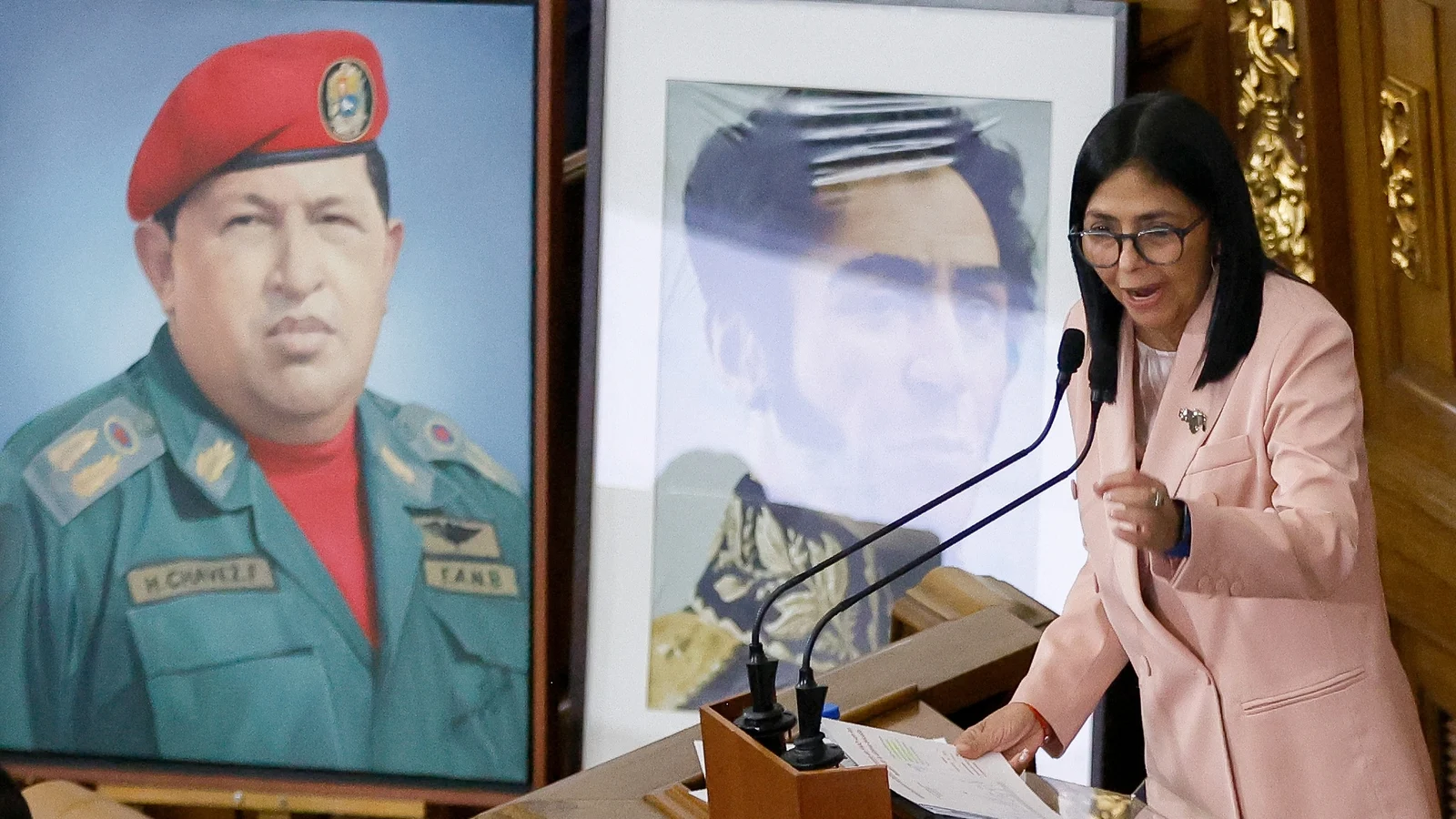
There are moments when the air itself seems to rearrange. In Caracas, the late-afternoon heat takes on a different feeling—tenser, layered with possibility—when a foreign phone call becomes domestic policy. That is the mood now, after reports that the interim president of Venezuela, Delcy Rodríguez, has been invited to visit Washington. If the trip happens, it will be the first bilateral visit by a sitting Venezuelan head of state to the United States in more than 25 years, save for the routine passage of UN delegations to New York.
“We’re not talking about a courtesy call,” said a senior White House official, who asked not to be named because discussions are sensitive. “This would be a strategic, pragmatic engagement—very calibrated.”
Why the Visit Is Such a Big Deal
For decades, Venezuela and the United States have traded rhetoric as if it were industrial-grade fuel: hot, explosive, and capable of burning everything in its path. From the hawkish populism of Hugo Chávez to deep alliances with Tehran and Moscow, Caracas and Washington long operated like two giant ships orbiting different suns. Now, buoyed by economic pressures, shifting alliances, and the magnetic pull of Venezuela’s oil fields—estimated at roughly 300 billion barrels of proven reserves, the largest in the world—both capitals appear to be rethinking old scripts.
“This is less about handshakes and more about access,” said Marta Espinosa, a Caracas-based energy analyst. “Who controls the taps controls leverage. The United States wants predictable exports; Venezuela wants investment and legitimacy.”
Diplomacy, Sanctions, and the Art of the Possible
Delcy Rodríguez’s journey from an insider in Venezuela’s previous administrations to an interim leader engaging Washington is the sort of plot twist diplomats dream about. She is still reportedly subject to various sanctions and asset restrictions—a reminder that politics rarely cleans house overnight. But the invitation signals an American willingness to interact with a leader once branded untouchable.
“We’re in a process of dialogue, of working with the United States, without any fear, to confront our differences and difficulties,” Rodríguez said in a recent address. Whether that translates to relief from sanctions, easier foreign investment, or a stable route for oil exports is the question now hanging over both capitals.
There are practicalities behind the headline-grabbing optics. Since 2019 Washington has imposed significant sanctions on Venezuela, particularly targeting the state oil company and senior officials. Those measures were intended to pressure Nicolás Maduro’s government—accused by many in the international community of democratic backsliding—while avoiding a chaotic vacuum.
“Sanctions are blunt instruments,” said Benigno Alarcón, a political scientist at Andrés Bello Catholic University. “They can fracture elites, but they also hurt ordinary people. The United States appears to be trying a mixed strategy: pressure plus engagement.”
The Domestic Chessboard
Inside Venezuela, the invitation is a political litmus test. Hardliners—figures like Interior Minister Diosdado Cabello and Defense Minister Vladimir Padrino López—still command loyalty in parts of the armed forces and the bureaucracy. Their stance toward opening up to Washington is far from monolithic.
“Some in the military see this as capitulation,” said a retired officer who now runs a coffee shop in La Guaira and asked that his name be withheld. “Others see the smell of dollars and foreign parts—that’s persuasive.”
Rodríguez has been reshuffling military leadership—appointing twelve senior officers to regional commands in recent days—moves that observers interpret as an attempt to solidify control while signaling continuity to both domestic and international audiences.
“Every promotion is a message,” the retired officer said. “It’s for the troops. It’s for the generals. It’s for the people watching from Miami and Madrid.”
Voices from the Street
Outside the corridors of power, Venezuelans are navigating a landscape of cautious optimism and bitter skepticism. In a market in eastern Caracas, vendors tally sales in bolívares and barter in hard currency. A fruit seller named Alba summed up the complex feelings: “If a plane brings investment, I will sell more oranges. If it brings war, I will sell them for my children’s safety.”
Opposition activists and democracy campaigners, who have long demanded full political freedoms and fresh, internationally supervised elections, worry that high-level diplomacy could paper over the need for accountability. “Any normalisation must include amnesty for political prisoners, truth, and a clear timetable for elections,” said Javier Morales, an activist whose brother remains detained. “Otherwise it’s a deal between elites.”
Geopolitics and the Global Ripples
Venezuela’s pivot—or partial pivot—toward engagement with Washington ripples beyond the Andean highlands. For Beijing, Moscow, Havana, and Tehran, who cultivated close ties with Caracas during its years of estrangement from the U.S., any warming with Washington represents both a strategic loss and a potential opening for renegotiated relationships.
“You can’t separate energy geopolitics from the broader architecture of the hemisphere,” said Dr. Isabel Romero, an international relations scholar in Bogotá. “The European Union, CARICOM, even Brazil and Colombia will watch closely. A negotiated path could defuse a humanitarian crisis that has pushed more than seven million Venezuelans into exile.”
Indeed, migration—estimated at roughly seven million people displaced since the crisis intensified in the 2010s—remains among the most pressing human consequences. Remittances, family separations, and brain drain are part of a long shadow that any diplomatic reset will have to acknowledge.
Questions for the Reader
What would you want to see from a diplomatic thaw between a superpower and a fractured nation? Are energy interests an acceptable starting point, or must human rights and democratic restoration be the non-negotiables? These are not rhetorical flourishes; they are the choices being negotiated in back rooms, on parade grounds, and in kitchens where people plan for another uncertain year.
What Comes Next
If the visit to Washington goes forward, it will not be a singular event but a test case: can transactional diplomacy be turned into something more durable? Can sanctions and incentives be calibrated to protect citizens without empowering bad actors? Can the international community encourage free elections and human rights while avoiding the pitfalls of ill-prepared regime change?
“Diplomacy is ugly, often slow, and always imperfect,” Dr. Romero said. “But it is better than the alternative—chaos. The key is to anchor any engagement in clear, measurable benchmarks.”
For now, Caracas waits. Markets and ministries adjust. Families watch the headlines with a mixture of hope and fatigue. And in Washington, diplomats run numbers and maps, aware that the fate of a nation—and perhaps the tone of hemispheric politics—may hinge on whether two leaders can find a language they both can live with.
- Quick facts: Venezuela’s proven oil reserves are roughly 300 billion barrels—the largest on earth.
- Migration: About 7 million Venezuelans have left the country since the crisis deepened in the 2010s (UN and IOM estimates).
- Sanctions: Washington has used sanctions as a principal lever of policy toward Venezuela, particularly since 2017–2019.
Diplomacy is, at its best, an act of imagination. It asks opposite camps to picture a common future. Whether that imagination will be commanded by oil derricks or by ballot boxes is the unfolding story—one that will be written by politicians, generals, and ordinary people in market stalls, office towers, and family living rooms across the hemisphere.