After a weekend of missile fire that raised fresh fears of a wider Middle East war, Iran and Israel both said the fighting between them has stopped.
Israeli Prime Minister Benjamin Netanyahu said the “fire on that front is contained” just hours after Tehran announced it had ended its military action.
Iran launched missiles at Israel on Sunday in response to Israel’s ongoing war against Hezbollah in Lebanon. Israel retaliated despite attempts by US President Donald Trump to dissuade Mr Netanyahu.
The back-and-forth then escalated into another wave of Iranian missiles before Tehran declared it would cease fire.
Iran has tried to link its truce with the United States — in effect since 8 April despite repeated attacks by both sides — to Israel’s campaign against Hezbollah, warning that strikes on Lebanon would compel it to respond.
Tehran said yesterday it would attack again if Israel continued striking Lebanon. Mr Netanyahu countered with a warning of his own, saying that if Iran “make the mistake of resuming attacks against us, we will respond with full force”.
Earlier, Israeli Defence Minister Israel Katz said Israel’s campaign in Lebanon would continue regardless and vowed that Israel would hit the Hezbollah-dominated southern suburbs of Beirut in retaliation for each militant attack on northern Israel.
Mr Trump, who has reportedly grown increasingly exasperated with Mr Netanyahu, urged both sides to stop “shooting” and said “final negotiations” toward peace would move forward “subject to ignorance or stupidity getting in its way”.
In a televised address, Mr Netanyahu said he told Mr Trump that “Israel has a full right to self-defence, and we are exercising it as required”.
Deadly strikes in Lebanon
According to the Israeli military, Iran fired nearly 30 missiles toward Israel, and Israel responded by targeting military sites in the Islamic republic.
No casualties have been reported in either Israel or Iran following the exchange.
In southern Lebanon, however, violence continued yesterday. The Lebanese health ministry said an Israeli strike in the city of Tyre killed five people, another attack in the Nabatieh district left seven dead, and a third strike in Marwanieh killed two.
Israel’s Iron Dome anti-missile system intercepts a missile near the Israel-Lebanon border
The Israeli military said it detected projectiles launched toward its soldiers operating in southern Lebanon. Some were intercepted, while one landed near troops without causing casualties.
It later reported intercepting a “suspicious aerial target” originating from Yemen, with no injuries reported.
Calm in Tehran
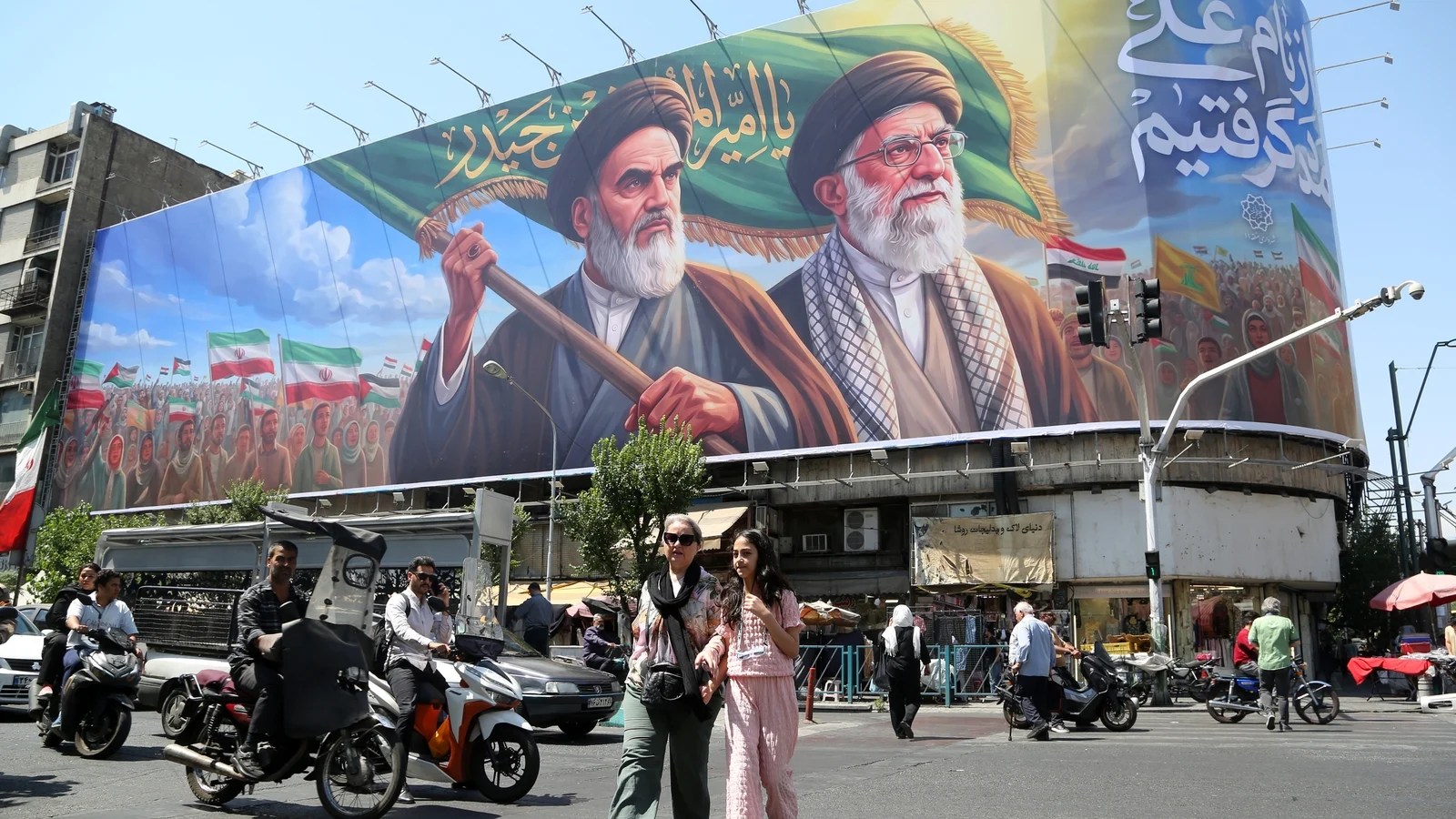
In Tehran, there was little visible sign of a return to war, with café terraces busy.
Traffic appeared lighter than normal for a weekday, suggesting some residents stayed home, while queues at petrol stations grew noticeably longer.
In Tel Aviv, residents headed to shelters as sirens sounded.
Iranian news agencies said early this morning that the capital’s international airport — closed amid renewed missile launches — had reopened, allowing flights carrying hajj pilgrims from Saudi Arabia to land.
Latest Middle East stories
Oil markets reacted sharply. Benchmark crude contracts Brent North Sea and West Texas Intermediate jumped more than 5% in Asian trading on concerns the war could restart, then eased later, ending the day up 1.3% and 0.8% respectively.
The conflict has seen Iran all but halt shipments of Gulf oil and gas through the Strait of Hormuz, while the US has imposed a blockade on Iran’s ports.
The US military said it struck and disabled an unladen oil tanker yesterday that violated the ports blockade.
Still ‘at the negotiating table’
The exchange between Iran and Israel came as diplomatic efforts — with mediator Pakistan involved — reached a sensitive phase.
At a press conference in Tehran, Iranian foreign ministry spokesman Esmaeil Baqaei said diplomacy was continuing but could be affected by the fighting.
As he spoke at the foreign ministry, a huge explosion shook the building, followed by repeated blasts believed to come from air defence systems, an AFP reporter said.
Pakistan Interior Minister Mohsin Naqvi travelled to Tehran to deliver what he described as a “special letter” to Iran’s supreme leader Mojtaba Khamenei, according to Iranian state television.
An official Pakistani source said yesterday that Mr Naqvi has since returned to Pakistan.
Iranian President Masoud Pezehskian wrote on X that Tehran remained “at the negotiating table”.