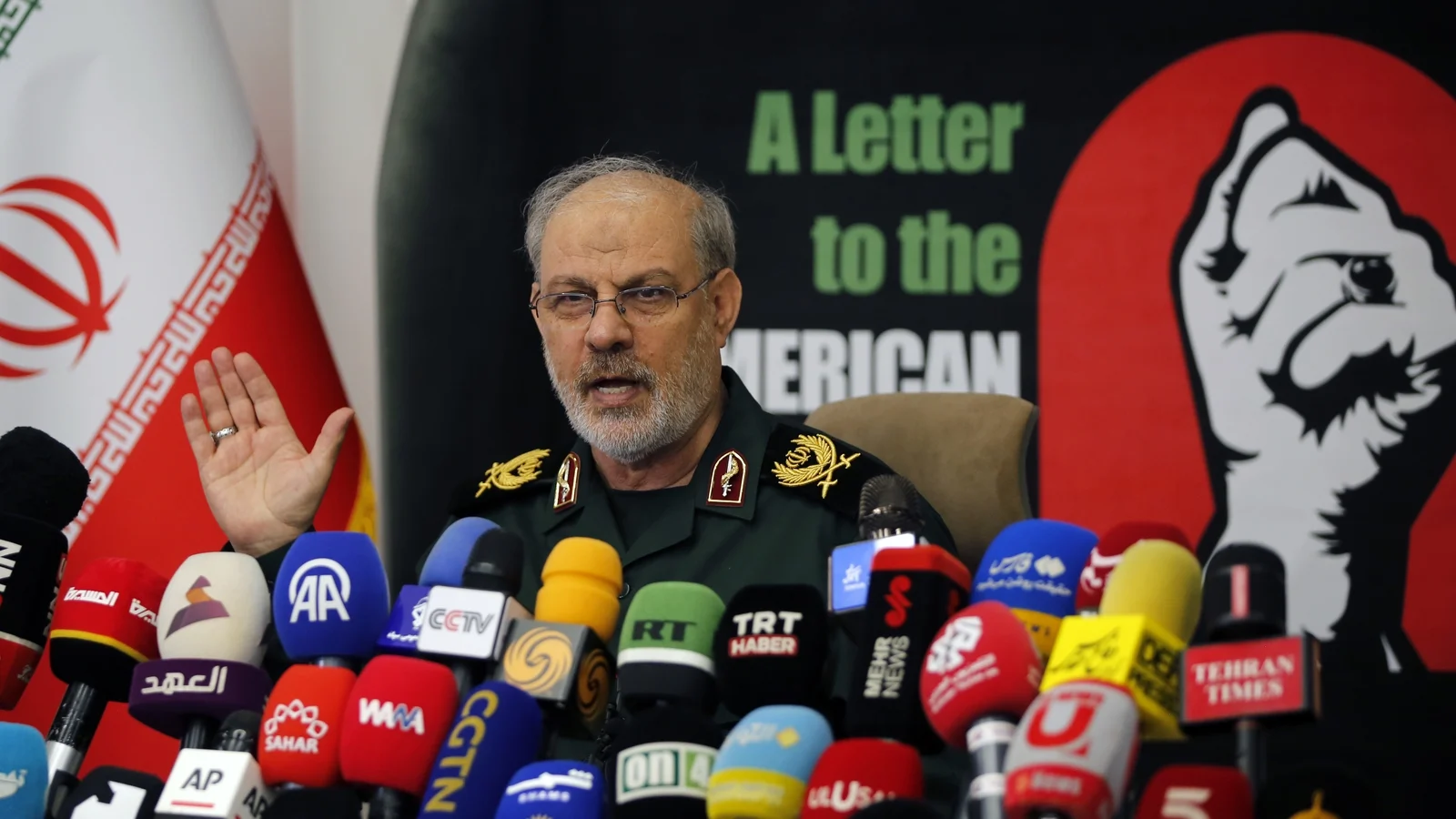
With US troops set to vacate their last positions in Iraq, Iran’s Islamic Revolutionary Guard Corps (IRGC) seized the moment to take its fight to American politics, urging voters to oust allies of US President Donald Trump in Congress — a withdrawal Tehran is openly hailing as a victory.
As that shift unfolded, Qatar kept up its shuttle diplomacy in an effort to end the seven-month-old war between Iran and the United States, even as Mr Trump again forecast a quick Iranian capitulation.
In a 26-page letter released yesterday, the IRGC called on Americans to use the ballot box to push out current officeholders, while pressing them to oppose US backing for Israel and reject military intervention overseas.
The message, circulated by Iranian media and unlikely to reach — much less persuade — many US voters, nonetheless touches on themes that analysts say are complicating Mr Trump and the Republican Party’s prospects ahead of 3 November congressional elections. Democrats, they note, could regain control of one or both chambers, potentially constraining Mr Trump’s agenda.
“Remove from power the evil, deceitful, and violent politicians who are responsible for America’s current state, the letter said. “Make sure your politicians understand that the world has changed.”
Iranians walk past a wall decorated with the image of assassinated Iranian supreme leader Ayatollah Ali Khamenei
Mr Trump ran in 2024 promising to steer clear of new wars, wind down existing conflicts and curb inflation. Yet the conflict with Iran — launched by Mr Trump alongside Israel — has helped lift global fuel prices and widened instability across the Middle East.
A Reuters/Ipsos poll published 21 September underscored the political strain: just 17% of respondents approved of Mr Trump’s handling of the cost of living, the issue Americans most often cite as decisive for how they will vote in November. Only 34% supported the strikes on Iran.
Mr Trump, who broke with Republican orthodoxy in 2016 by calling the US invasion of Iraq a major mistake, presided over today’s final withdrawal from Iraq — a pullout agreed in 2024 by former President Joe Biden.
The exit comes 23 years after US-led forces overthrew Saddam Hussein, a campaign that unleashed years of turmoil and ultimately set the stage for the rise of Islamic State.
Qatari mediation
The US war in Iran has pulled in Tehran-aligned groups across the region, including the Houthis in Yemen, Hezbollah in Lebanon and militias in Iraq. Riyadh has blamed those militias for the 10 September attack that forced the East-West Pipeline in Saudi Arabia offline.
Iran says its broader objective is to drive US forces from the entire Middle East, and it is portraying the American departure from Iraq as a win for its “axis of resistance” — a network of allied armed factions spanning the region.
Despite multiple rounds of talks and several ceasefires, Washington and Tehran have yet to identify a clear way out of the war.
Diplomatic activity appeared to pick up during last week’s UN General Assembly in New York. But negotiators have not produced an agreement to reopen the Strait of Hormuz, the strategic chokepoint through which 20% of global oil and liquefied natural gas flowed before the war began in February.
Qatar has again stepped forward as a would-be broker, after previously helping produce a June memorandum of understanding that paved the way for a short-lived ceasefire. US and Iranian officials held separate discussions with Qatari mediators on Monday, though it was unclear whether any exchanges occurred yesterday.
“We are exchanging messages between the parties, and we’re working towards establishing a common ground in order to get into a deal that would save all of us from the repercussions of the conflict,” Qatari Foreign Ministry spokesperson Majed al-Ansari told reporters.
Mr Trump, for his part, reiterated his insistence that Iran must not acquire a nuclear weapon and maintained the war would end quickly.
Mr Trump has consistently stated that Iran must not obtain a nuclear weapon
The fighting has eroded Iran’s conventional military power and further battered an already struggling economy. Tehran, however, has responded with missile and drone attacks against US allies in the Gulf and by tightening oil tanker traffic through the Strait of Hormuz — a move that has driven world energy prices higher.
“I don’t know if they are going to give up yet but they’ll give up,” Mr Trump told reporters yesterday.
“They are doing very poorly,” he added.
At last week’s United Nations General Assembly, Iran presented a peace proposal that would set a seven-day countdown to reopening the strait and pausing hostilities.
Mr Trump rejected the proposal on Saturday, though Iranian Foreign Minister Abbas Araqchi said on Sunday that Washington had not formally communicated a US rejection through mediators.
Mr Trump has described his aims as weakening Iran’s nuclear capabilities, stopping it from attacking its neighbours, and creating conditions for Iranians to overthrow their leaders.
Iran, which does not have nuclear weapons, says it is not seeking them. The United States is nuclear-armed. Tehran argues it has the right to pursue nuclear technology for peaceful use as a signatory to the nuclear Non-Proliferation Treaty.