A possible diplomatic breakthrough between Washington and Tehran could come within days, as US President Donald Trump said the two countries may sign a peace deal as soon as this weekend that would reopen the Strait of Hormuz to shipping — though Iran insisted no final decision has been made.
If confirmed, the agreement would mark the most significant step so far toward ending a three-month-old war that has killed thousands and driven global energy prices sharply higher.
Iranian media quoted Foreign Ministry spokesperson Esmaeil Baghaei as saying substantial portions of the draft text have been finalised, but that Tehran would not budge on its redlines.
“We have not reached a final conclusion on this matter,” he said.
“This is a very important issue that is currently being reviewed by the relevant decision-making bodies.”
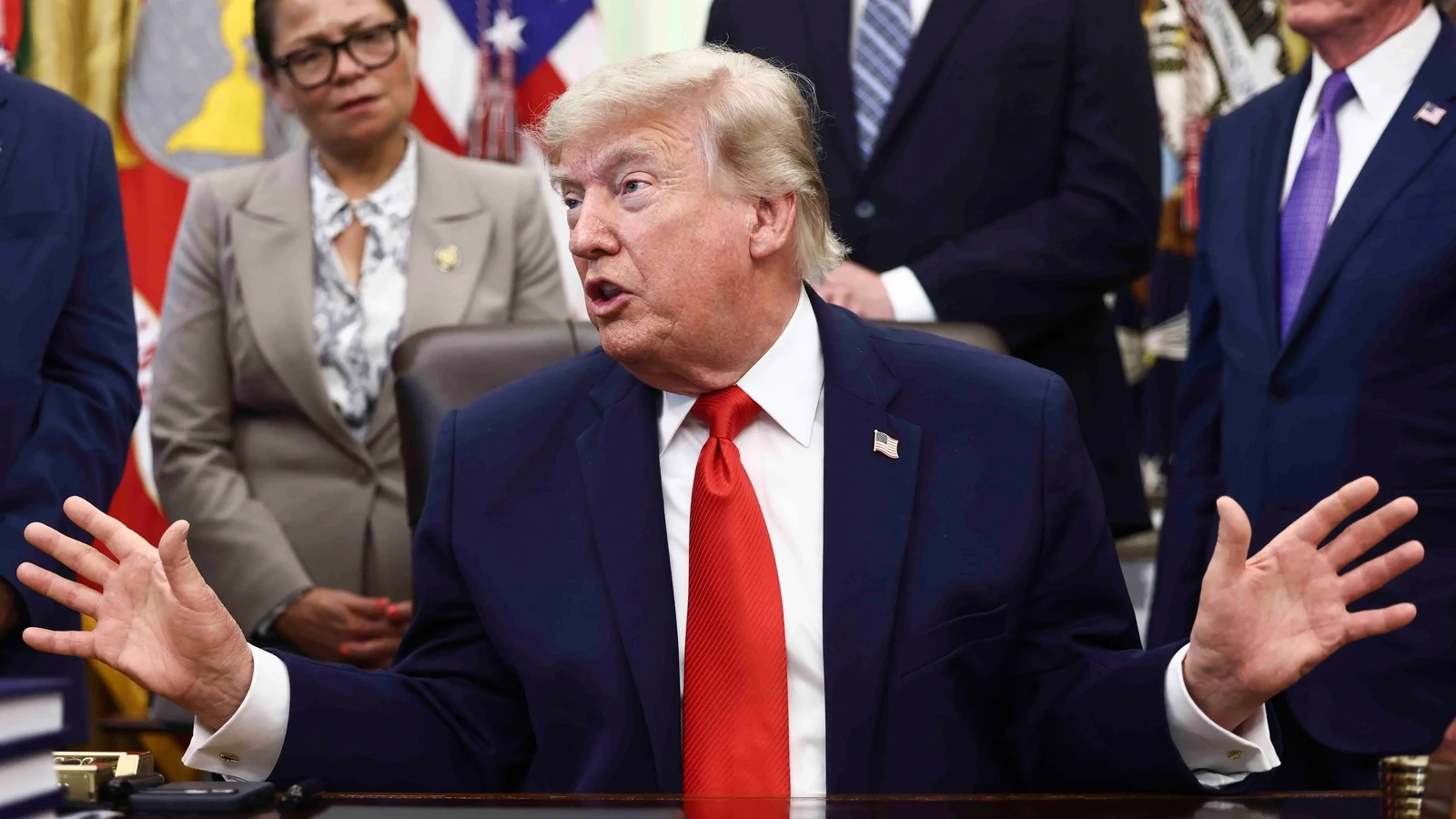
Speaking at the White House, Mr Trump told reporters: “We just made a great settlement of the war with Iran.”
“The strait will officially open as soon as we sign, which could be soon, very soon, maybe over the weekend in Europe,” Mr Trump said, adding that Vice President JD Vance could sign on behalf of the United States.
Asked whether Iran’s Supreme Leader Ayatollah Mojtaba Khamenei has approved the deal, Mr Trump replied: “I understand the answer is yes.”
Watch: US President Donald Trump announces a “great settlement” with Iran
Mr Trump’s remarks followed his decision to call off planned military strikes against Iran, citing progress in negotiations.
Markets reacted quickly: US stocks climbed and oil prices dropped after his comments.
Since mid-March, Mr Trump has repeatedly suggested an end to the war was within reach.
Yet this week both sides exchanged strikes, testing a ceasefire announced in April.
“It’s a very strong memorandum of understanding that is a little conceptual,” Mr Trump said.
Mr Trump has repeatedly insisted any peace deal must prevent Iran from developing a nuclear weapon. Iran says it is not pursuing such a weapon.
Iran has blocked traffic through the Strait of Hormuz
According to the reports, Iran has sought the lifting of international sanctions, access to billions of dollars in frozen assets and recognition of its control of the Strait of Hormuz.
“We have a deal that Iran will never have a nuclear weapon, which was the whole purpose of what we had to go through to get this. So it was a very big thing,” Mr Trump said.
Tit-for-tat strikes
The war has left thousands dead — mainly in Iran and Lebanon — and rattled the world economy by pushing up energy prices since the US and Israel began airstrikes on Iran on 28 February.
Despite a fragile ceasefire that took effect in early April, the fighting has escalated in recent days.
After a US Apache helicopter was shot down, Mr Trump ordered fresh strikes around the Strait of Hormuz over two days this week.
At the same time, Iran fired missiles and launched drone attacks targeting US bases in the region.
Bahrain’s interior ministry said debris from Iranian drones — intercepted and destroyed — fell to the ground, causing minor injuries to an 11-year-old girl and damaging homes.
Mr Trump had earlier warned the United States would hit Iran “very hard tonight” and said he ultimately wanted Iran’s oil infrastructure hub, Kharg Island.
Kharg Island handles 90% of Iran’s oil exports; taking it would give the United States the ability to sharply disrupt Iran’s energy trade and place intense pressure on Tehran’s economy.
Domestic pressures
The conflict has increasingly weighed on the White House politically, with polls showing Mr Trump’s approval ratings sliding amid voter anger over rising gasoline prices.
Some Republicans have publicly voiced concern that the war’s unpopularity could jeopardise their party’s control of Congress in November’s midterm elections.
At the same time, Mr Trump faces pressure from within his own party to ensure any agreement fully blocks Tehran’s route to a nuclear weapon.
Opposition from Iran hawks helped sink a previous push for a deal that would have reopened the Strait.
Regional reaction will also be a decisive factor.
US stocks rose and oil prices fell on the news of a potential agreement
Mr Trump said on social media that other countries in the region — including Israel, Saudi Arabia, Qatar and the United Arab Emirates — had approved the agreement.
But Israeli Prime Minister Benjamin Netanyahu’s office said after the Israeli leader spoke with Mr Trump that Israel is not a party to the memorandum of understanding with Iran.
According to the read out, Mr Netanyahu thanked Mr Trump for pursuing a deal that would include removing enriched material, dismantling enrichment infrastructure, limiting missile output and ending support for regional proxies.
Tehran has also demanded an end to Israeli attacks in Lebanon, where fighting has continued in a parallel war between Israel and Iran-backed Hezbollah militants.
Mr Trump said he would soon also speak with Turkey’s President Tayyip Erdogan.