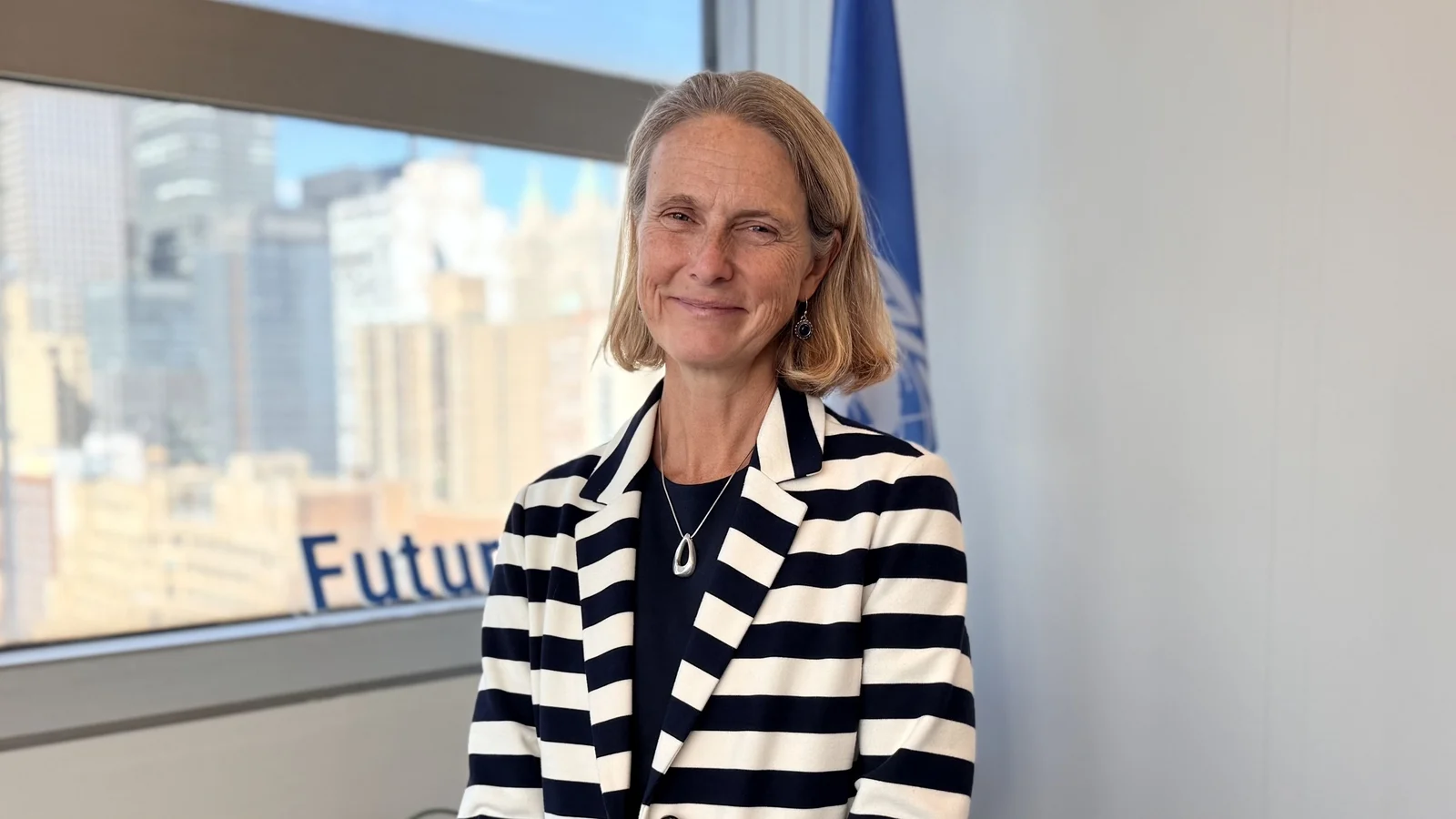
As countries head to the polls in an era of rapid technological change, an Irish woman at the heart of the United Nations’ election support work is warning that artificial intelligence is reshaping the risks — and the possibilities — for democratic processes worldwide.
Michèle Griffin, who grew up in Dublin and Louth and now leads the UN’s electoral assistance department, said the surge in AI tools has pushed election integrity into the broader global debate on how the technology should be governed.
Ms Griffin has spent three decades at the UN — a career path she said began as a childhood ambition “since I realised such a thing existed”.
Her rise through the organisation started with an internship before moving into roles supporting successive secretaries-general, where she worked on “helping them to think about the big picture”.
Looking back as she marked her 30th UN General Assembly this week, she said she still finds it remarkable, describing herself as “privileged” to be part of an institution filled with people “trying to make the world a better place”.
In her current role, Ms Griffin said her department may be providing electoral support to as many as 50 countries at any given time.
Ms Griffin has worked with successive Secretarties-General throughout her career
“It can run the gamut from the logistics, helping countries with the participation challenges, especially for women, minority communities, disadvantaged people, and people with disabilities,” she told RTÉ News.
She said the nature of requests coming in has shifted, with governments and election officials increasingly seeking support around information integrity — and how to navigate new technologies without eroding confidence in results.
“We get a lot of requests now for help with information integrity, and making sure that both the risks and opportunities of technology are handled well, and in a way that preserves public trust in the election and preserves a credible election.”
AI governance featured prominently during High-Level Week at UNGA, and Ms Griffin said her team is already engaging with election management bodies worldwide on what AI means in practical terms for voting systems, campaigns and public confidence.
“We are figuring out where AI can be helpful, but, of course, we have to be very aware of the ways in which it can, even inadvertently, hurt trust, undermine credibility, make people question elections, make people worry about their data and how it’s used and exposed,” she said.
She also pointed to deliberate misuse, saying hostile actors are already exploiting the technology to target elections.
“And, of course, there are bad actors who can use AI to undermine elections, and we’re seeing a huge amount of that already happening around the world.”
For Ms Griffin, the election-related concerns feed directly into the global debate now under way about what guardrails should govern AI.
She added: “It connects to the bigger conversations around global governance of AI. What should the guard rails be? How do we put safeguards in place?”
Ms Griffin began her UN career at the Irish Permanent Mission
Despite the new pressures, she stressed that the core standards of a trustworthy vote remain unchanged.
Another theme at UNGA was the question of UN reform — and what role the organisation will play in an increasingly complex international landscape.
Asked what comes next for the UN, Ms Griffin gestured to a sign on a window in her office that reads ‘future’.
“If you didn’t have the UN, you’d have to invent it,” she said.
She argued that as more challenges spill across borders, the need for a forum that brings states together — alongside civil society and other influential actors — has only grown.
“In a world where most problems can’t be solved within national borders, more than ever you need a place where countries can come together, and not just countries, but all sorts of civil society, all sorts of actors who have in their power to solve problems, that they would come together to one place and talk about how to solve those problems together.
“I’m personally, obviously, a true believer in that and have been convinced of it, and have given my entire career to trying to make that happen.”