A Quiet Morning Shattered: Inside the Islamabad Mosque Blast
There are mornings in Islamabad when the light falls soft across manicured lawns and glass-fronted ministries, and then there are mornings that undo the fabric of a city. Tuesday’s attack at the Imam Bargah Qasr-e-Khadijatul Kubra, a Shia mosque tucked into the Tarlai outskirts, was of the latter kind: a rupture that left bodies, questions and raw grief in its wake.
Local officials say at least 31 people were killed and more than 130 wounded after a suicide bomber detonated at the mosque’s gate after morning prayers. Authorities warned the toll could yet climb as hospitals scramble to treat the injured and families search for missing loved ones.
The Moment It Happened
The blast came when the mosque was brimming — a common scene across Pakistan after dawn prayers, when community life briefly gathers inside carpeted halls. “He was stopped at the gate and detonated himself,” a senior security source told journalists on condition of anonymity, reflecting the chaos of the moment and the razor-thin margin between prevention and catastrophe.
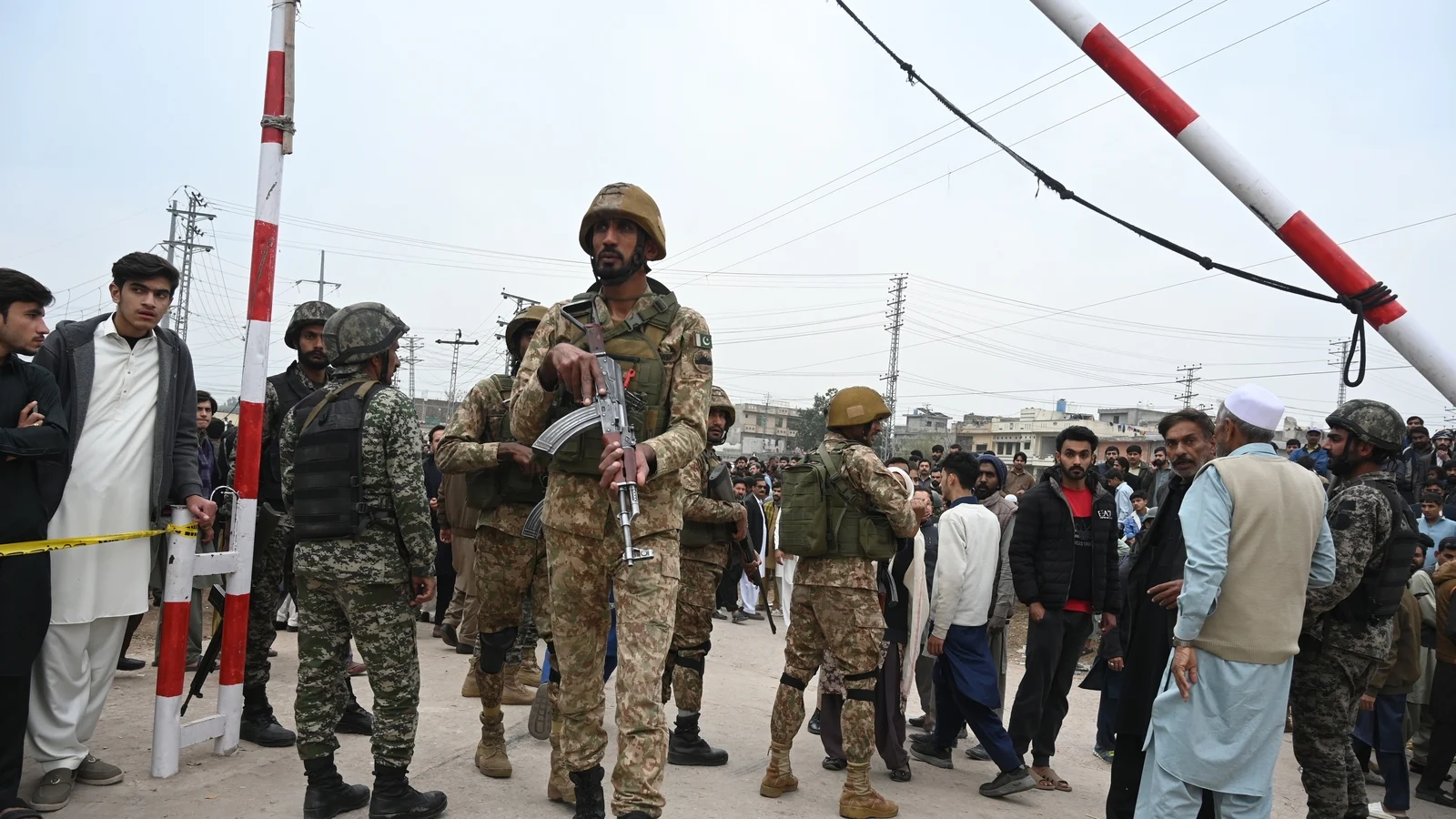
Witnesses and hospital staff described a scene that shifted from ordinary worship to emergency. Medics and volunteers unloaded the wounded from ambulances and private cars; at least one casualty was carried in the boot of a vehicle. Videos shared on social media showed shoes and clothing scattered across the red-carpeted prayer hall and bodies lying near the entryway — images that authorities said were being verified.
Outside the mosque, yellow crime-scene tape fluttered in the breeze. Broken glass, a child’s shoe, a prayer mat stained with dust and blood: small, human artifacts of a violent interruption. Armored security forces sealed off the area, and investigators combed the site for clues.
On the Ground: Voices and Scenes
“There was a sound like a thunderclap,” said one worshipper who survived the blast, his voice low and rough. “People fell like trees. I pulled my neighbor out by his feet.”
At the Pakistan Institute of Medical Sciences, relatives paced, their faces a map of shock and disbelief. A nurse wiped her hands and said, “We’ve treated adults, children — so many of them. Our corridors are full. We don’t have enough beds.” The urgency at the hospital pulsed like a second heartbeat for the city that morning.
“This was a place where my children learned to read the Quran,” whispered a woman who had come with white cloths to collect a relative. “I cannot believe it happened here.”
Leadership Speaks — And the Wider Context
Pakistan’s leadership was swift in condemnation. Prime Minister Shehbaz Sharif vowed that those responsible would be found and brought to justice, while Deputy Prime Minister Ishaq Dar labeled the attack “a heinous crime against humanity and a blatant violation of Islamic principles,” posting his condemnation on social media.
No group immediately claimed responsibility. The attack lands at a fraught moment for Pakistan, which is battling intensifying insurgencies on multiple fronts — Islamist militants in the north, separatist violence in the southwest, and a long-standing problem of sectarian attacks directed at the Shia community. Shias make up roughly 10–15% of Pakistan’s population of around 240 million, and they have been targeted in repeated incidents over past decades.
The capital itself has not been untouched: the last major strike in Islamabad was a suicide blast outside a court in November that killed 12 people — the first such high-profile attack on the capital in nearly three years. In neighboring Balochistan, violence has surged recently; separatist attacks in the province last week reportedly killed dozens of civilians and security personnel, prompting major counter-operations in which authorities said nearly 200 militants were killed.
Safe Havens, Blurred Borders
Islamabad has accused armed groups operating in southern Balochistan and the northwestern borderlands of using neighboring Afghan territory as a sanctuary to plan and stage attacks — a charge repeatedly denied by Afghanistan’s Taliban government. Cross-border clashes and diplomatic frost have made the region ever more combustible, and this latest strike underscores how porous and politically charged those lines remain.
The Human Toll
Count the bodies. Count the funerals. Count the empty rooms and the schoolbags left where children once slept. The numbers — 31 dead, 130-plus wounded — carry weight, but they do not begin to capture the texture of the losses: a father’s palm missing at the dinner table, a teenage voice never heard again, the small rituals of a neighborhood wiped clean.
“My cousin was a teacher at the madrassa next door,” said an elderly man with tears in his eyes. “He would sit with the children after prayers and tell them about numbers and poems. Now there is a hole where he used to be.”
What Does This Mean for Pakistan — and for Us?
This is not just another item on a news ticker. It’s a mirror reflecting several broader, interlinked challenges: the persistence of sectarian violence, the difficulty of securing open places of worship, and the geopolitics of a region where militants exploit borders and fragile governance.
How does a nation keep the public square — places of worship, markets, schools — both open and safe? How do communities stitch themselves back together when fear has been sown inside sacred spaces? These questions are not unique to Pakistan. Globally, democracies and fragile states alike wrestle with balancing openness and security, and with addressing the root causes of violent extremism: marginalization, ideology, porous borders and sometimes, geopolitical indifference.
Possible Paths Forward
- Immediate humanitarian response: more hospital capacity, emergency funds, and psychological support for survivors and families.
- Security review: reassessing mosque security at entrances and public awareness programs for early detection of threats without militarizing spiritual spaces.
- Diplomatic engagement: renewing cross-border dialogue to reduce safe havens and improve intelligence cooperation.
- Community resilience: fostering local peacebuilding efforts that bridge sectarian divides and nurture interfaith solidarity.
What I Saw, and What I’m Still Thinking
Walking away from the scene, I carried an image I cannot unsee: a line of shoes — children’s sandals beside men’s formal shoes — where worshippers once stood shoulder to shoulder. The intimacy of those small, scattered objects reminded me how public violence always lands most cruelly in private lives.
There will be investigations, arrests, official statements and perhaps retribution. There will also be funerals and months of quiet grieving that won’t make headlines. In the long arc, the real test is whether Pakistan can address not only the perpetrators but the conditions that allow such brutality to recur.
To readers halfway across the world: ask yourself what you feel when a place of worship is turned into a crime scene. How do we, as a global community, balance vigilance with the preservation of open civic life? And beyond policy, how do we make room for the small acts of compassion that stitch communities back together — the neighbors who show up at hospitals, the strangers who bring meals for grieving families, the teachers who keep going to work?
For now, the mosque in Tarlai is surrounded by tape and investigators. Inside, the prayers will be quieter for a time. Outside, a city holds its breath, counting, grieving — and hoping that this rupture will not become yet another tragic normal.