Smoke Over the Olive Groves: A Day When a Fragile Truce Frayed
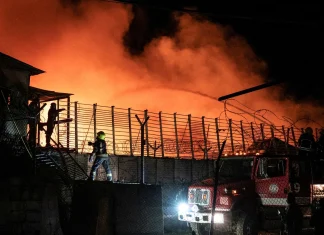
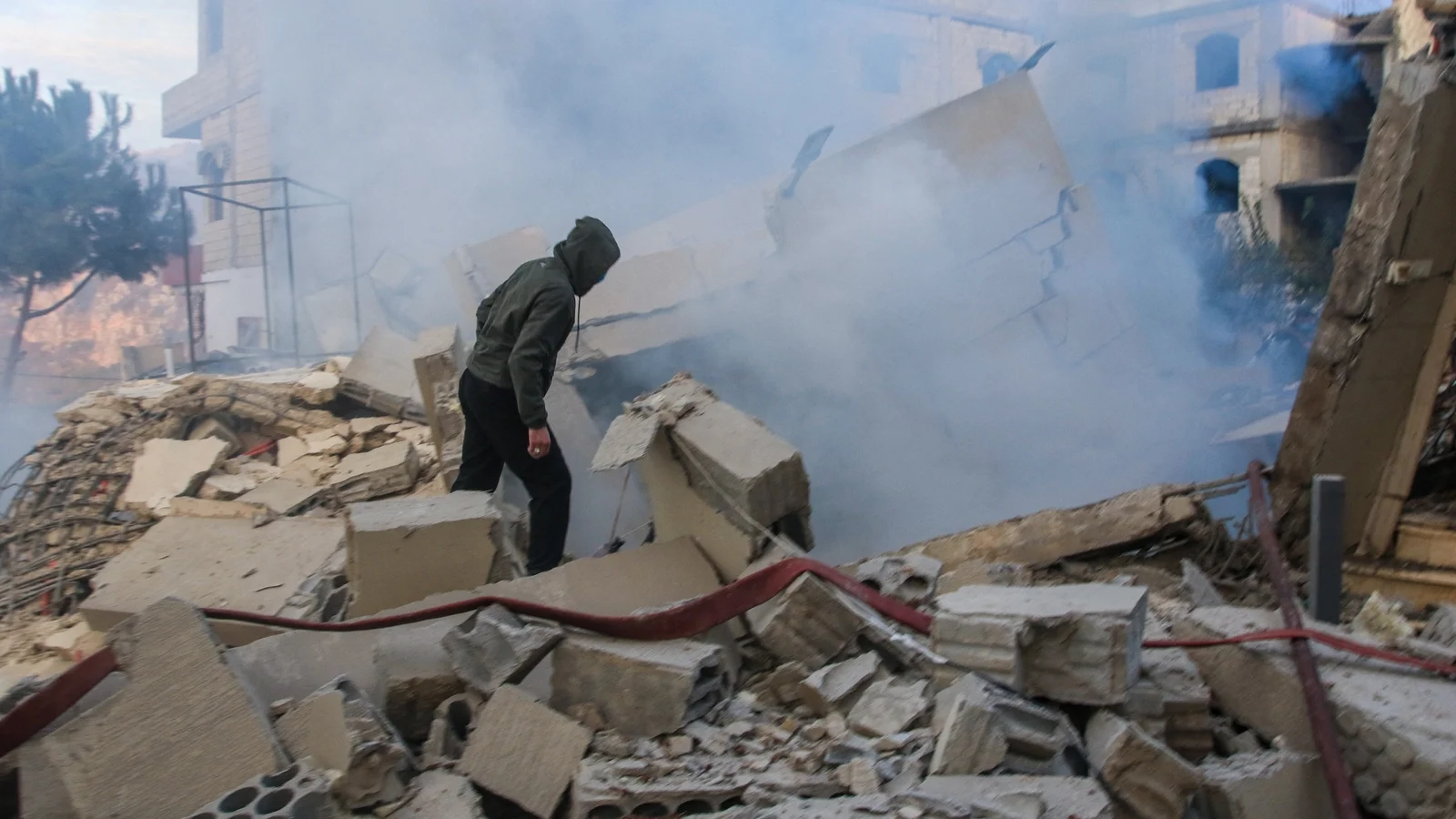
Early this morning the sky over southern Lebanon turned the color of old ash. Plumes rose from the hills above towns with names most maps skip — Mahrouna, Jbaa, Majdal, Baraasheet — places of terraced olive groves, cinderblock homes, mosque minarets and children who still play among pitted concrete walls that carry the memory of past fights.
“We were eating breakfast when the first blast shook the house,” said Ahmad, a shopkeeper in Jbaa, his voice low and steady. “Windows shattered across the street. My neighbor’s daughter was crying for her doll; her face looked like she’d seen the world end.” His hands picked at the hem of his shirt as if trying to undo the moment.
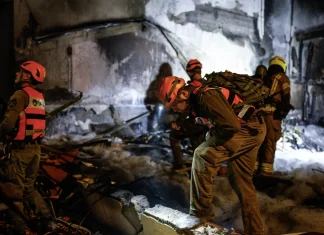
Hours later, Israel’s military said it had struck what it described as “Hezbollah weapons storage facilities” tucked within civilian neighborhoods. Lebanese authorities reported raids on a string of southern towns. Photographers and residents shared images of smoke curling above streets, of shattered glass glinting like a constellation on the sidewalks.
Between a Ceasefire and a Cold War
The attacks came only a day after a small diplomatic opening: for the first time in decades, civilian representatives from Lebanon and Israel sat down — brokered under the watchful umbrella of the UN peacekeeping presence in Naqura — to discuss the terms of last November’s ceasefire and the practical mechanics meant to keep it in place.
The mechanism that convened in Naqura is the same one that has become a weird, on-again, off-again lifeline along the border: an assemblage of military officers and diplomats from the United States, France, Lebanon, Israel and the United Nations Interim Force in Lebanon (UNIFIL). The intent is practical — to prevent sparks from becoming infernos — but the symbolism is larger. When former enemies sit at the same table, even to argue about how to measure a buffer zone, it signals a weariness in both capitals.
“Don’t mistake this for peace,” warned Lebanese Prime Minister Nawaf Salam at a press briefing. “These conversations are limited: they aim to stop the gunfire, to secure the release of hostages, to ensure full withdrawal from Lebanese territory. They are not peace talks.” His words landed like a careful, necessary reminder that diplomatic contact does not instantly erase seven decades of hostility.
How Thin Is the Truce?
The ceasefire agreed in November was meant to halt more than a year of escalating exchanges between Israel and the Iran-backed Hezbollah. It has reduced full-scale operations, but not the episodic violence that keeps the families of the south living on edge. Israeli forces have kept units in a handful of strategic areas near the border; Hezbollah remains an armed and politically entrenched movement inside Lebanon. The result is a tense détente, an uneasy quiet filled with the sound of scanners, warnings and the occasional flare of violence.
“This isn’t peace. It’s managed tension,” said Marie Dupont, a former French diplomat now tracking the ceasefire implementation. “You can build monitoring committees, you can erect confidence-building measures, but without addressing the root political questions — disarmament, sovereignty, and a political horizon — these windows of calm will keep closing and opening.” Dupont pointed out that UNIFIL, the peacekeeping mission, deploys roughly 10,000 troops and monitors an area scarred by displacement, poverty and political fractures.
On the Ground: Civilians in the Crossfire
For residents, the diplomatic choreography feels distant. What matters is whether their children can get to school, whether the generator will keep the fridge running, whether a warning siren will send them scurrying into basements and stairwells.
“We are used to threats,” said a local official in Mahrouna, speaking near a shattered storefront. “But the damage this time was strange — every window within 300 metres was broken. People are in shock. We live here, we farm here; our lives are woven into these hills.”
Humanitarian actors warn that repeated strikes in populated areas can have cumulative, long-term effects. Trauma, interrupted education, and economic dislocation are slow-burning consequences. In communities already suffering from a failing economy and high unemployment, another round of strikes risks pushing more people toward desperation.
- Lebanon and Israel have been technically at war since 1948, a fact that underpins much of the mistrust along the border.
- The November truce curbed large-scale fighting but did not resolve the presence of armed groups or the strategic deployments near the frontier.
- UNIFIL continues to monitor the cessation of hostilities, but its mandates are limited to observation and reporting rather than enforcement.
Politics and Blame: Who Decides When a Neighborhood Is a Target?
<p”The presence of weapons in civilian areas is a grim reality,” said an Israeli military spokesperson in a statement. “Hezbollah’s embedding of military infrastructure within towns is a cynical tactic that endangers Lebanese civilians and constrains our options.” The message is clear: Israel frames its strikes as targeted responses to military threats emanating from within populated areas.
Hezbollah and its supporters offer a different narrative, casting such strikes as collective punishment that violates the sanctity of civilian life. Lebanese officials have repeatedly said they favor the disarmament of all militias, but they also warn about the political impossibility of disarming a group that is integrated into social networks and local power structures.
“People here don’t want to be human shields,” said Sami, an elderly farmer in Majdal, watching his goats in a field dotted with olive trees. “But what are our alternatives? Who will protect us from the other side if they take our guns? There are no easy answers.” His question echoes a central dilemma for Lebanon: how do you reconcile state sovereignty with armed groups that function as both militia and social provider?
A Wider Theatre: Regional and Global Stakes
This is not a local spat with only local consequences. The tug-of-war between Israel and Hezbollah is part of a larger regional rivalry. Iran’s support for Hezbollah, American backing for Israel, and the diplomatic gestures from European capitals create an arena where local skirmishes can have outsized geopolitical effects.
“The ceasefire’s durability matters beyond the border,” said Leila Haddad, a Beirut-based analyst. “If the truce collapses, the risk is not only renewed tit-for-tat shelling. A broader conflagration could redraw alliances, increase displacement, and destabilize an already fragile Lebanon.” Haddad highlighted how economic ties — from gas exploration in the eastern Mediterranean to trade corridors — are often dangled as incentives for de-escalation.
Indeed, participants at the Naqura talks reportedly discussed potential economic cooperation ideas. Israeli officials described the atmosphere as “positive,” but insisted any progress on economics would be contingent on Hezbollah’s disarmament. The United States has been active behind the scenes, pressing for modalities that would reduce the group’s ability to carry out cross-border attacks.
Faces Not Figures: A Final Thought
Numbers and statements matter — they help diplomats and analysts model scenarios. But when the dust settles, it is faces and routines that reveal the cost of this long conflict: the baker who closes shop early because of curfew, the teacher who counts students desk by desk to make sure they’re all present, the mother who tapes up broken windows because she can’t afford new ones.
What do we owe communities wedged between armies and militias? How do global powers reconcile strategic interests with the immediate human cost on the ground? As the sun set today and families in the south swept glass into plastic bags, those questions felt less like abstract policy debates and more like urgent, local dilemmas.
“We want to sleep at night without sirens waking our children,” said Ahmad. “Is that too much to ask?”
Perhaps the late, small talks in Naqura can grow into something more substantial. Or perhaps, as history warns, another flare will once again remind everyone why peace that is only a pause is a precarious thing. Will the international community push harder for a lasting solution — or will we circle back to accepting a managed, fragile quiet? The answer will shape not only the map of the region but the lives in these olive-scented hills for years to come.