Nightfall Over Lebanon: A Ceasefire Fraying at the Edges
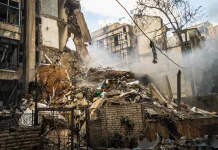
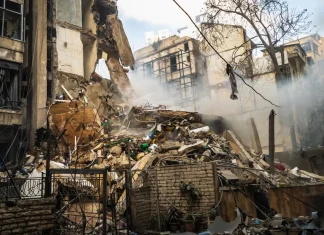
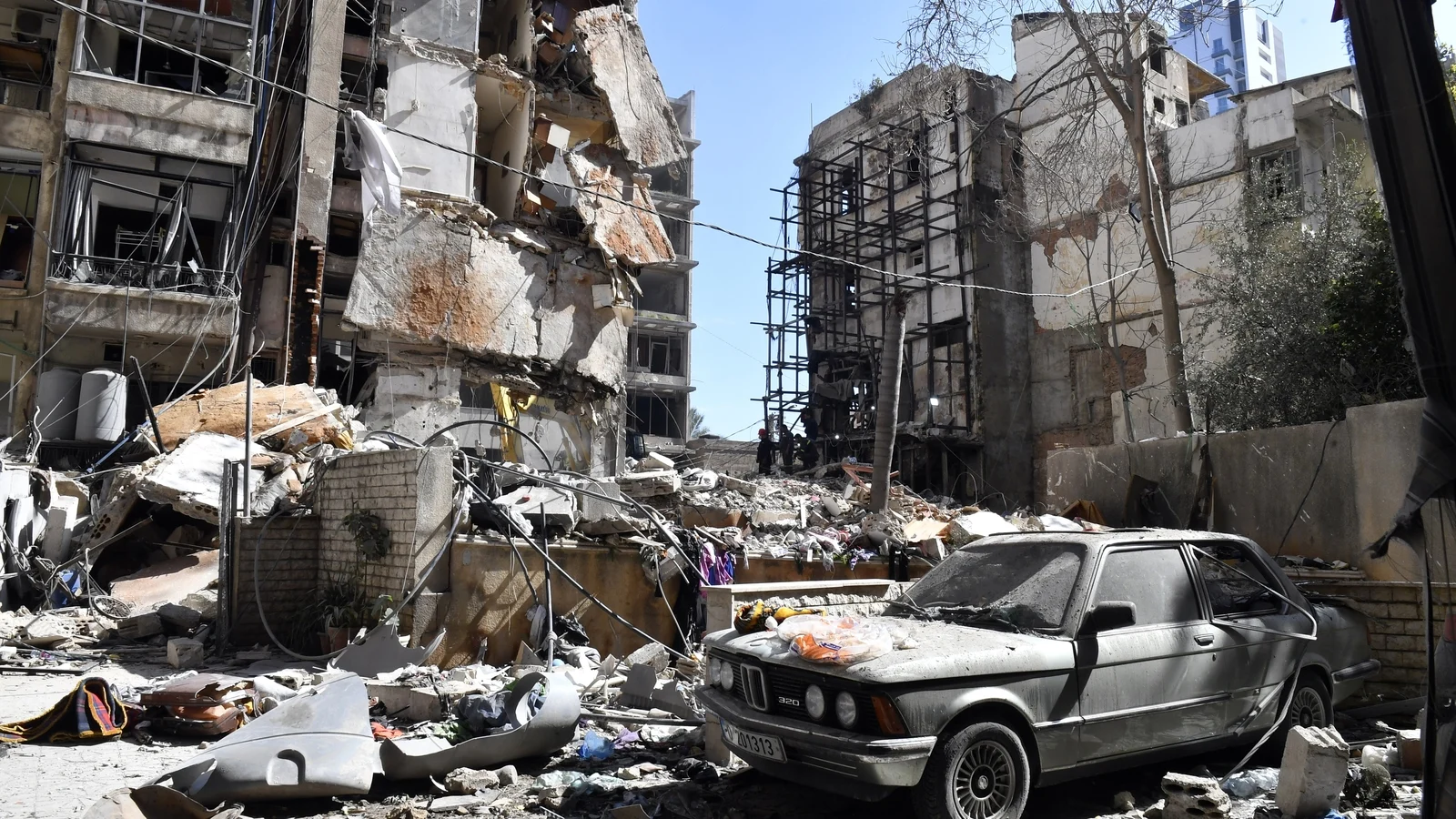
Bombs fell again last night and dawn broke over neighborhoods that should have been quiet—streets littered with glass, a bakery still smelling faintly of yesterday’s bread, and people whose lives were cleaved into before and after. More than 250 people were reported killed in the heaviest Israeli strikes on Lebanon in recent days, and with every blast the fragile architecture of a regional ceasefire creaked toward collapse.
“You cannot sleep when your city is a target,” said Hana Khalil, a seamstress in Beirut who sheltered with her two children in the stairwell of an apartment block whose windows were gone. “We put rugs on the floor so they don’t feel the cold. Every time an explosion comes, my youngest grabs my hand like it can stop the noise.”
The diplomatic choreography meant to keep this war contained is unraveling. Brussels’ foreign policy chief, Kaja Kallas, urged that any truce must explicitly cover Lebanon—stating in sharp terms that Israel’s latest actions did not fit the narrow legal language of self-defence. Across Europe, leaders echoed the same concern: the ceasefire’s boundaries are no longer theoretical lines on a map but battlegrounds where millions of civilians are paying the price.
Rescue, Ruin, and the Human Landscape
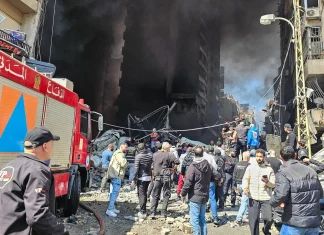
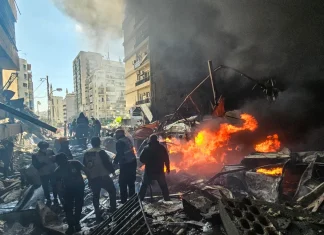
Rescue teams worked through the night, digging through concrete and dust for neighbors, cousins, the occasional pet. “The worst part is the silence,” said an emergency responder who asked to be named only as Karim. “After you pull someone alive out, you hear how the whole block exhales. But then there are more calls.”
The strikes hit densely populated neighborhoods without the customary warnings designed, at least in theory, to give civilians time to evacuate. Buildings crumpled the way old bread crumbles in a palm: quickly, without dignity. Streets that yesterday hosted cafés and fruit stalls now served as triage zones. The human picture is painfully simple: homes destroyed, livelihoods dismembered, futures suddenly uncertain.
Hezbollah, Israel, and the Elastic Line of the Truce
Lebanon was drawn into the wider conflict when Hezbollah began firing rockets into Israeli territory earlier this month. The group says it is retaliating for attacks it attributes to Israel and its allies. Israeli forces, for their part, said they struck high-value targets overnight—including, the military stated, a relative of Hezbollah’s deputy leader and river crossings used by fighters—moves that prompted the militia to resume cross-border fire.
“This is not a contained skirmish anymore,” commented Dr. Miriam Al-Khatib, a regional security analyst. “When precision strikes occur in residential zones and when non-state actors cross the threshold of a truce, escalation becomes hard to rein in.”
Voices of Authority and the Local Reality
Global leaders have taken awkwardly different positions. Washington has signalled that Lebanon is not covered by the current truce, while mediators—most prominently delegations from Iran and Pakistan—insist the opposite. Britain and France, for their part, have publicly called for Lebanon’s inclusion. “Lebanon must be fully covered,” said France’s president in a recent statement. The fragmentation of international messages only amplifies uncertainty on the ground.
Back in Beirut, ordinary people parse these grand statements into everyday questions: Will the water come back? Can I get medicine for my father? Will my child be safe going to school? These are the questions that do not make headlines but shape life for millions.
Strait of Hormuz: A Chokehold on Global Energy
Beyond Lebanon, the conflict has tightened its grip on a different front: the sea lanes. Iran’s moves to control the Strait of Hormuz—the narrow funnel through which roughly one-fifth of the world’s seaborne oil and liquefied natural gas flow—have had immediate global effects. Supply disruptions and the spectre of mined waters pushed physical oil prices toward record highs, with some spot cargoes reportedly fetching near $150 a barrel and refined products like jet fuel trading at still higher premiums as refineries scramble for scarce supply.
“For months, markets priced in disruption as a tail risk,” explained Sofia Mendes, an energy economist. “Now we’re seeing the risk materialize. Insurance costs, shipping delays, and uncertainty about alternative routes all inflate the bill for consumers and businesses worldwide.”
Iran’s Revolutionary Guards published a map suggesting alternative routes around mined areas, a practical step if the strait is to be partially reopened. Yet even such maps are double-edged: a sign of readiness to re-open, but also proof that reopening will be slow, hazardous, and expensive.
Diplomacy on a Tightrope
Negotiators from Iran were due to meet a U.S.-led delegation in Pakistan—a rare forum since the war began—for what diplomats described as urgent talks. The goal: to convert fragile understandings into durable mechanisms that protect civilians and keep global commerce flowing. But Tehran was clear, according to sources close to the talks, that any relief would depend on an end to strikes on Lebanese territory.
“You can’t stitch peace with one hand tied behind your back,” an unnamed Pakistani mediator told me. “If one side feels it’s being squeezed while the other is allowed to strike, there is no mutual confidence to build.”
Freedom of the Seas—A Moral and Practical Argument
British Foreign Secretary Yvette Cooper is among those pressing a simple, almost old-fashioned demand: freedom of navigation must be preserved. “An international waterway cannot be monetised or militarised by one actor,” she argued in a speech, invoking centuries of maritime law. The sentiment resonates far beyond London: shipping companies, airlines, and manufacturers all feel the consequences of chokepoints when energy prices surge.
Where We Go From Here
Look closely and you can see the strands that might lead to containment: shared economic pain, third-party mediators with room to manoeuvre, domestic political constraints on leaders keen to avoid open-ended wars. Look closer still and you see the strands that could snap them: miscalculation, local reprisals, and the human impulse for revenge after personal loss.
What happens if the strait remains contested? How long before higher fuel costs ripple into food prices and broader inflation? And at the most intimate level—how do families rebuild when the skyline of their city has been refashioned into rubble?
“I don’t want to be a symbol,” Hana Khalil told me, voice steady despite everything. “I want to sew a dress and go to the market. I want my children to learn math without hearing sirens. Is that too much to ask?”
That question is both specific and universal. It lands in capitals and kitchens alike: how do we protect ordinary life when geopolitics reshapes maps overnight? If the ceasefire is to be more than a pause between bombs, it must be stitched together with credibility, guarantees—legal and practical—and a recognition that the war’s frontlines are not only defined by tanks and missiles but by supermarket queues and schoolrooms.
There are no easy answers. But the choices made in the coming days—by negotiators in Islamabad, commanders on the battlefield, and leaders in global capitals—will decide whether a weary region can begin to breathe again, or whether the air will remain heavy with the smoke of an intensifying conflict. What would you do if your city became the center of a dispute between giants? How would you choose between justice, safety, and survival?