Night of Blazes: Tehran and a Region on Edge
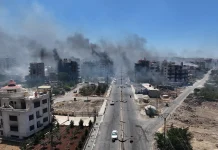
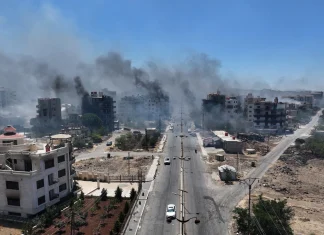
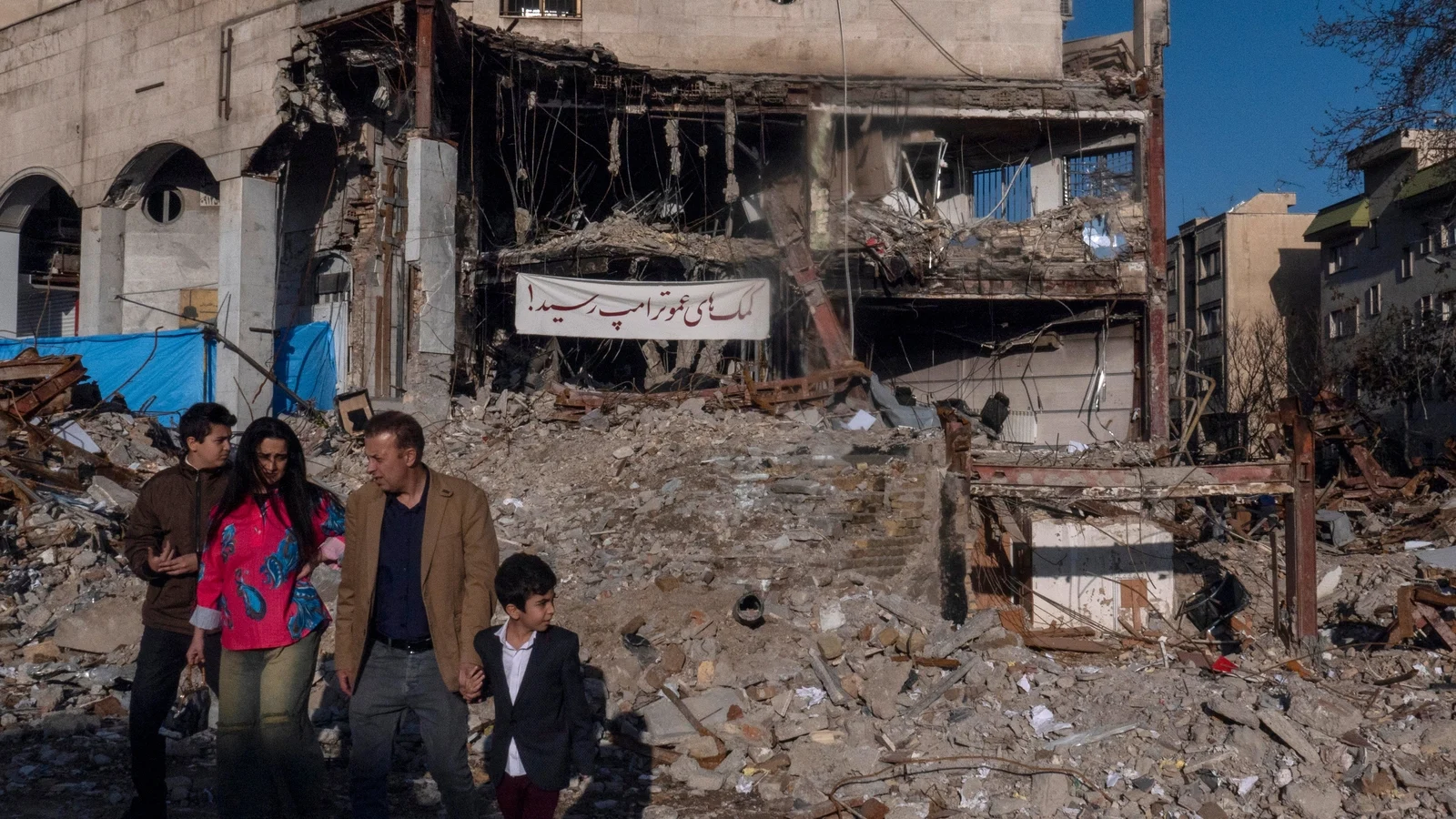
It was not the ordinary glow of a city at dusk. On the fourth week of a conflict that has ripped through capitals and oil fields, Tehran’s skyline flickered with the harsh, staccato light of explosions. Smoke rose over residential blocks. Ambulances threaded through snarled streets. Farther south and to the east, sirens cut into the night in Tel Aviv and the occupied West Bank, where people pressed into stairwells and bomb shelters, wondering if the next blast would be closer than the last.
“I woke up to the windows rattling,” said Mansour, who runs a small bakery on the outskirts of Tehran. “You learn to breathe through fear, but tonight the fear was a different kind—louder, hotter.”
From Targeted Strikes to Threats on Lifelines
What began as a military campaign between states has edged toward something far darker: the deliberate targeting, or threatened targeting, of civilian infrastructure that keeps cities alive. Electricity grids, desalination plants, and pipelines have been named as potential targets in a tit-for-tat escalation that could ripple far beyond the combatants.
International monitors say at least 40 energy assets across the oil- and gas-exporting region have been “severely or very severely damaged,” signaling an unprecedented hit to facilities that underpin global supply. At the same time, one of the world’s most vital shipping lanes—the Strait of Hormuz—has been effectively throttled at moments by actions in the conflict. About one-fifth of global crude normally flows through that narrow stretch of water; when it hiccups, markets and ordinary lives feel it.
“This is not just an attack on tanks and bunkers. This is an attack on the things that make modern life possible for millions,” an energy analyst in London told me. “When power, water and fuel start to be seen as military objectives, the humanitarian stakes skyrocket.”
Why the Gulf’s Water and Electricity Are So Fragile
Walk along any waterfront avenue in the Gulf and you will see glass towers shimmering like ships in the desert—cities that, without energy, would be uninhabitable. In Bahrain and Qatar, desalination furnaces supply virtually all drinking water. In the United Arab Emirates, desalination plants meet more than 80% of potable water needs; Saudi Arabia relies on the process for roughly half its water.
Those plants are voracious consumers of power—electricity that keeps pumps turning and salt left on the shoreline instead of in our glass. Gulf states consume roughly five times as much power per person as many other countries, driven by cooling needs and water production. Cut the power, and you don’t just dim a skyline. You shut down hospitals’ refrigerators, halt water taps, and turn air-conditioned lives into an unbearable furnace.
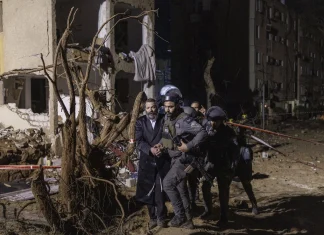
“You can repair a wall. You cannot stitch together a water supply overnight,” said Reza, a search-and-rescue volunteer with the Iranian Red Crescent. “People are already standing in queues to fill buckets. If the desalination stops, we will have more than broken glass to fear.”
Markets and the Mathematics of Fear
Markets are not clairvoyant, but they are very sensitive to risk. Oil has hovered above $100 a barrel at times during the crisis, traders watching every report of an intercepted missile or a damaged pipeline. With energy facilities hit and the Hormuz bottleneck threatened, the prospect of prolonged supply disruptions tightened futures and raised the specter of a global energy squeeze.
Fatih Birol, head of a major international energy watchdog, warned that the damage tally to energy facilities was already significant—at least 40 assets severely affected—and that the ripple effects could be felt from refineries in Asia to petrol pumps in Europe. Inflation worries, already persistent in many economies, grew overnight as transport and manufacturing expenses ballooned.
Why this matters to you
- Higher oil prices filter down into more expensive transport, heating, and food.
- Shipping delays on key routes can raise costs for manufacturers and consumers globally.
- Escalation that hits civilian infrastructure risks a humanitarian crisis that transcends borders.
On the Ground: People, Places, and Fractured Routines
In Khorramabad, west Iran, families woke to the sight of their neighborhood half-shrouded in dust. Hospitals filled with the injured; a child was among those reported killed. In Urmia, wrecked windows and toppled signs told a similar story of ordinary lives interrupted by extraordinary violence.
In Riyadh, morning prayers were followed by a half-hour of unnerving silence, then news: two ballistic missiles had been launched toward the capital; one intercepted, one fell in an uninhabited area. “We are used to drills, not to real rockets,” said Fatima al-Harbi, who runs a grocery store near the city center. “You stack canned goods not for convenience but because you don’t know when the road will be safe to go to the supermarket.”
Across the Gulf, ports adjusted watchfulness and shipping firms rerouted vessels or paused sailings. Insurance premiums rose, and charter rates spiked for tankers tasked with carrying crude around or away from the Strait of Hormuz. The shipping industry sent a clear message: volatility breeds cost.
Questions for the Wider World
What is the acceptable cost of deterrence when whole cities can be pushed to the brink of losing electricity and water? How long can global supply chains tolerate operating on the edge of such geopolitical risk? And for those who live furthest from the conflict, how do you weigh solidarity with strategic partners against the immediate economic pain felt at your local petrol pump?
These are not abstract queries. They are choices for policymakers and citizens alike, and their answers will shape months—perhaps years—of geopolitics and economics.
Where We Go From Here
Diplomacy must be the instrument that reins in this spiral, yet diplomacy is a fragile thing—easily eroded when politicians and generals play for advantage. Leaders talk of “obliterating” power plants and “closing” straits; such rhetoric can be calming for home audiences but combustible in practice.
For now, people like Mansour, Reza, Fatima and thousands of others return to a day that is both routine and unimaginable: children to school where classes may be interrupted by alarms, shopkeepers stocking goods that might become scarce, medics preparing for the next surge of patients. They live at the sharp end of decisions made in distant rooms.
Read this and ask yourself: how much of your daily comfort is the product of fragile systems working quietly in the background? And what responsibilities do we bear, collectively, when those systems become targets?
In the end, this is not just a story about missiles and markets. It is about the fragile scaffolding of modern life and how easily it can be rocked—not only by bombs, but by the political choices that make those bombs a strategy. The next chapter depends on restraint, repair, and the stubborn human work of rebuilding trust—on both sides of the conflict and far beyond the shorelines of the Gulf.