Smoke Over the Bekaa: A Valley of Olive Trees, Meetings, and Missiles
There is a peculiar hush that follows the boom of an airstrike in eastern Lebanon — a silence that is at once heavy with dust and thick with questions. In the early hours after an Israeli strike flattened part of a building between Riyak and Ali al-Nahri, villagers in the Bekaa Valley stepped out into a smeared dawn and found their ordinary lives interrupted by the extraordinary: charred concrete, the smell of diesel, and men who used to be counted among the region’s shadows now reduced to statistics.
Hezbollah spokespeople say eight members of the group were killed during a meeting in the eastern Bekaa. Lebanon’s health ministry tallied a broader human toll: ten people killed in the east and two in the south — numbers that include both fighters and, as neighbors insist, civilians. The Israeli military said its strikes hit “several terrorists of Hezbollah’s missile array in three different command centres in the Baalbek area,” a terse formulation that did little to quiet the neighbors’ grief.
On the Ground: What People Saw
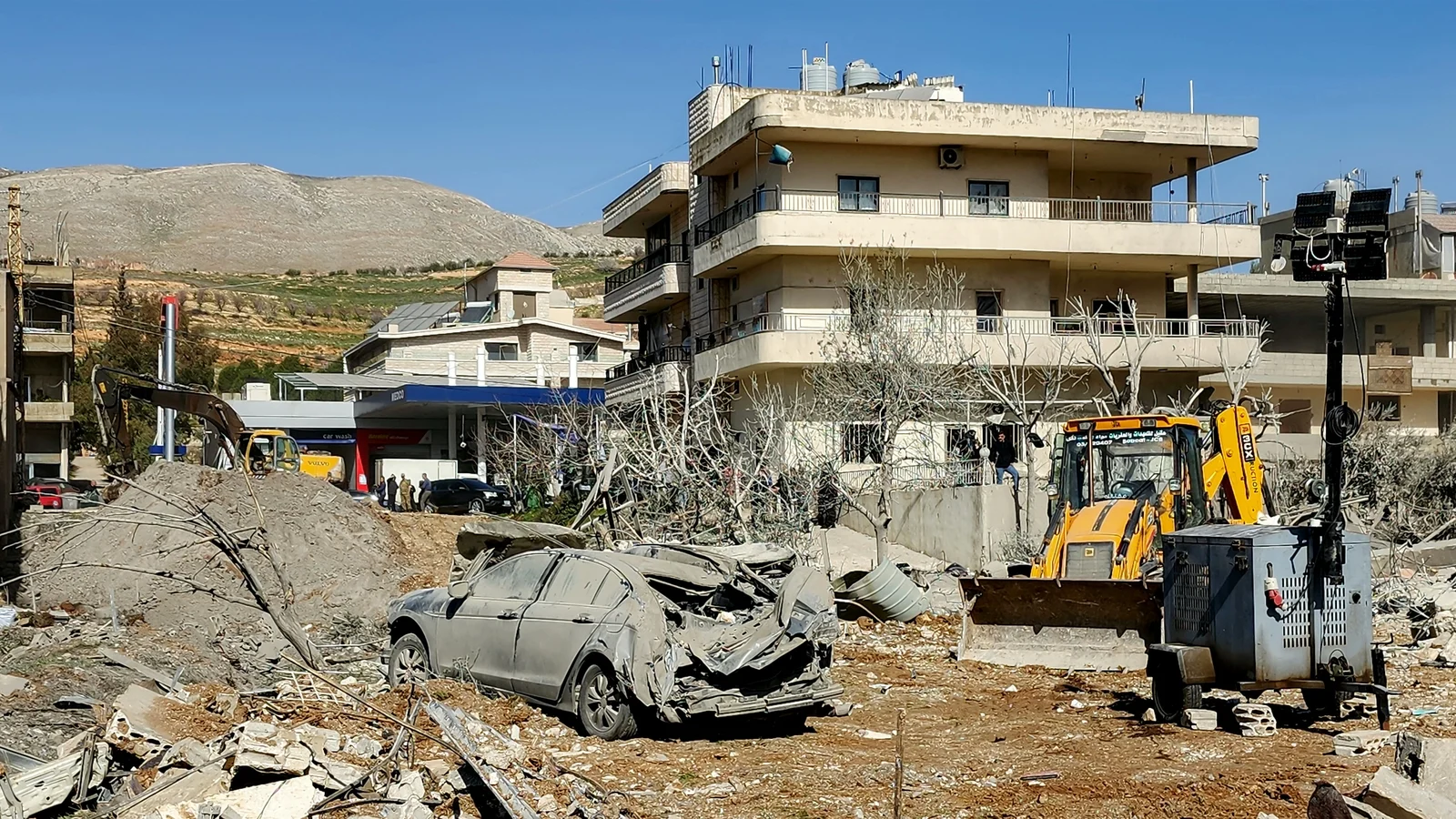
A bulldozer operated slowly, like a reluctant hand trying to erase a bruise. An AFP correspondent who later walked the site described debris-strewn streets and a heavily damaged four-story building — once home to families, now a jagged reminder of how quickly ordinary places can become strategic targets.
“I was in the shop when the wall fell. My wife is still inside,” said Karim, a shopkeeper from nearby Bednayel, his voice breaking between cigarette puffs. “They tell us these men were fighters. How are we supposed to know? We bury whoever is here. All we know are families and names.”
The strike also came hours after an attack on Lebanon’s largest Palestinian refugee camp in the south, where the health ministry reported two deaths. Hamas, the group Israel said it had targeted there, condemned the strike and said the building hit belonged to forces tasked with maintaining security inside the camp.
Politics in a Valleyscape: Disarmament, Diplomacy, and Distrust
The strike did not occur in a vacuum. Lebanon’s government has publicly committed to a plan to disarm Hezbollah in the country’s south; the army says it completed the first phase near the border and is preparing to launch a second. The deeper question running through the region’s conversations is whether a sovereign state can reassert control over armed groups that have both political and social roots in their communities.
“We will not accept authorities acting as mere political analysts while our people are being targeted,” said Rami Abu Hamdan, a Hezbollah lawmaker. “Suspend committee meetings until the enemy ceases its attacks.”
Lebanon’s President Joseph Aoun called the raids “a blatant act of aggression aimed at thwarting diplomatic efforts,” speaking specifically of ongoing multinational attempts — including the United States on a five-member committee — to solidify a ceasefire signed in November 2024. Those efforts will be tested anew when the committee reconvenes next week.
Regional Ripples and Global Stakes
This is not just a local quarrel. The strikes took place against the backdrop of escalating tensions between the United States and Iran, with the US warning of possible military options over Tehran’s nuclear ambitions. Iran’s network of regional partners — from Hezbollah in Lebanon to Hamas in Gaza — gives any skirmish here the capacity to ignite wider conflagrations.
“Proxy dynamics have turned towns and valleys into chessboards,” said Dr. Lena Markari, a Beirut-based conflict analyst. “What makes this dangerous is that decisions in Tehran, Jerusalem, and Washington cascade down into villages where farmers plant grapes in spring and harvest olives in autumn.”
Consider the numbers that remind us the clash has everyday consequences: the November 2024 ceasefire ended more than a year of open fighting between Hezbollah and Israel, yet strikes continue. The health ministry’s tally of the dead yesterday — a dozen in two regions — is a small but vivid punctuation mark in a longer sentence about displacement, trauma, and a fraying state authority.
Lives Caught Between Orders and Allegiances
In the Bekaa, identity is a tapestry of loyalties: family, sect, political movements, survival. The valley itself sits like a natural amphitheater, its wheat fields and vineyards hearing more politics than harvest songs in recent years.
Astha, a schoolteacher in Bednayel, described the quiet panic before dawn. “Children asked if the sound was thunder. They are seven and eight and can no longer tell the difference between thunder and fear. We teach them math and history, but what they learn when buildings fall is something else entirely.”
She added, “The talk is not only about Hezbollah or Israel. The talk is about whether the state can protect us, whether the economy can sustain us, whether the ceasefire is a paper promise.”
Why This Matters to the World
Ask yourself: why should a strike in a valley far from Western capitals command headlines? Because this geography is a lived nexus of broader global issues — the limits of nation-state control, the role of non-state armed groups anchored in local communities, and the way great power politics trickle down into everyday suffering.
Nearly two decades into an era defined by regional proxies and asymmetric warfare, the Bekaa Valley incident highlights how local grievances and international rivalries are braided together. The outcome of Lebanon’s internal disarmament plan has implications not only for its sovereignty but for broader regional stability: if armed groups are allowed safe harbor within state borders, the risk of proxy escalation rises; if the state pushes too aggressively, it risks alienating portions of its population and inciting new cycles of violence.
What Comes Next?
On the immediate calendar: the multinational ceasefire committee meets in days. Diplomats and military planners will parse whether yesterday’s strikes are tactical operations against missile infrastructure or strategic moves meant to pressure Lebanon—and by extension Iran—politically.
On the longer horizon: Lebanon faces a painful choice about disarmament and national unity, while regional actors weigh the costs of further escalation. The human calculus — the families who mourn in Bednayel and the children who watch classrooms empty — will continue to be the most consequential metric.
“We want peace, but not at the price of forgetting who we are,” said an older woman who lost a neighbor in the strike. “We have graves to tend and bread to bake. The rest is noise.”
Final Thought
So where do you stand, reader? On what edge of the valley does your compass point — toward sovereignty, toward security, toward a ceasefire that sticks? Every conflict asks us this, and the answer matters beyond any single headline. In the dust after the strikes, the question remains: can a society rebuild both its houses and its trust?