For a Moment, a Pause: Israel’s High Court Grants Aid Groups a Temporary Reprieve
There are moments in courtrooms that ripple far beyond wood-paneled walls and legal briefs. On one grey morning, Israel’s Supreme Court issued a tentative pause — an injunction that halts a sweeping government order to strip 37 foreign non-governmental organisations of their Israeli registration while judges consider the dispute. For communities in Gaza and the occupied West Bank, where aid is often the thin thread between survival and catastrophe, the ruling feels like a brief, fragile breath of relief.
“This gives us breathing room,” said Athena Rayburn, director of the umbrella group AIDA, which coordinated the NGOs’ legal challenge. “But the pause is procedural. Our staff on the ground are still navigating closed crossings, dwindling stocks and the uncertainty of what ‘allowed to operate’ will actually look like tomorrow.”
What the Court Actually Ordered
The High Court’s interim ruling — explicitly framed as not taking a final position on the merits — freezes a government directive that would have revoked the Israeli registration of dozens of well-known charities and humanitarian organisations. The list includes Doctors Without Borders (MSF), Oxfam, the Norwegian Refugee Council and CARE, among others.
Those groups had been notified on 30 December 2025 that their registrations had expired and that they had 60 days to re-submit documentation, including lists of Palestinian staff. If they failed, the government said, they would be obliged to cease operations in Gaza and the West Bank, including east Jerusalem, as of 1 March.
The NGOs refused to hand over the staff lists, citing obligations under European privacy laws and real fear of reprisals against employees. The High Court said the clash raised a “genuine legal dispute” — an acknowledgement that the competing demands of security and privacy are not easily reconciled.
Legal Lines, Human Lives
“This is not a paper fight — it’s the difference between whether a clinic stays open or shutters its doors,” said Yotam Ben-Hillel, the lawyer who represented the NGOs. “We won an interim order because courts recognize the gravity. Still, an injunction is not a cure. We still don’t know how authorities will interpret it on checkpoints, at crossings, in bureaucratic files.”
Ben-Hillel’s words echo a practical, unavoidable truth: legal decisions matter only when institutions and officials implement them on the ground. The court gave time. It did not map the route for trucks stuck at crossings or outline the safety guarantees for Palestinian staff who could be named in exchange for registration.
What’s at Stake in Gaza and the West Bank
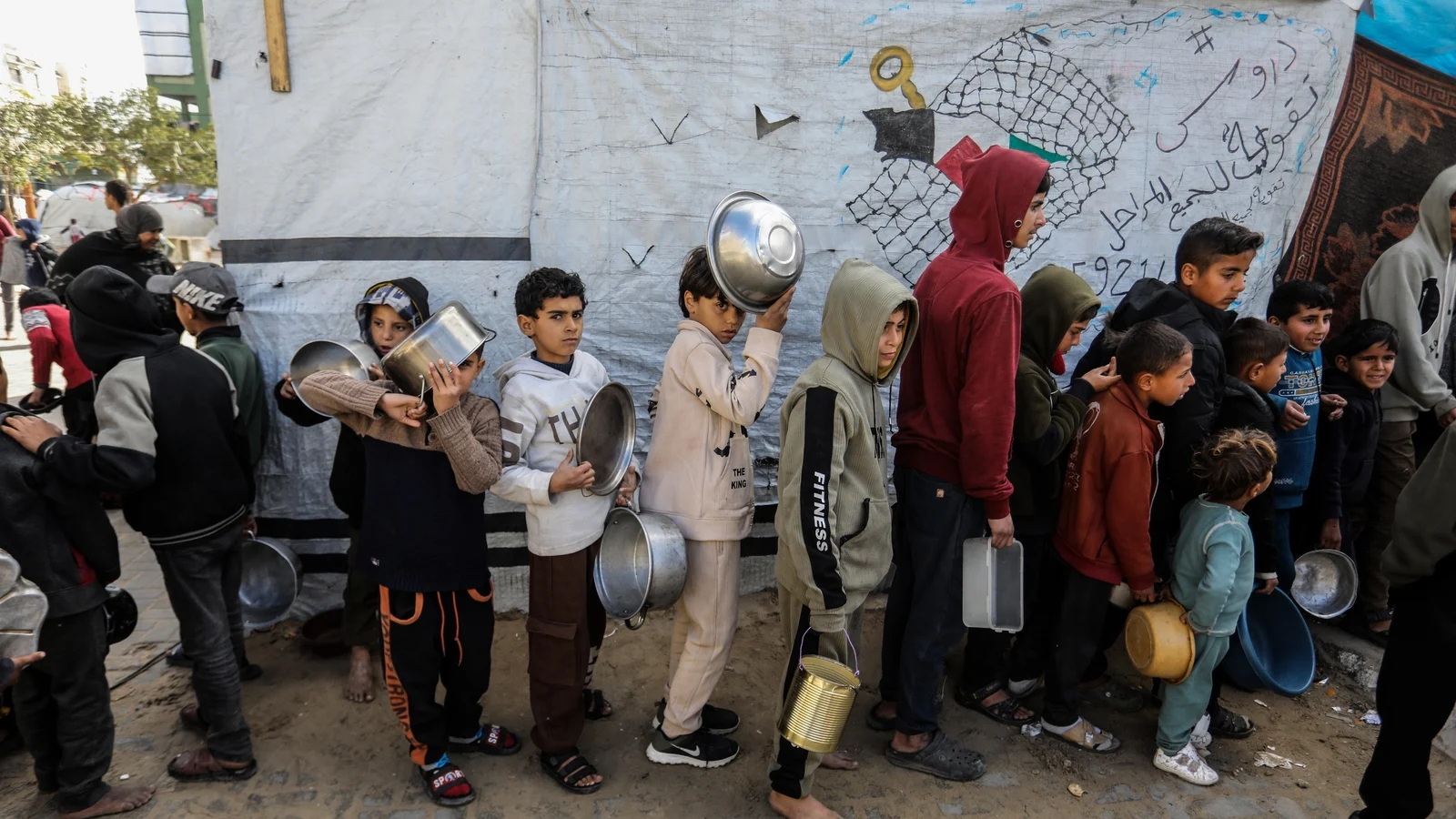
Allowing humanitarian organisations to operate in Gaza and the West Bank is not just a legal technicality — it’s a logistical and moral lifeline. Gaza, home to roughly 2.3 million people, has faced repeated cycles of conflict and blockade for years. Humanitarian agencies deliver water, perform surgeries, run maternity wards and maintain food distribution networks that keep communities alive. The West Bank, meanwhile, hosts a complex landscape of checkpoints, permit systems and contested sovereignty where aid can mean crucial healthcare and schooling.
“We depend on the humanitarian actors to fill gaps the political system will not,” said Dr. Sawsan Abu-Hassan, a public health specialist in Ramallah. “When organisations are threatened, the first to feel it are mothers, children, the elderly — people who cannot carry their needs into a courtroom.”
MSF, for example, told the court and the press that it evacuated 28 foreign staff from Gaza in the weeks before the ban would have taken effect; some 1,200 Palestinian staff remained to run clinics and essential services. “The foreign surgeons went out. The backbone stayed,” said Craig Kenzie, MSF’s Gaza project coordinator. “We have supplies, but they’re insufficient. Commercial cargo is entering Gaza, but at prices many cannot afford. That’s not a substitute for humanitarian supply chains.”
Privacy, Protection, and the Politics of Access
At the center of the legal quarrel sits a simple, urgent question: should NGOs be forced to hand over employee lists to a state that might treat those employees as security risks? For many humanitarian organisations working under European jurisdiction, handing over staff names would violate privacy laws — not least the General Data Protection Regulation (GDPR) of the European Union — and expose employees to potential arrest, detention, or worse.
“We cannot betray our staff,” said an NGO field coordinator who asked to remain anonymous for safety reasons. “Our duty of care is to protect them. If local staff are exposed, the response is immediate and personal: family members worry, colleagues fear, and people stop coming to clinics.”
Israel argues that transparency and oversight are necessary for security — particularly in a region where militants have used civil society fronts in the past. International human rights groups counter that broad-brush delisting of humanitarian groups will worsen the very insecurity the state seeks to prevent.
Voices from the Ground
In a market in Deir al-Balah, a coastal town in central Gaza, a vegetable seller named Mahmoud wrapped a plastic bag around a stack of oranges and spoke with weary pragmatism. “Doctors used to come and help people for free,” he said. “Now they tell us ‘maybe’ every time. My neighbor’s child needs surgery. Should we wait for the judge to decide?”
A teacher in Nablus, Lina, framed the decision in broader social terms. “When space for civil society shrinks,” she said, “you see not just fewer clinics, but fewer cultural programs, fewer rights organisations, fewer people helping others find legal aid. It becomes harder to breathe as a society.”
Why This Matters Globally
This legal tussle in Israel is not an isolated case. Around the world, governments are tightening oversight of NGOs under the banners of national security and anti-terrorism. From restrictions on foreign funding to onerous registration requirements and transparency laws, the global trend is clear: civic space is under pressure. The debate in the High Court presents a microcosm of a larger tension — how to balance legitimate state security concerns with the rights of civil society, the privacy of employees, and the urgent needs of vulnerable populations.
What happens in this case could set precedents. Will courts insist on procedural safeguards for staff privacy? Will governments accept limits to their oversight in the name of humanitarian necessity? Or will security prerogatives prevail, narrowing the operating ground for independent aid groups everywhere?
Looking Ahead — Questions That Remain
The interim ruling buys time but not answers. Who will interpret the injunction at border crossings? Will private donors, already nervous by uncertainty, continue funding operations? How will displaced families in Gaza and remote hamlets in the West Bank cope if NGOs are forced to reduce services or withdraw entirely?
“Courts can only do so much,” said Dr. Abu-Hassan. “The rest depends on politics, on negotiators in ministries, on civil servants who decide whether a truck moves or a permit is granted. For the people I serve, ‘perhaps’ is not enough.”
Closing Thoughts
As you read this, imagine the hum of a Gaza clinic — a nurse coaxing a newborn, the hiss of a makeshift oxygen line, the whispered prayers of a mother. Imagine an office in Ramallah where staff update spreadsheets, try to secure funding, and worry about names on a list. The High Court’s decision did not end the story. It opened a small window through which hope might flow. But whether that hope turns into supplies, surgeries, and secure jobs depends on far more than a line in a judgment.
So here’s a question for you, the reader: in a world where security narratives and humanitarian imperatives collide, how should societies balance the protection of citizens with the protection of those who serve them? The answer will shape not only legal precedent in Tel Aviv, but the lives of millions in Gaza, the West Bank, and beyond.