Smoke over the Bekaa: A Valley on Edge
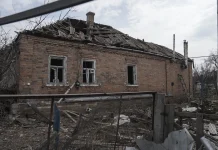
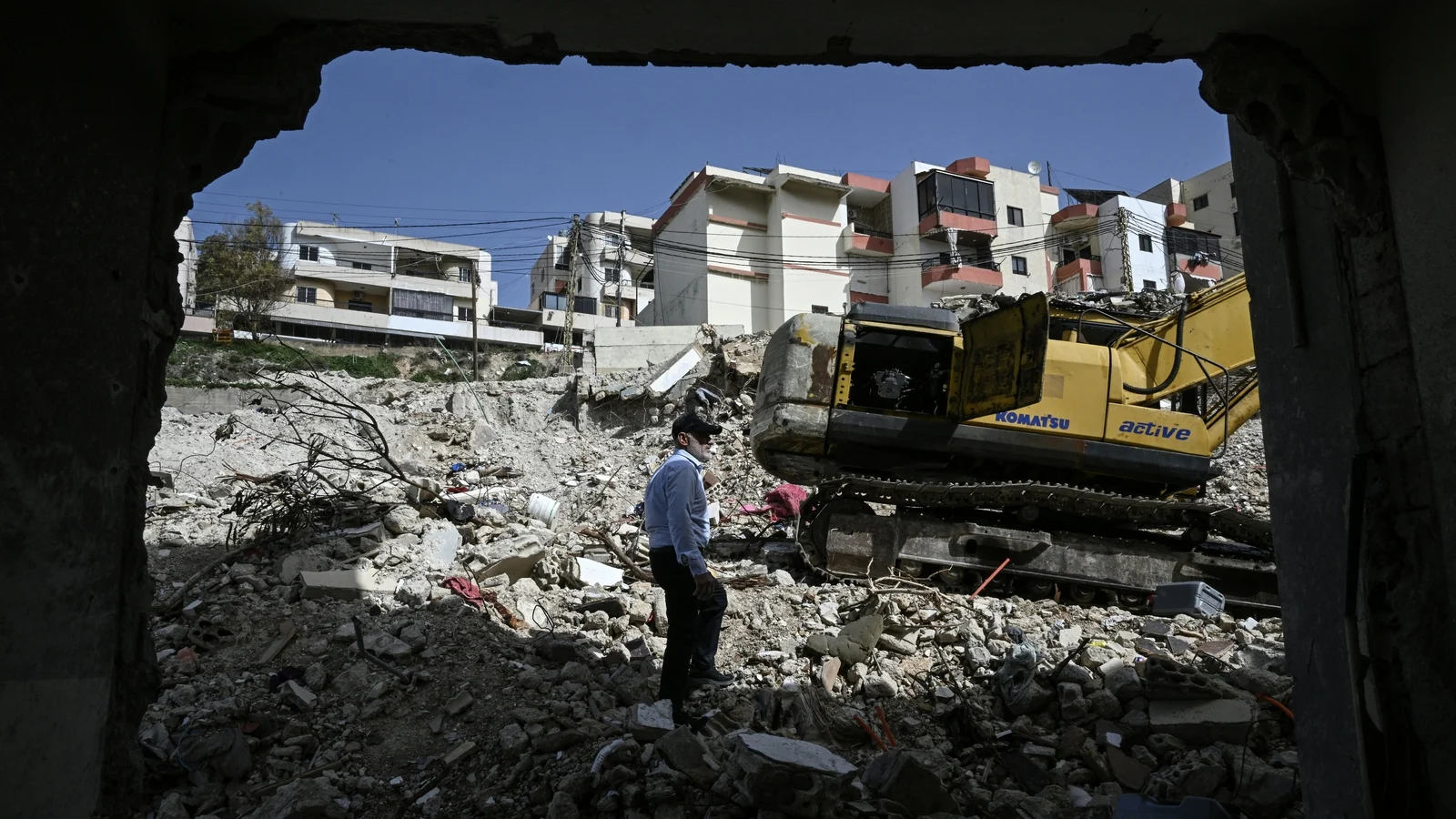
When the first drones cut across the morning sky above Baalbek, the valley smelled of olives and diesel and an old, fragile calm that had settled after months of uneasy quiet. By midday, that calm was gone. Buildings shook; window glass scattered like rain. Men and women ran from the narrow lanes, clutching children and the little that could be grabbed in a hurry. In the wake of the strikes, grief settled in like dust.
Local security sources and regional reporting now put the human toll at a stark minimum: at least ten people killed and roughly fifty wounded in strikes across the Bekaa Valley, centered around the Baalbek area. The Israeli military said it had targeted what it described as Hezbollah command centers. Among the dead, according to two security sources, was a senior Hezbollah official. There was no immediate public comment from the group.
Scenes and sounds
“This valley has always been quiet in the mornings—farmers, schoolchildren, the call to prayer,” said Karim, a 42-year-old olive farmer standing by a charred pickup. “Today, it sounded like the past came back to pull everything apart. I could see smoke from my father’s field. There was a child, crying, with dust in her hair. I can’t forget that.”
The Bekaa, an agricultural spine running through eastern Lebanon, is storied and scarred: ancient ruins at Baalbek sit only a few kilometers from makeshift refugee settlements and warehouses that have become targets in a conflict that never seems confined to front lines. The strikes are among the deadliest recorded in eastern Lebanon in recent weeks and threaten to further fray a US-brokered ceasefire that has held, fitfully, since 2024.
Testing the limits of a fragile ceasefire
The ceasefire that was agreed in 2024 was meant to put an end to a year of near-constant cross-border fire between Israel and Hezbollah—fighting that had sharpened into an exchange of strikes that degraded the Iran-aligned group’s capabilities. Since that agreement, both sides have traded accusations of violations. Each incident now risks becoming the spark that ignites a broader confrontation.
“A ceasefire is not a peace. It is a paused war,” said Miriam Haddad, a Beirut-based analyst who has followed Lebanese politics for two decades. “These strikes test the political will on all sides—Hezbollah, the Lebanese state, Israel, and international brokers. Every civilian life lost makes compromises harder to swallow.”
Lebanese leaders have warned that wide-ranging Israeli strikes could push a country already dragged into economic collapse and political paralysis over the edge. Lebanon, a state battered since 2019 by financial implosion and a ruptured public contract, still hosts more than a million Syrian refugees and tens of thousands of Palestinian refugees—populations that increase the human stakes of any escalation.
The Ain al-Hilweh strike: a crowded camp in the crossfire
In a separate operation, the Israeli military said it struck what it described as a Hamas command center operating in Ain al-Hilweh, the largest Palestinian refugee camp in Lebanon, near the port city of Sidon.
Ain al-Hilweh is a maze of alleys, small shops, and dense housing where tens of thousands of people live in a claustrophobic press. “There is no safe place in a camp,” said Fatima, a schoolteacher who fled southern Lebanon during earlier conflicts. “When a strike hits a place where so many children and old people live, the damage is not only to buildings. It is to souls.”
Hamas condemned the strike and denied the Israeli characterization of the target, saying the site belonged to the camp’s Joint Security Force—a local body tasked with maintaining internal order. The dispute over who was responsible for what in that crowded space underscores a grim reality: in today’s conflicts, arenas of war and daily life often overlap.
Diplomacy under strain: a Washington meeting and competing demands
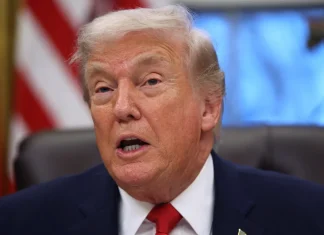
Meanwhile, in Washington, a new initiative intended to foster reconstruction met its inaugural session: Donald Trump’s so-called “Board of Peace,” a body that drew pledges of money and personnel from several countries to help rebuild territories ravaged by recent fighting. The meeting came more than four months into a fragile ceasefire between Israel and Hamas.
But diplomacy on the international stage is not happening in a vacuum. Hamas insists any discussion about Gaza must begin with an immediate halt to what it calls “aggression” and a lifting of the blockade. “Any political process must start when the bombing stops,” a Hamas spokesperson told reporters, adding that the group’s demand includes guarantees of national rights and freedom.
Israel, for its part, has insisted that militant groups disarm before broad-scale reconstruction can begin. Prime Minister Benjamin Netanyahu declined to attend the Washington meeting in person, sending his foreign minister instead, and has repeatedly tied the return of everyday normalcy in Gaza to the dismantling of militant military capabilities.
Questions that won’t go away
Who guarantees reconstruction can proceed without rearmament? Who ensures aid reaches civilians and not armed groups? And what happens when parties on the ground see a temporary lull as an opportunity to regroup militarily?
“There are no easy answers,” said Thomas Egan, a humanitarian officer who has worked in Lebanon and Gaza. “Reconstruction is vital for people to return to their lives, but it also becomes a bargaining chip. If the international community pays attention only when cameras are rolling, we will keep trading short-term fixes for long-term instability.”
What this tells us about the regional picture
This latest round of violence is not an isolated flare-up: it is a symptom of a sprawling regional fault line. Hezbollah remains a potent political force inside Lebanon and a strategic ally of Iran. Israel sees Hezbollah’s arsenal as an existential threat; Lebanese authorities complain that these cross-border confrontations risk dragging the whole country into a renewed—and perhaps wider—conflict.
For local residents, the geopolitics are painfully immediate. “We wake up, and either the work we do to get by is gone, or someone we love is gone,” said Samar, who runs a small bakery near Baalbek. “We don’t ask for politics. We ask for bread on the table.”
- Casualties reported: at least 10 dead, about 50 wounded in Bekaa strikes (security sources).
- Targets cited: Hezbollah command centers in Baalbek and an alleged Hamas site in Ain al-Hilweh.
- Diplomacy: US-brokered ceasefire in 2024 still holds tenuously; Trump’s “Board of Peace” began reconstruction talks in Washington.
Looking ahead: fragility, responsibility, and the human cost
As the smoke clears, the questions multiply. Can a ceasefire that depends on restraint from several armed actors and the patience of civilians survive another hit? Will the international community be able to decouple urgent humanitarian needs from security demands? And what price will ordinary people pay if politics continue to play out in the skies above their towns?
“We need commitments that are more than statements,” said a UN aid worker who asked not to be named for security reasons. “That means safe corridors, consistent funding, and clear accountability. Without that, the cycle repeats.”
When you scroll past headlines and images online, take a moment to remember the olive groves of Bekaa and the crowded alleys of Ain al-Hilweh—places where everyday life persists despite the thunder of geopolitical decisions. What responsibility do distant capitals bear for those living under the shadow of strikes? How do we, as a global community, choose to act when a fragile peace is tested by violence once more?