When the Dawn Breaks: Another Day of Loss in Gaza
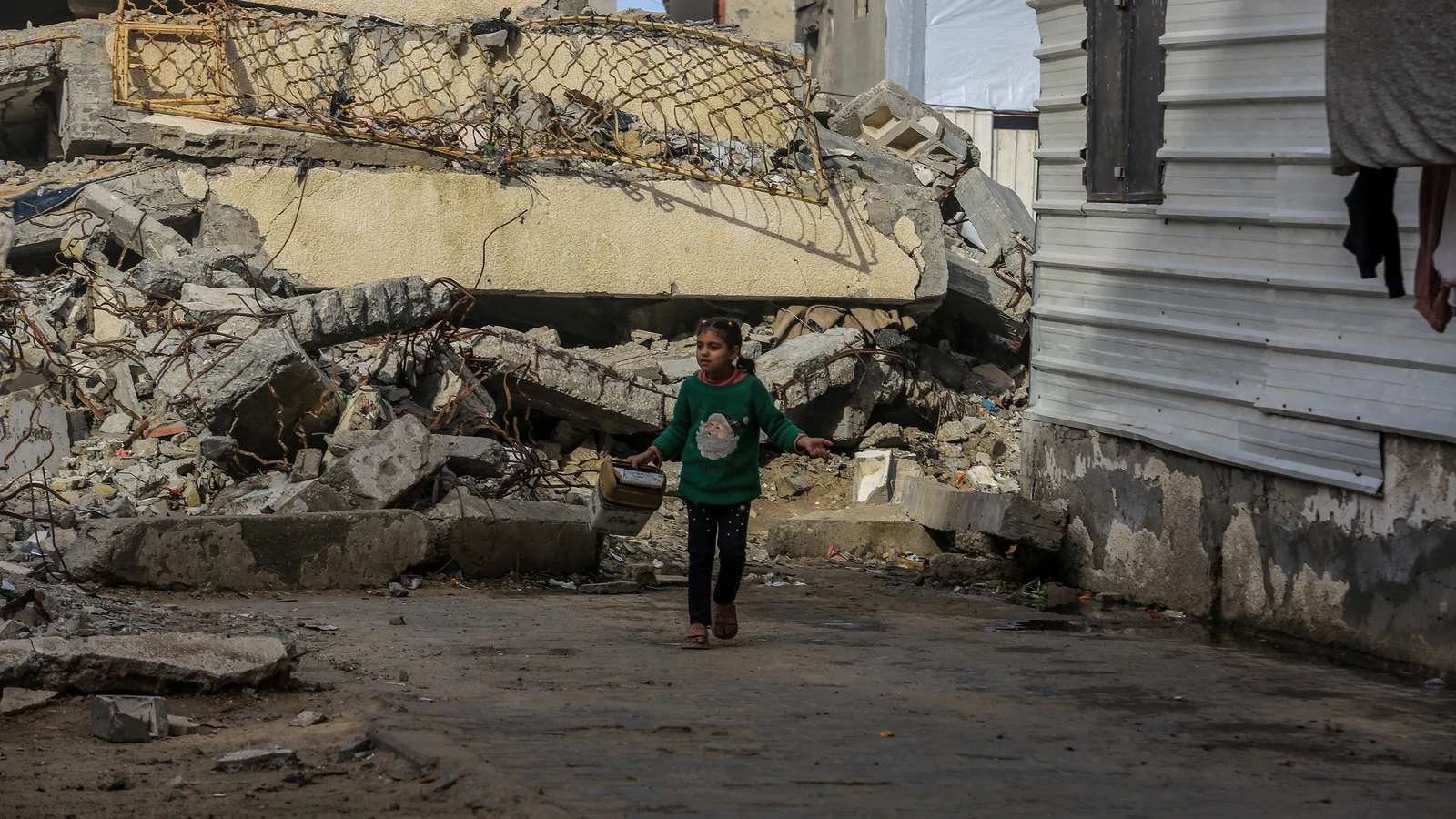
There is a sound here that never quite leaves the chest: the dull, abrasive echo of things collapsing, of homes remembering how to fall. In Tuffah, a neighborhood in northern Gaza City, people picked through concrete and wire at first light, searching for shoes, photos, anything that could make the day seem like yesterday instead of an endless rupture. Then the ambulances came, and the count of the living and the dead shifted again.
Gaza health officials say eight people were killed in Israeli strikes yesterday. Two were killed in an airstrike on a group of Palestinians in Tuffah. Later, five others lost their lives after drone strikes hit two police checkpoints — one in southern Khan Younis, another northwest of the Bureij refugee camp in Abu Hujair. Several more were wounded, some critically, according to medics on the ground.
A neighborhood speaks
“We heard the plane, then a sound like a giant hitting the ground,” said Laila, a woman in her forties who had returned to Tuffah with three children to salvage a mattress. “My brother was at the corner. He called and then the phone went dead.” Her voice trembled, but she did not sob. “There is no time for that.”
At Shifa and Nasser hospitals, stretcher-bearers moved through corridors that smelled of antiseptic and diesel. “We are treating more shrapnel, more children with burns,” said a medic who asked not to be named. “The triage keeps growing. We are running out of painkillers and bandages.”
The military narrative
The Israeli military said its forces operating in the southern Gaza Strip killed a militant who had entered an area still held by Israeli forces. It described the incident as a violation of the U.S.-brokered ceasefire that began last October. Officials said the individual “posed an imminent threat” to troops.
There was no immediate comment from the Israeli military about the airstrike in Tuffah or the drone strikes in Khan Younis and Bureij, even as the humanitarian toll mounted and local ambulances ferried victims from the rubble.
Fragments of a fragile peace
The ceasefire, negotiated last October after months of intense fighting, has been both fragile and paradoxical: it stopped wide-scale offensives but did not end the deaths. Gaza’s health ministry says more than 72,000 people, mostly civilians, have died from Israeli fire since the war began after Hamas’s 7 October 2023 attack on southern Israel, an assault that Israeli tallies put at about 1,200 killed.
Since the ceasefire came into effect last October, the ministry reports at least 600 more people have been killed by Israeli fire. Israel, for its part, reports that four soldiers have been killed by militants in Gaza since the truce began. Both sides accuse each other of violations — an accusation that plays out in neighborhoods where the only witnesses are children playing among shattered glass and the occasional elderly man who remembers when the shops had names that didn’t ask for donations.
Into the second phase
In January the Gaza deal entered a second phase. Israel is expected to withdraw more of its troops from the Strip; Hamas is meant to cede administrative control of many day-to-day functions. But transitions on paper often collide with realities on the ground: checkpoints still cast long shadows, and the administrative handover moves slowly, like a conversation interrupted mid-sentence.
“Every change takes place under pressure — political, military, humanitarian,” said Miriam Ben-Ari, a regional analyst who has tracked ceasefire negotiations. “The intent of the second phase is de-escalation, but if those small violations continue, the confidence necessary to fully implement the agreement evaporates quickly.”
Lives in numbers
Numbers can flatten suffering into data, but they are useful for understanding scale. The Gaza health ministry’s figure — more than 72,000 dead — adds a weight that is almost impossible to hold alone. Hundreds more wounded every week. Hospitals stretched to their breaking point. Displacement on a scale that makes temporary tents feel like a permanent address.
Humanitarian agencies warn that Gaza’s infrastructure — sewage, water, electricity — has been devastated. Schools double as shelters. Markets are skeletal. The World Food Programme and other aid groups report logistics are messy and sporadic, and reconstruction funds remain uncertain, while political impasses complicate delivery of basic services.
Voices from the street
“We sleep in shifts so the children don’t get scared,” a father in Khan Younis told me, his hands stained with dust. “At night you can still hear the drones. We pretend it’s thunder.”
An older woman in Bureij, who has lived through multiple displacements in her lifetime, said, “We plant what we can and wait for the rain. That’s what families here do — we keep trying.” Her eyes had the strange patience of people who have learned to pace their grief, to measure it out like a ration.
What does the world owe?
As a global audience, what should we do with this information? It is easy to become numbed by repetition: another strike, another tally. But every number contains names, interior lives, future plans severed mid-sentence: children who wanted to be teachers, a baker whose oven cannot be fixed, a midwife who has lost her clinic.
International diplomacy has an ethical dimension here: ceasefires are not just pauses in fighting; they are opportunities to rebuild trust, to secure humanitarian corridors, to lay groundwork for a durable peace. When those opportunities are punctured by violence, the cost is paid in lives and in the erosion of any hope that the next phase will be different.
Questions to sit with
- How can ceasefires be enforced in a way that actually protects civilians?
- What are the responsibilities of third-party brokers when violence resumes?
- And perhaps most fundamentally: what measures can the international community take to make rebuilding not just possible but dignified?
Endings that demand beginnings
Walking through the rubble of Tuffah, I saw a child balancing a toy car in front of a collapsed gate. The car was dusty, its paint scratched, but it rolled. It is a simple, unwieldy image of stubborn hope: human beings continuing to move forward even when the ground gives beneath them. That resilience is not an argument for passivity. It is a call to action.
There are no simple solutions here. But there are choices: to look away, or to listen; to count numbers, or to count names. When the next dawn comes, will the world be ready to help mend what has been broken, and to hold both the immediate suffering and the long-term justice in its hands?