Kashiwazaki-Kariwa’s Second Act: Japan’s Giant Reactor Prepares to Wake
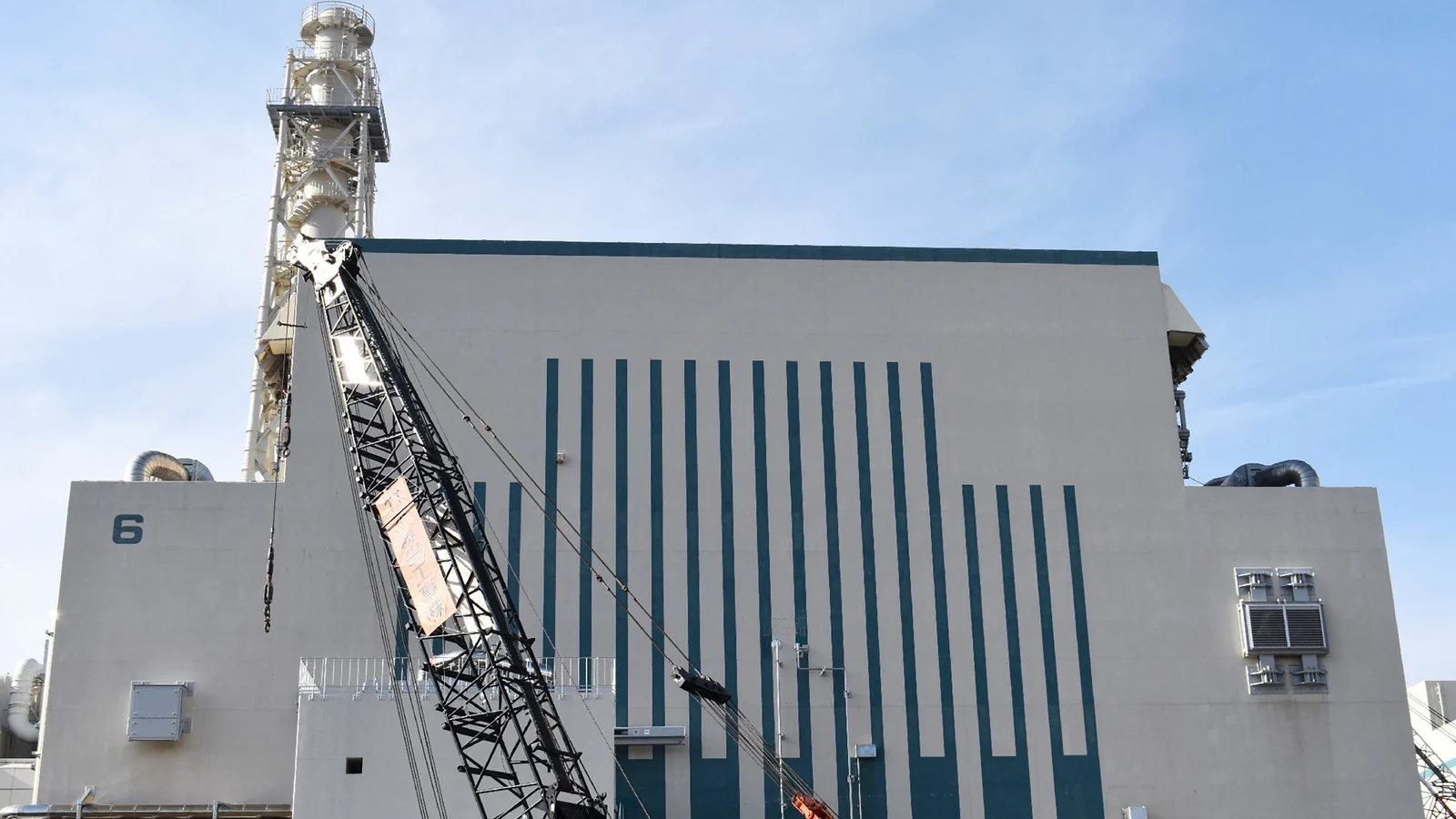
The wind off the Sea of Japan carries salt and a stubborn cold that bites through even the thickest coats. In Niigata prefecture, rice paddies crouch under a powder of late snow and the roofs of small shops steam with the comfort of hot sake. On the horizon, seven cooling towers and a cluster of domes and scaffolding sit like a modern citadel—quiet, enormous, and waiting.
That citadel is the Kashiwazaki-Kariwa nuclear power plant, the largest of its kind on Earth by capacity, and after a hiccup that briefly stalled its revival, Tokyo Electric Power Company (TEPCO) says it will try again. “We plan to start up the reactor on February 9,” Takeyuki Inagaki, the plant’s manager, told reporters, a terse sentence that carries years of anxiety, engineering work and political negotiation.
A stealthy, noisy restart
The attempt last month was stopped within hours—not because of a mechanical breakdown but because an alarm had been set incorrectly. Technicians detected the configuration mismatch and halted the procedure. Officials insist the error had no impact on the plant’s safety systems; still, the incident laid bare a fragile truth: in nuclear power, the smallest human slip can crater public trust.
Kashiwazaki-Kariwa’s story is inseparable from the memory of 2011. After the magnitude-9.0 earthquake and devastating tsunami that led to meltdown at Fukushima, Japan shut down every reactor in the country—54 in total—facing off not only with technical questions but with grief, displacement and a decades-long debate over whether to restart any at all.
Why this matters, now
To understand why TEPCO is pressing forward, look beyond the plant grounds to the electricity market and the climate charts. Before 2011, nuclear generation provided a substantial share of Japan’s electricity—roughly a third in some years—helping to keep fossil fuel imports and carbon emissions lower. After the shutdowns, the country leaned heavily on liquefied natural gas, coal and oil imports, fueling domestic energy bills and complicating emissions goals.
In recent years, only a fraction of Japan’s reactors have returned to service—about a dozen have been restarted after meeting stricter safety requirements. Regulators under the Nuclear Regulation Authority (NRA) implemented sweeping new standards after Fukushima, and utilities have spent billions on seismic upgrades, seawalls and hardened safety equipment. Yet even with upgrades, restarting a megasite like Kashiwazaki-Kariwa is as much a political operation as a technical one:
- Local approvals and consultations with fisheries and municipalities
- Reassurances to residents and compensation arrangements to affected industries
- Implementation of new safety protocols, monitoring and emergency drills
Voices of the coast
Walk into the Haru fish market near Kashiwazaki and you’ll hear a chorus of views. “We’ve had good catches these past seasons,” says Masako, a vendor who has sold Echigo sardines for three decades. “Energy isn’t something I study daily, but jobs matter here. If the plant can be safe, it helps everybody.”
Not far away, a fisherman, arms knotted from a lifetime at sea, scratches his jaw and sighs. “People remember Fukushima. I remember it. My brother moved to the city after that,” he says. “If they say it’s safe, I want proof. We need water clean enough for our children to swim in.”
Across town, young parents gather at a community center for a public forum. “My child was born after the disaster,” says a mother who asked for anonymity. “I don’t want radioactivity in our future. But I also don’t want my neighbors forced to leave again because there’s no work.”
Experts weigh in
“An alarm setting issue is technically minor,” explains a nuclear safety researcher at a Tokyo university who asked not to be named. “But when you’re operating a plant with the scale of Kashiwazaki-Kariwa—seven reactors, around eight gigawatts of capacity—you’re also operating under a microscope. The public reads such errors as symbolic: if routine checks are sloppy, what of the catastrophic scenarios?”
Global context nudges the debate forward. Countries around the world are reassessing nuclear’s role in decarbonization—France still leans on reactors, the U.K. is building new plants, and Germany is phasing out its last units even as it invests in renewables. Japan’s decision balances energy security, economic realities and climate commitments: the government has pledged carbon neutrality by mid-century, a target that complicates a rapid pivot away from low-carbon nuclear toward intermittent renewables alone.
How locals live with the weighing scales
Niigata’s streets reflect both resilience and ritual. Farmers whose families have tended the land for generations bring trays of fresh koshihikari rice to market—their pride on display, their hands stained with soil that has fed Tokyo for centuries. In the evenings, izakayas fill with ordinary conversations about weather, politics and whether the plant will create steady local work again.
Beyond the human narratives, the municipality and TEPCO have threaded a series of safeguards into the relaunch plan: improved emergency shelters, cross-prefectural evacuation routes, real-time radiation monitoring with publicly accessible data portals, and annual disaster drills designed to make coordination smoother than in 2011.
What comes next
On paper, a restart on February 9 is a date. In people’s memories, it is a hinge. For some, the sight of steam rising from cooling towers will be a signal of returning normalcy and economic opportunity. For others, it will be another reminder that the pain of 2011 never really left.
So ask yourself: when technology promises power and the planet signals urgency, how do societies weigh risk against reward? Is trust restored by regulations and checklists—or by the slow steady accumulation of safety demonstrated in the daily lives of a community?
Kashiwazaki-Kariwa’s restart will not answer those questions outright. But as engines begin to hum and workers chalk up yet another checklist, it will offer a real-time lesson in how a nation stitches together faith in institutions, the need for energy and the enduring demand for accountability.
When the lights come on, who will be in the room with you—citizens who feel reassured, skeptics watching closely, technicians proud of their craft? This is not only about a reactor once more generating electricity; it is about a community and a country trying to reconcile memory, safety and the future.