Nightfall Over Glass and Sunflowers: Ukraine’s Latest Round of Strikes and What It Reveals
In the grey hour between dusk and dark, the city hum that keeps life tethered — the tram brakes, the neighbor’s late radio, a dog’s bark — was sliced by a different sound: sirens, then the distant, mechanical whump of intercepted ordnance and the aftershock of buildings shaken. For many Ukrainians, that sound no longer registers as extraordinary; it has become, heartbreakingly, part of daily life. But last night’s barrage felt different. Farther reaching. More indiscriminate.
Officials say the strikes — a barrage that reportedly involved some 430 drones and 68 missiles — hit towns and cities across multiple regions: Kyiv, Sumy, Kharkiv, Dnipro, Mykolaiv and Zaporizhzhia. The air force reported intercepting a large majority of the incoming devices, but not before lives were lost and homes were sliced open by shrapnel and fire.
Human Cost in Plain Numbers—and in Broken Glass
Authorities tallied six people killed and dozens injured. In the Kyiv region alone, Mykola Kalashnyk, head of the regional military administration, said five people died and four others remained in critical condition. “The main target for the Russians was the energy infrastructure of the Kyiv region,” he said, “but there were also direct hits on ordinary residential buildings, schools and businesses.” He reported roughly 30 damaged sites in his region.
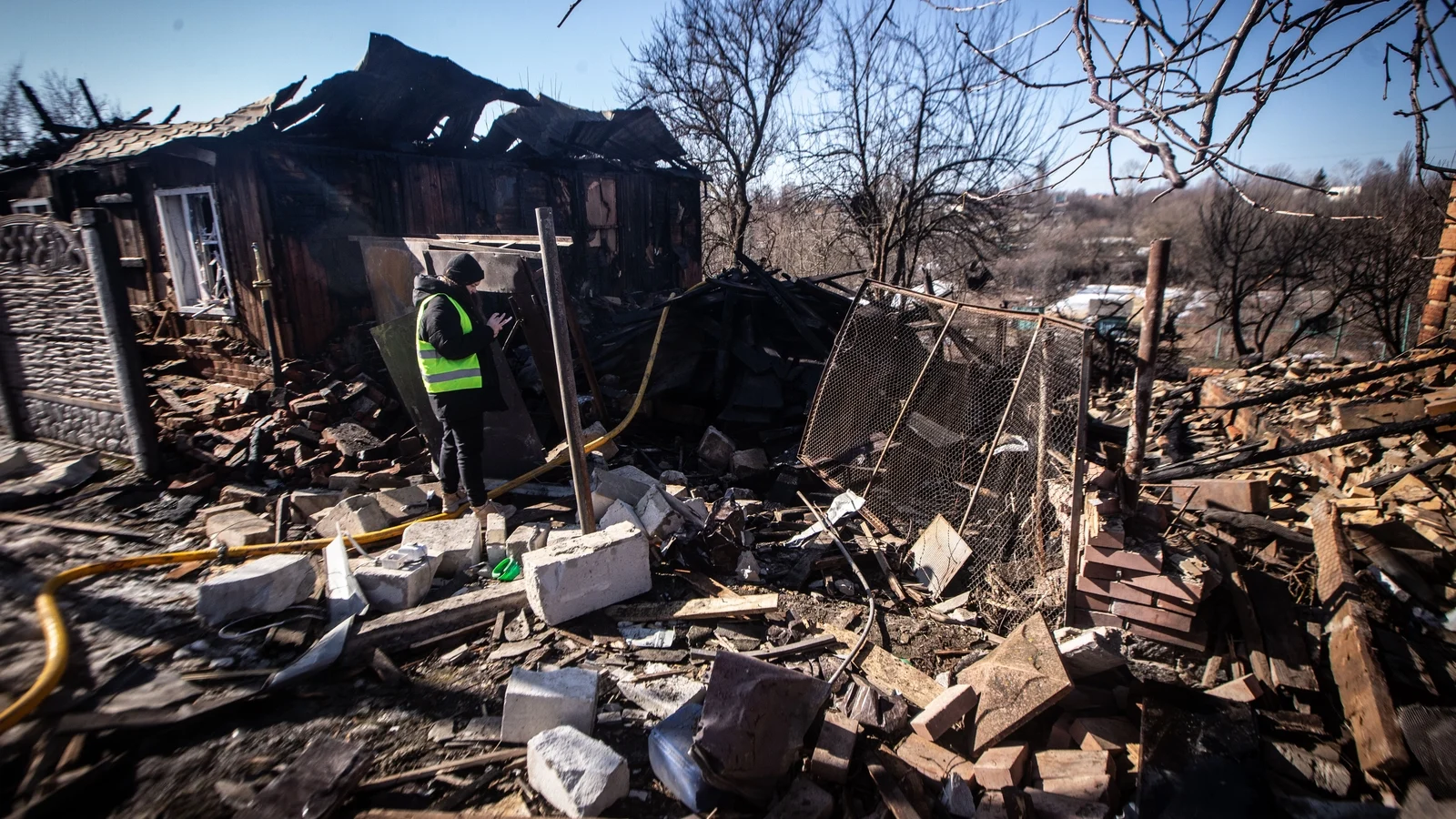
Later in the afternoon, a strike on the suburbs of Zaporizhzhia wounded 18 people, two of them children, the local administration said. Rescue crews cleared apartments and removed glass from balconies — glass that once framed morning coffee and late-night phone calls, now jagged and sharp like the headlines.
“We cleared the hallway at midnight,” said Andriy, a volunteer rescue worker whose soot-streaked face betrayed the hours he’d spent in the ruins. “There was a school satchel lying outside a door, its owner nowhere. You get used to the noises, but not to the looks on people’s faces. That’s what stays.”
How the Defences Fared — and How They Didn’t
The Ukrainian air force said air defenses intercepted 402 of the drones and all 68 of the missiles — impressive on paper, costly in reality. Modern air defences are a high-wire act: they protect cities and infrastructure, but they are not flawless shields. Intercepting an incoming weapon often means the debris still falls into civilian spaces, causing damage and injuries.
“High interception rates are a testament to years of training and the systems provided by Ukraine’s partners,” said Dr. Marta Petrenko, a defense analyst based in Lviv. “But the volume and variety of threats — from low-flying loitering munitions to long-range cruise missiles — force defenders to choose priorities. It’s like trying to juggle flaming torches while someone adds more.”
Behind the Headlines: The Ordinary Places That Were Hit
This wasn’t only a military exchange. Schools, energy plants, small factories, and residential blocks bore the brunt. In one Kyiv neighborhood, where apple trees mark the end of apartment rows and morning markets still sell pickled cucumbers in glass jars, a preschool lost a roof and several windows.
Olena, a teacher in her fifties who has taught in that preschool for decades, stood on the sidewalk without a jacket in the chilly air. “The children’s drawings were on the wall,” she whispered. “Little suns, little houses. Now the suns are covered in dust. We teach them songs about peace. Where do you teach them now?”
Attackers appeared to be seeking to disrupt power and communications — a familiar and strategic goal in modern warfare: make lights go out, hospitals run on shrinking reserves, and patience fray. Even a partial outage can slow emergency services and confuse coordination when minutes count.
What This Means for Diplomacy and Dollars
These assaults arrive on a complicated global stage. Peace efforts led by the United States — attempting to find a diplomatic path to halt more than four years of grinding warfare — have been strained, not just by the fighting in Ukraine but by new geopolitical fires elsewhere. Tensions between the US, Israel and Iran have complicated Washington’s attention and bandwidth.
Meanwhile, a shift in US policy temporarily easing sanctions on Russian oil — a move prompted by disruptions in the Middle East — has President Zelensky and other Ukrainian leaders worried. “Any windfall for Moscow risks paying for more weapons, and more suffering,” one senior Kyiv official said.
There is a straightforward arithmetic to war: money buys munitions. Even a short-lived inflow of revenue can alter calculations. Observers warn that such changes in international economic posture can have downstream effects on the battlefield.
Stories From the Ground: Small Lives, Sweeping Consequences
In a block of flats near the city center, a grandmother named Halyna swept shattered glass from her balcony and paused to count her steps back to the doorway. “We looked out and saw the sky glow,” she said. “My grandson asked if rockets are stars. How do you tell a child otherwise?”
Across the river in a small factory that makes parts for tractors — a town symbol of Ukrainian persistence — a foreman counted damaged equipment and sighed. “We made it through the first winter,” he said, “and now this. It’s not just metal. It’s livelihoods.”
These are the ripples of violence: fractured windows, interrupted schooling, delayed wages, and a mental toll that will persist after rubble is cleared. Humanitarian groups say the cumulative effect wears communities down and draws resources away from recovery and growth.
Numbers That Anchor, and Questions That Hover
Some facts are blunt instruments: millions displaced, thousands dead. The invasion that began in 2022 is the bloodiest war in Europe since World War II, forcing millions from their homes and exacting a heavy toll on soldiers and civilians alike. The precise totals of loss and displacement rise as the conflict grinds on, but the human ledger is plain in neighborhoods like these.
So here’s the question for anyone reading from another hemisphere: how do we respond to a world where wars can be waged from afar with drones and missiles, where civilians and energy grids are simultaneous targets, and where diplomatic efforts can be derailed by conflicts elsewhere? Do we, as a global community, accept these nightly interruptions to childhood drawings and grandparents’ routines? Or do we press harder for the tools — political, economic and humanitarian — that blunt the next strike?
Looking Ahead: Recovery and Resilience
After the last siren faded this morning, volunteers were already at work. Crews from municipal services and charities cleared debris, set up temporary power lines, and placed repair crews on standby for damaged schools and clinics. These are acts of resilience, small and mighty.
“We will fix the roof,” Olena said. “We will teach the children again. What else can we do?”
That determination is Ukraine’s daily counterweight to destruction: teachers resuming lessons, engineers patching substations, neighbors bringing warm porridge to those who lost their kitchens. It’s not victory in the grand strategic sense, but it is the stubborn, human thing that keeps cities from unravelling.
In a world where headlines move fast and attention is scarce, the challenge is to remember the faces behind the numbers. For the people sweeping glass from their balconies and coaxing frightened children back to sleep, this is not a remote conflict. It’s the sound of their lives being rearranged.
What will we, as a global audience, choose to do with that knowledge? Will we let it flicker past like another alert, or will we hold it steady until it means something — in policy, in aid, in understanding? The answer will shape whether nights like these become a chronic condition or a painful memory on the path back to peace.