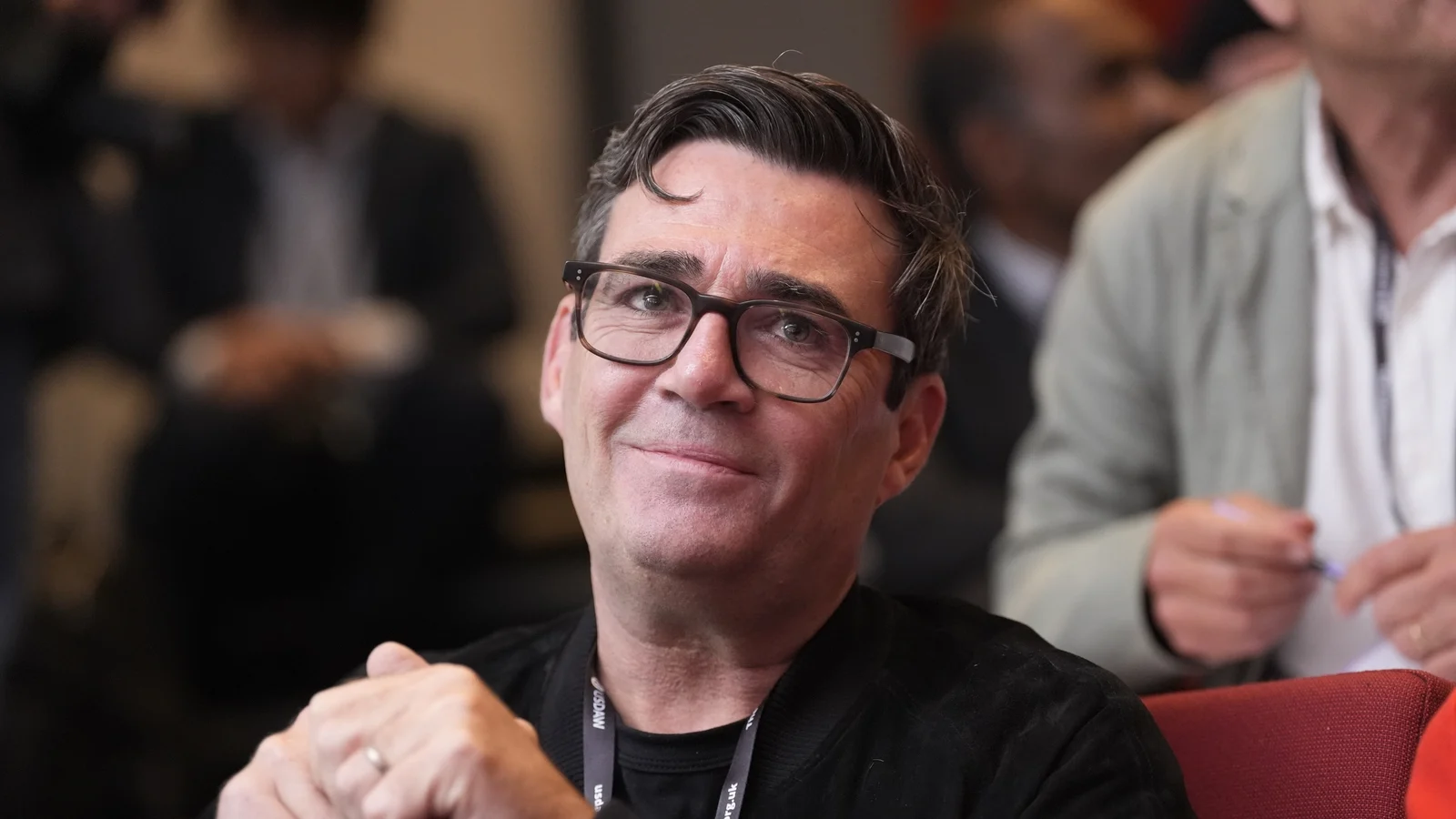
The day Manchester’s mayor was told “not yet”: inside a choice that exposed Labour’s fault lines
The rain had just let up over Manchester when I walked past Piccadilly Gardens and felt the city’s familiar mix of grit and optimism: builders’ vans, a woman hauling grocery bags, a teenager with a football tucked under his arm. It’s the sort of place where the person on the campaign leaflets becomes almost tangible—the mayor you see at community centres, at hospital launches, on TV reminding people they’re not invisible.
So when Andy Burnham, the city’s twice-elected mayor and a national figure with long Westminster experience, sought permission this week to run for parliament in a sudden by-election, it felt like the opening of a chapter in a political novel. But the plot took a sharp turn: Labour’s National Executive Committee (the NEC), the party’s governing body, declined to grant him permission. The reason given was pragmatic—avoiding the cost and disruption of a mayoral by-election in Greater Manchester while the party prepares for elections in May—but the reverberations are about more than money.
What the NEC said — and what it didn’t
Labour’s ruling body released a statement explaining that directly elected mayors must seek NEC approval before standing as candidates for Westminster. The committee argued that Burnham’s attempt to contest the Gorton and Denton seat would have triggered a mayoral by-election, one that would divert funds, volunteers and attention away from the party’s wider campaign ahead of the May local elections and the votes for the Scottish Parliament and the Welsh Senedd.
“We must weigh the public cost and the campaign risk,” a senior NEC source told me off the record. “A mayoral by-election isn’t just a headline; it’s tens, possibly hundreds of thousands of pounds, and it draws on people-power we can’t afford to scatter right now.”
That financial framing was the core justification: the NEC said it feared “a substantial and disproportionate impact on party campaign resources,” even though the committee was confident Labour would retain the mayoralty. But to many, the ruling felt less like neutral stewardship and more like a political block—one that keeps a high-profile potential rival in his current post rather than letting local members decide.
Local reactions: pride, puzzlement and a sting of disappointment
On the market stalls of Gorton, where the by-election will be fought, people’s responses were a patchwork.
“This is local democracy, isn’t it?” said Aisha Khan, a hairdresser who has lived in the area for 24 years. “I want to choose the person who will be our MP. If Andy thinks he can help, why shouldn’t members have a say? It feels like decisions are being made upstairs and we’re not in the room.”
At a community centre in Denton, a retired teacher named Paul Griffiths shrugged. “Andy’s done good by the city,” he said, stirring his tea. “But I worry about money—if a new election would cost taxpayers, that’s not great either. It’s messy.”
Party unity vs. local democracy: a long-running tension
The row has highlighted a perennial dilemma for political parties: who gets the final say—local members or central bodies? Inside Labour’s tent the debate has become urgent and emotionally charged. Several senior figures, including deputy leader Lucy Powell and cabinet minister Ed Miliband, publicly urged that the question of Burnham’s candidature be left to local members to decide. Both are members of the NEC, and their intervention suggests this was not a straightforward procedural matter but one with broader strategic and symbolic stakes.
“There’s a real desire among activists to be trusted,” said a city councillor who supported Burnham’s application. “People are fed up with top-down decisions. If the job was to build trust between the party and its grassroots, this didn’t help.”
What Burnham himself said
Burnham framed his bid in moral, almost heroic terms. In a letter to the NEC he described the Gorton and Denton by-election as “the front line” of a fight against divisive politics, saying he felt a duty to step forward. “I owe it to a city which has given me so much to lead from the front,” he wrote—a sentiment that resonates with many who see him as a mayor deeply embedded in the life of Greater Manchester.
To some, his stance reads like the final act of a seasoned Westminster hand who prefers to lead from a platform of proven local credibility; to others it carries the hint of a leadership centre of gravity shifting away from party headquarters.
The practicalities: costs, timing and other looming votes
There are concrete reasons the NEC was anxious. The UK’s local elections in May are already a logistical mountain—councils across the country prepare thousands of polling stations, and political parties marshal volunteers, staff and cash to contest seats. The Scottish Parliament has 129 members and the Senedd 60, and both devolved institutions will demand campaign focus and resources.
By-elections for mayoral posts are relatively rare and costly. Officials estimate such an election in Greater Manchester could run into tens of thousands of pounds at minimum and could stretch into the low hundreds of thousands depending on turnout and the length of the campaign. In an era where councils are facing budget squeezes and charity groups are reporting more people needing help with basics, the optics of ordering a new election are politically sensitive.
Beyond Manchester: what this says about modern parties
This isn’t just a Manchester story. Across democracies, parties are balancing organizational cohesion with pressures for democratic participation. Central bodies argue for discipline and strategic coordination; local activists push for agency and the right to choose. Which side wins often shapes how voters perceive a party’s openness.
“You can’t pretend there’s no tension here,” said Dr. Emily Carter, a political scientist who studies party organisation. “Central committees worry about resource efficiency and message discipline. Local members want authenticity and voice. Both concerns are valid, but they pull in different directions.”
Ask yourself: would you trust a party that always defers to local activists, even when coordination matters? Or would you prefer a tight central hand that sometimes looks paternalistic? There are no easy answers—only trade-offs.
What’s next
The NEC says it remains confident of winning the upcoming by-election without Burnham on the ballot. Labour will field another candidate in Gorton and Denton, and the seat—vacated after the MP cited health reasons—will be contested by a field of hopefuls. For Burnham, the refusal closes one door and leaves others open: his role as Manchester’s mayor remains secure for now, and he continues to be a figure who looms large in national conversations about Labour’s direction.
For the people of Manchester, this episode will be remembered not just as a political skirmish but as a signal—a test of how parties steward local voices when national strategy bites. The bigger question is whether the party can reconcile that tension before the next set of ballots arrive.
Closing thoughts
Walking back through the city that evening, I saw a poster on a lamppost for a cost-of-living advice centre, and a group of teenagers passing a pizza box. Politics in Manchester, as elsewhere, is woven into daily life—the practical concerns of heating bills, school places, the state of the neighbourhood park. Decisions made in meeting rooms and committee hearings ripple into those ordinary moments.
Is centralised caution protecting the public purse, or is it shutting down democratic choice? Does a mayor more useful in city hall mean a lost opportunity for change in Westminster? These are debates that will outlive a single by-election—and they are worth watching closely, not just in Manchester but across democracies where party control and grassroots voice are forever negotiating their fragile balance.