Uvira’s Quiet Morning and the Echoes of War
The sun rose over Lake Tanganyika like it had every morning for centuries, painting the shoreline of Uvira in honey-gold. Fishermen pushed out their wooden canoes, women arranged fresh fish and cassava at the market stalls, and children chased each other along the dusty alleyways between corrugated-roof homes.
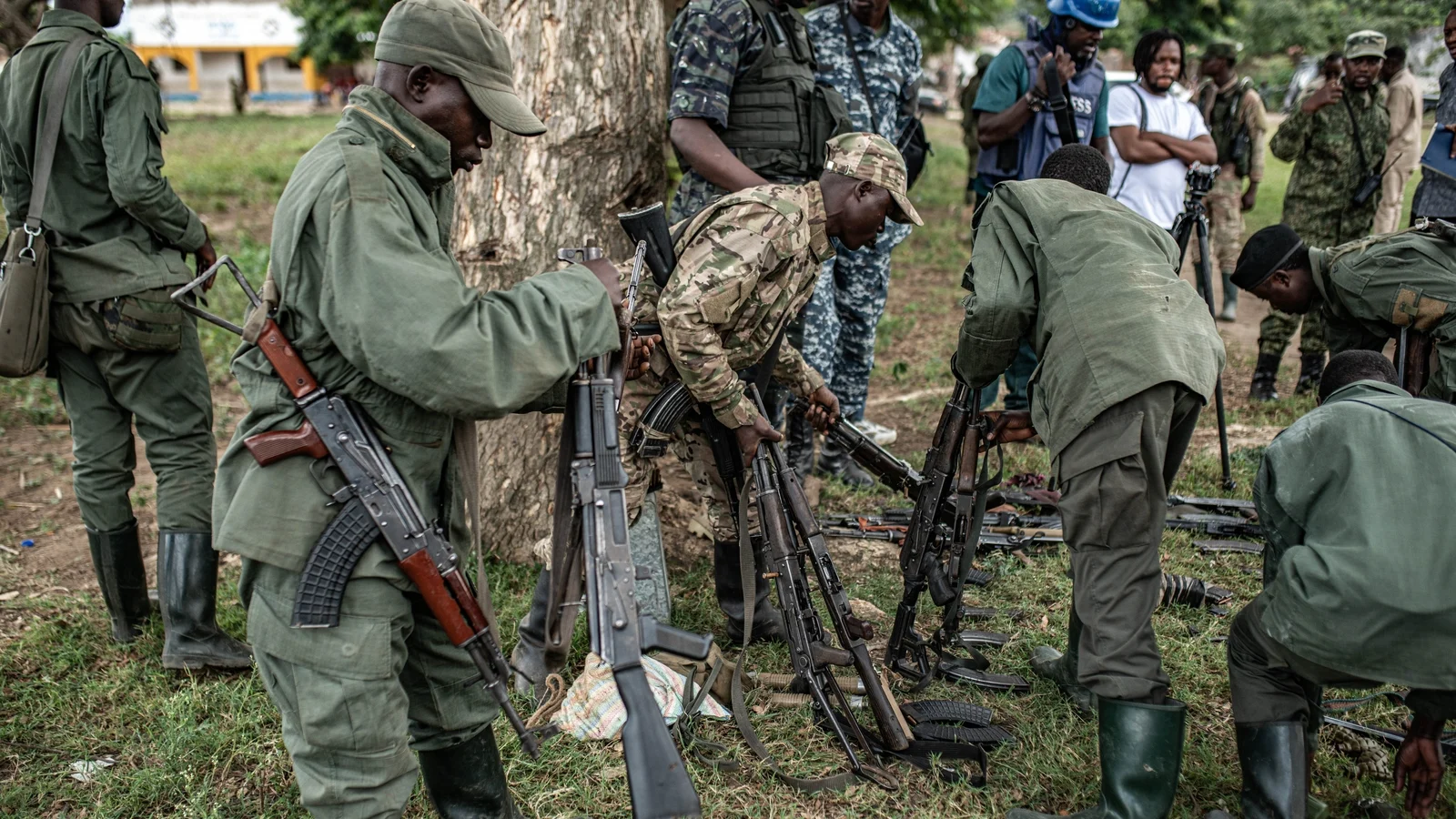
But last week the rhythm broke. Soldiers arrived. Flags appeared where laundry had hung. A militia—known as M23—moved into the city, turning a busy market into a theater of uncertainty. And then, almost as abruptly, the group announced it would pull back at the request of American mediators.
“We saw men in uniform at every corner,” recalled Marie, 34, a vendor who has sold fish on the same bench for 15 years. “I thought, ‘Is this how the peace they promised will look?’ People locked their doors and listened to the radio. The fear started again.”
What the Announcement Means — and What It Doesn’t
On Thursday the M23 issued a statement, signed by their coordinator Corneil Nangaa, saying they had agreed to “unilaterally withdraw” from Uvira after a request from US mediators. The group called for demilitarisation of the city, protections for civilians and infrastructure, and third-party monitoring of any ceasefire.
The withdrawal is framed as a goodwill gesture toward a parallel peace framework negotiated in Doha last November—an agreement that has largely remained words on paper amid continued violence in eastern Democratic Republic of Congo (DRC).
“This is a small step, but small steps in this region are the only things that ever seem to keep people alive,” said Pierre Mbusa, a humanitarian coordinator who has worked in South Kivu. “But a withdrawal on paper and a withdrawal on the ground are different. We need verification and guarantees.”
Who Is M23 and Why Does Uvira Matter?
M23 is a rebel movement that resurfaced in recent years after earlier uprisings a decade ago. The group draws on grievances, ethnic tensions, and the chaotic militarised networks that have long thrived in the DRC’s east. Kinshasa and various international observers have accused neighbouring Rwanda of supporting the movement; Kigali has repeatedly denied backing the rebels.
Uvira sits on the eastern edge of the DRC, a strategic port city on Lake Tanganyika with routes into Burundi and Tanzania. Control of the city isn’t only about checkpoints and administration—it’s a doorway to trade, mineral routes and influence. The region is also part of a vast, mineral-rich tapestry: the DRC supplies a major portion of the world’s cobalt (roughly 70% of global production) and is a crucial source of copper, tin, tantalum and gold that power global technologies.
The Human Toll: Displacement, Fear, and the Economy
For civilians, the calculus is not political—it is survival. The east of the DRC has been shaped by decades of conflict; UN and humanitarian reports document millions displaced and thousands of lives lost. Today, more than 6 million people in the country are internally displaced, according to humanitarian estimates. Health clinics are overstretched; markets are disrupted; schooling is interrupted.
“When the fighters came into Vira, we packed a small bag and left the house,” said Jean-Paul, 52, a driver who fled to a neighboring village. “If they’re leaving now, where will we go back to? Who will pay for the damages?”
Local traders say the disruption is immediate and deep. “The boats have fewer passengers. People are afraid to come to town,” Marie explained. “Business was beginning to recover after the rains, but everything stops when the guns come.”
Diplomacy on a Knife-Edge: Washington, Doha and the Region
The pullback came after a request by the United States, which earlier hosted a high-profile peace agreement between Kinshasa and Kigali. That Washington deal had raised hopes—and eyebrows—by promising a roadmap toward calmer relations between the DRC and Rwanda. But the M23’s advance into Uvira tested that fragile trust.
In Doha, a parallel process produced a ceasefire text last November; M23’s statement urged the international community to implement those terms. Whether the Doha framework will now be given room to function depends on monitoring, enforcement and the willingness of regional actors to forgo strategic advantage for stability.
“Peace in the DRC requires regional buy-in, especially from Rwanda and Burundi, and real guarantees that armed groups cannot be used as proxies,” said Dr. Lillian Okoye, an expert in African conflict resolution. “Without enforcement mechanisms and economic incentives for peace, agreements tend to collapse back into violence.”
What Verification Looks Like
- Independent observers on the ground to confirm troop movements
- Demilitarised buffer zones monitored by neutral forces
- Humanitarian corridors to allow displaced people to return safely
- Transparent reporting on resource flows and mineral trading
These are the kinds of measures M23 asked for, and that civil society groups and NGOs are now demanding as conditions for any meaningful calm.
Local Color: Life Between Lakes and Mountains
Uvira’s streets are threaded with smells and sounds—cooking fires, church bells, the barter-chant of market sellers. There is a resilience to this city: women carrying woven baskets on their heads, musicians tuning their drums by the lakeside, children learning how to cook small fish over charcoal. These textures are not background; they are reasons to care.
“We are not just statistics,” said Aisha, a teacher who stayed behind to keep a small class running in a church hall. “We want to teach our children, to farm, to trade. We want to rebuild our homes without fear of waking to gunfire.”
Why This Matters to the World
This is not just an African story. The minerals that flow through eastern DRC power smartphones, electric vehicles and medical devices around the globe. Supply chains are tied to human lives here. When a city like Uvira falls into chaos, it ripples into global markets and the ethical debates about sourcing and corporate responsibility.
It also tests the international community’s capacity to intervene wisely. Do we rush troops in? Do we focus on sanctions and diplomacy? How do we prioritize protection for civilians over geopolitical gamesmanship?
Ask yourself: if the world can call for climate action and corporate accountability, can it also demand accountable systems that prevent the looting of resources and the exploitation of people who live where those resources are extracted?
What Comes Next?
The M23’s announcement offers a fragile window of possibility—but windows can be slammed shut. Verification teams must be allowed in; displaced people need safe corridors home; and regional leaders must back a process that replaces armed competition with negotiated governance and economic inclusion.
“If the withdrawal is genuine and followed by meaningful demilitarisation and monitoring, then perhaps we can see a sliver of hope,” said Dr. Okoye. “But hope without instruments—that is not enough.”
For the people of Uvira, hope is less a word than a daily act: returning to the market, fixing a roof, teaching a child. It is also a test for the international promises made in rooms from Washington to Doha. Will those promises turn into protection and accountable change? Or will they dissolve like footprints in the dust when the next group of fighters arrives?
As readers across continents, we have a stake in the answer. How will we respond when the world’s least visible crises demand the most visible commitments? The people of Uvira are waiting for a reply they can live with—one that keeps the lake’s morning light from being a reminder of the day the guns came back.