When a City’s Quiet Morning Became a Mirror for Europe’s Divisions
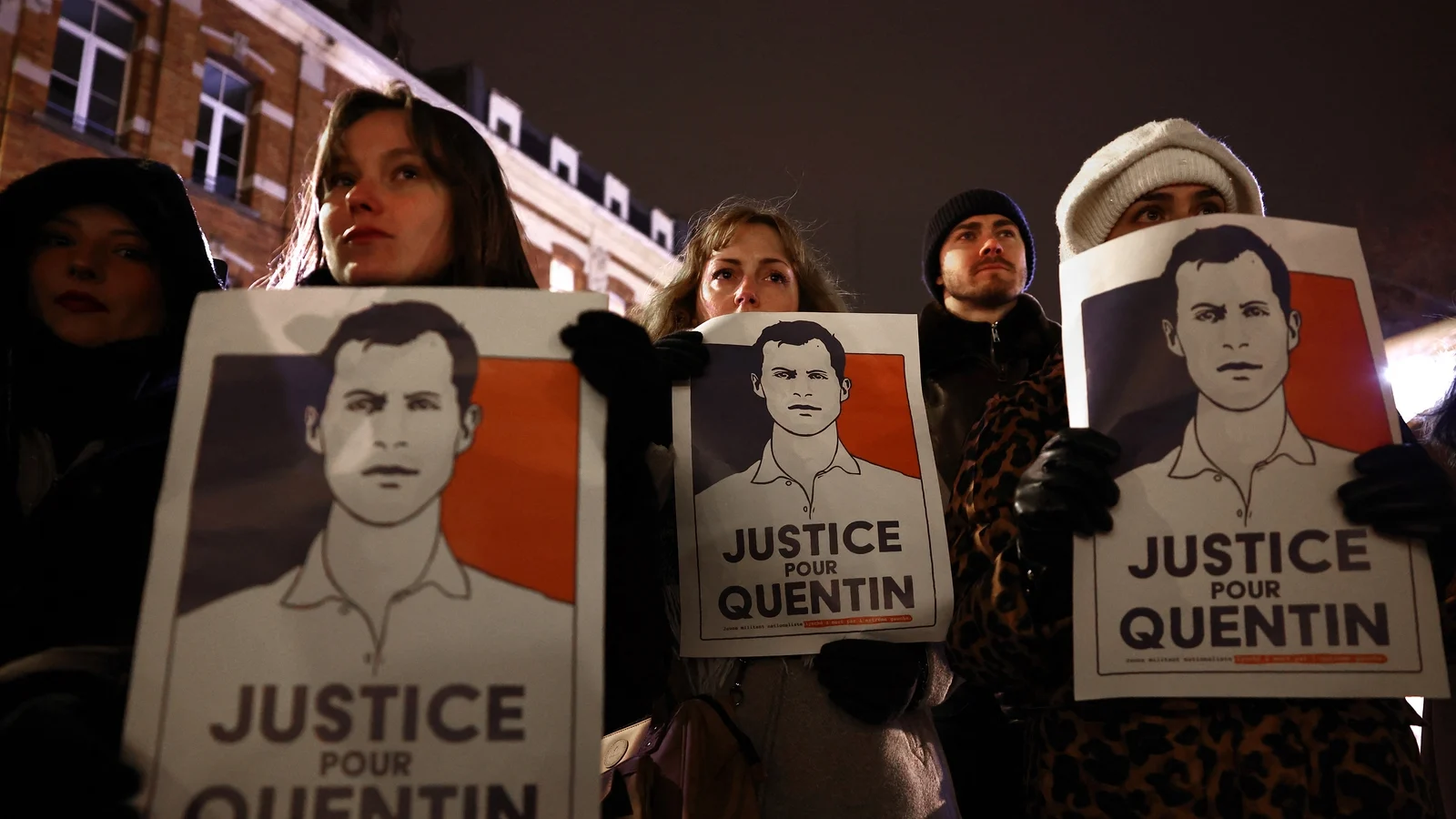
On an ordinary morning in Lyon—where the scent of coffee drifts from narrow bouchons and students weave through the city’s stone passageways—the world tilted a little. A political demonstration outside a university turned deadly when 23-year-old Quentin Deranque was beaten so severely that he died of head injuries. The shock of that loss has rippled far beyond the Rhône, stirring old wounds and new arguments across Europe.
For anyone who knows Lyon, the contrast is striking. This is a city of silk merchants and film festivals, of hilltop views from Fourvière and riverside promenades where joggers pass under plane trees. The idea that violence of this kind could erupt there—near lecture halls and cafés where young people debate late into the night—felt like a betrayal to many who live here.
The Incident
According to investigators, Deranque, 23, was attacked by at least six people on the sidelines of a far-right demonstration at a university. Eleven people—eight men and three women—have been taken into custody and questioned. A source close to the inquiry says most of those detained are linked to far-left movements. Prosecutors have asked judges to charge seven men with intentional homicide and to keep them in custody, citing the risk of further disturbance to public order.
“We have asked for the strongest possible measures,” a prosecutor said at a press briefing, underscoring the seriousness with which the judiciary is treating the case.
Facts at a Glance
- Victim: Quentin Deranque, 23, died of head injuries after the attack.
- Suspects: 11 detained (8 men, 3 women); prosecutors requested intentional homicide charges for 7.
- Reported assailants: at least six people involved; some suspects allegedly connected to far-left groups.
- Political context: tensions ahead of municipal elections and the 2027 presidential race.
From Lyon to Rome to New Delhi: Political Reverberations
The killing landed in the middle of a political storm. Italy’s Prime Minister, Giorgia Meloni, spoke publicly—expressing shock and solidarity—prompting a sharp retort from France’s President Emmanuel Macron while he was on an official visit to India. Macron told reporters that foreign leaders should refrain from commenting on the internal affairs of other countries. The exchange, brisk and pointed, illuminated how a single tragic event can be refracted through national politics and international sensitivities.
Rome’s foreign minister weighed in too, invoking painful chapters of Italian history: a reminder, he said, that violence has its ghosts and that Europe must guard against a return to dark times. “There have been many Quentins in our history,” he wrote, alluding to the violent “Years of Lead” that haunted Italy for decades.
Back in Paris, officials emphasized that France cannot tolerate movements that embrace violence. “Nothing justifies violent action—neither on one side nor the other,” a presidential aide said, echoing a plea for calm and a measured legal response.
On the Ground in Lyon
Walk through the university quarter where the attack occurred and you’ll hear the city speaking in hushed, urgent tones. A first-year literature student, who asked not to be named, said she felt a new fragility. “We used to argue loudly about politics over cheap wine and croissants,” she told me. “Now when people gather, there’s always someone checking exits.”
A nearby café owner, whose family has run the place for three generations, wiped tears when she spoke about Quentin. “He would come sometimes to study,” she said. “Young, loud, always sure of himself. This is not the city we want to be.”
Local councilors likewise sounded worried about the climate of confrontation. “This is not an isolated incident. It’s a symptom,” one told me. “Social media sharpens everything; allegiances harden; young people get swept up in fights that have echoes from other countries.”
Voices and Reactions
Not all reactions were the same. Quentin’s family, through their lawyer, called for restraint. “The family condemns any call for violence. Any form of political violence,” their lawyer said in a public statement, urging that grief not be weaponized by political factions.
At the same time, far-right leaders saw the killing as proof of their warnings about the radical left. “This attack shows where the violent fringe ends and society begins to fracture,” a National Rally spokesperson said, framing the death as a political fault line. On the other side, grassroots activists argued that the focus must be on a fair investigation rather than immediate politicization. “We need justice, not headlines,” a left-wing organizer told me quietly, tired from days of interviews.
Why This Matters Beyond France
Think about the image of universities as spaces for debate and discovery. When campuses become flashpoints for violence, the loss is not merely individual—it’s civic. It affects how young people see politics, how communities trust institutions, and how neighbors discuss safety and belonging.
Across Europe, elections and governance are being tested by surging polarization. In France, municipal elections are approaching, and the 2027 presidential race looms large—two moments when social fractures can widen into political chasms. When parties frame incidents like this through partisan lenses, they risk amplifying tensions rather than letting institutions handle the facts and the law.
Public safety statistics show that politically motivated violence, while a small fraction of overall crime, has disproportionately large effects on political discourse, draining public trust and accelerating cycles of retribution. Experts warn that social media accelerants—echo chambers, viral outrage, and performative solidarity—can turn crimes into causes overnight.
Questions We’re Left With
How should democracies respond when the line between protest and violence blurs? Can a society hold both a full-throated defense of free speech and a steadfast refusal of brutality? And how do we stop grief from being harnessed into further conflict?
These are not merely French questions. They are European—and global—questions about how communities process trauma, how justice systems respond without being politicized, and how political leaders choose rhetoric that cools or inflames.
Looking Forward
The judicial process will move at its own pace. The investigation is ongoing. Prosecutors have asked for severe charges and continued custody for the suspects. Meanwhile, politicians will continue to spar. Citizens and families will continue to grieve. And Lyon will continue to live, to argue, to feed its students and mend its streets.
“We cannot let fear become the new normal,” a local schoolteacher told me, tying the personal to the civic. “If we do, then those who profit from division will have won.”
As you read from wherever you are—whether in a city of canals, in a village, or on another continent—ask yourself: when a tragedy happens in a place far from home, what responsibility do we have to listen without deciding too quickly? How do we stand in solidarity without hijacking someone else’s pain for our own agendas?
For Lyon, for Quentin, and for communities everywhere, the answers will matter. The danger is not only in a single violent act, but in what we, collectively, make of it.