When a Dock Explodes: Venezuela, the U.S., and the Fog of a New Kind of War
There are places on Venezuela’s northern shore where mornings begin with the same small rituals: fishermen repairing nets under the shade of palm fronds, the smell of diesel and salt on the air, women selling warm arepas from makeshift stalls beside sun-beaten benches. On such mornings, life often feels stubbornly ordinary. This week, ordinary was punctured by an extraordinary claim — a U.S. president saying American forces had struck and destroyed a dock used to load boats with drugs. The Venezuelan government did not confirm the attack outright. The truth, for now, sits somewhere between an explosion on the sand and a declaration at a Florida resort.
“There was a major explosion in the dock area where they load the boats up with drugs,” said the U.S. president at his Mar-a-Lago estate, according to statements reported widely. His words were precise and public; the location and chain of command were conspicuously vague. Was this a military strike? A clandestine CIA operation? Where exactly did it happen? The White House would only say it was “along the shore.”
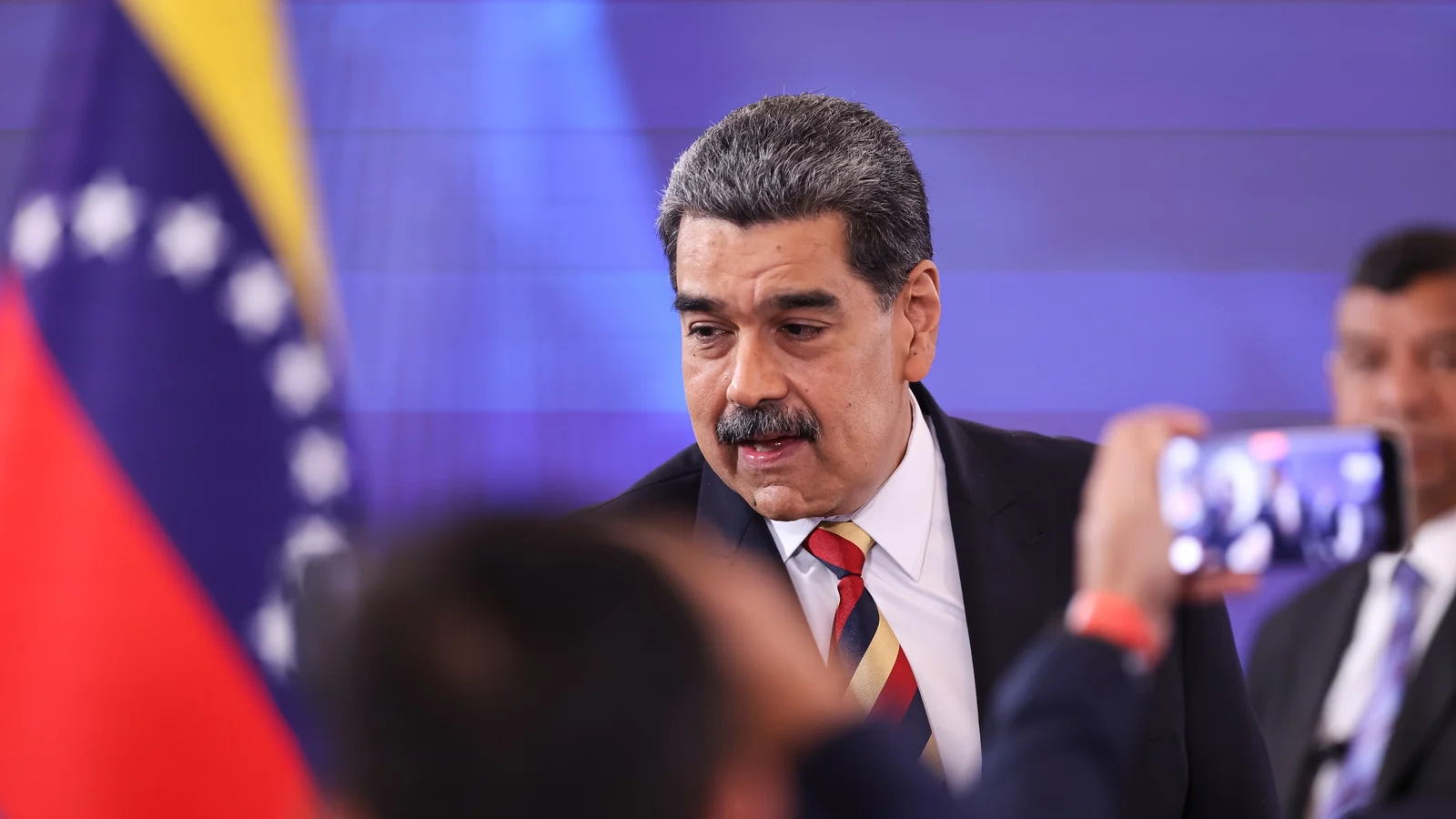
The man in Caracas
On state television, President Nicolás Maduro sidestepped a direct confirmation. “This could be something we talk about in a few days,” he said, leaving the question suspended like a dropped coin under water.
Even as he avoided the exact claim, Mr. Maduro offered an olive branch of sorts. “Wherever they want and whenever they want,” he said about the prospect of talking with Washington — on trafficking, on oil, on migration. His tone was both defiant and transactional: a leader who denies involvement in narcotics yet insists he is open to negotiations that might ease the pressure on his country.
What’s been happening at sea
For months, U.S. forces have been operating in the Caribbean and the eastern Pacific, targeting vessels the Pentagon says are linked to drug smuggling. Those strikes, according to U.S. military disclosures, have involved at least 30 separate actions and have killed at least 107 people. Washington maintains these actions are aimed at the narcotics trade; critics call them an extrajudicial maritime campaign that raises grave legal and ethical questions.
International law scholars and rights groups warn that strikes without transparent evidence and judicial oversight can amount to unlawful killings. “When lethal force is used outside a clear battlefield, and without accountability, we open the door to abuse,” said Dr. Ana Pereira, an international law scholar based in Caracas. “States may claim necessity, but the rule of law must follow, or this becomes a precedent for anyone to target anyone at sea.”
Voices from the coast
In a small fishing hamlet two hours from the capital, María Torres — who has sold coffee and arepas for 25 years from a stall by the pier — said she woke to helicopters last week. “The noise shook my pots. My son called me from the water and said they heard a big boom,” she recalled. “We don’t know anything for sure. We only know people are afraid.”
A retired coast guard captain, who asked to be identified only as Luis for fear of reprisal, offered a more guarded take. “There are real trafficking networks that use our coves. There are also innocent fishermen. It is complicated. The sea is big. Intelligence is not perfect,” he said.
Oil, power, and the long shadow of geopolitics
To understand why a single dock detonates diplomatic temperature, you have to look beyond drug interdiction and into oil — Venezuela’s most tangible global asset. The country is widely credited with some of the world’s largest proven oil reserves, often cited at roughly 300 billion barrels, a resource that has shaped both its domestic politics and international relations for decades.
The Trump administration had intensified pressure on Caracas with measures ranging from expanded sanctions to seizure orders on tankers carrying Venezuelan crude. Washington’s rhetoric has been stark: call Mr. Maduro the head of a drug cartel, and lay out a campaign of economic and military coercion designed to squeeze his government. Caracas responds with counter-accusations — that the true aim is regime change, driven by an appetite for oil and influence.
Is sovereignty being redefined?
What we are watching may be more than one-off strikes. It’s a potential reframing of how powers think about sovereignty and use of force. “If a state can hit a shore to disrupt an alleged illicit flow without transparent legal authority, what does that mean for coastal states everywhere?” asked Professor Simon Jansen, a specialist in maritime security at a London university. “The precedent is worrying.”
That question matters to migrants who cross borders in search of work, to coastal communities reliant on fishing, and to global norms that have historically protected states from extraterritorial use of force. It also matters to multilateral institutions like the United Nations, which will be asked to adjudicate or at least respond if allegations of unlawful strikes multiply.
The human ledger: casualties, uncertainty, fear
The U.S. military’s own tallies — at least 107 killed across 30 strikes — offer a raw arithmetic of loss, but they do not include the ambiguous human costs: families who cannot confirm whether a missing relative was aboard a targeted boat; small towns where economic life depends on fragile coastal trade; fishermen who swap diesel for bread money.
“We are trying to feed our children,” said Carmen Delgado, whose husband works on a small outboard skiff and who has seen friends detained or worse. “If there are criminals on the water, we want them gone. But we also want the right questions asked. Who will answer when things go wrong?”
Broader themes: law, morality, and the drug war
There are broader currents here. The U.S. campaign against drugs has evolved beyond interdiction and domestic law enforcement into a cross-border, and sometimes cross-legal, struggle. Technological reach — drones, satellites, precision munitions — makes strikes more feasible. But precision is not the same as certainty. And the war on drugs has always had collateral—on families, institutions, and trust.
Observers point out that without clear evidence and transparent accountability, actions that are framed as targeted strikes risk alienating the very populations they aim to protect. “Security is not just about destruction,” said Dr. Pereira. “It is about building legitimate institutions and rule of law. Otherwise, you might be fixing one problem while creating many more.”
What should we watch for next?
Will Washington produce verified evidence of the dock’s use in trafficking? Will Caracas open investigations or insist the strike never occurred? Will international bodies demand transparency or launch inquiries into the legality of maritime strikes? These questions will shape not only Venezuela’s next few weeks, but global answers about how states wield force in an era of transnational crime and contested sovereignty.
For people on the beaches where children still splash in salty shallows and neighbors still trade gossip over coffee, the geopolitics are inconveniently close. They ask simple, human questions: Who will keep us safe? Who will tell us the truth? Whose wars will end up on our sand?
We should all be listening for answers. And we should be asking them — loudly, clearly, and in public.