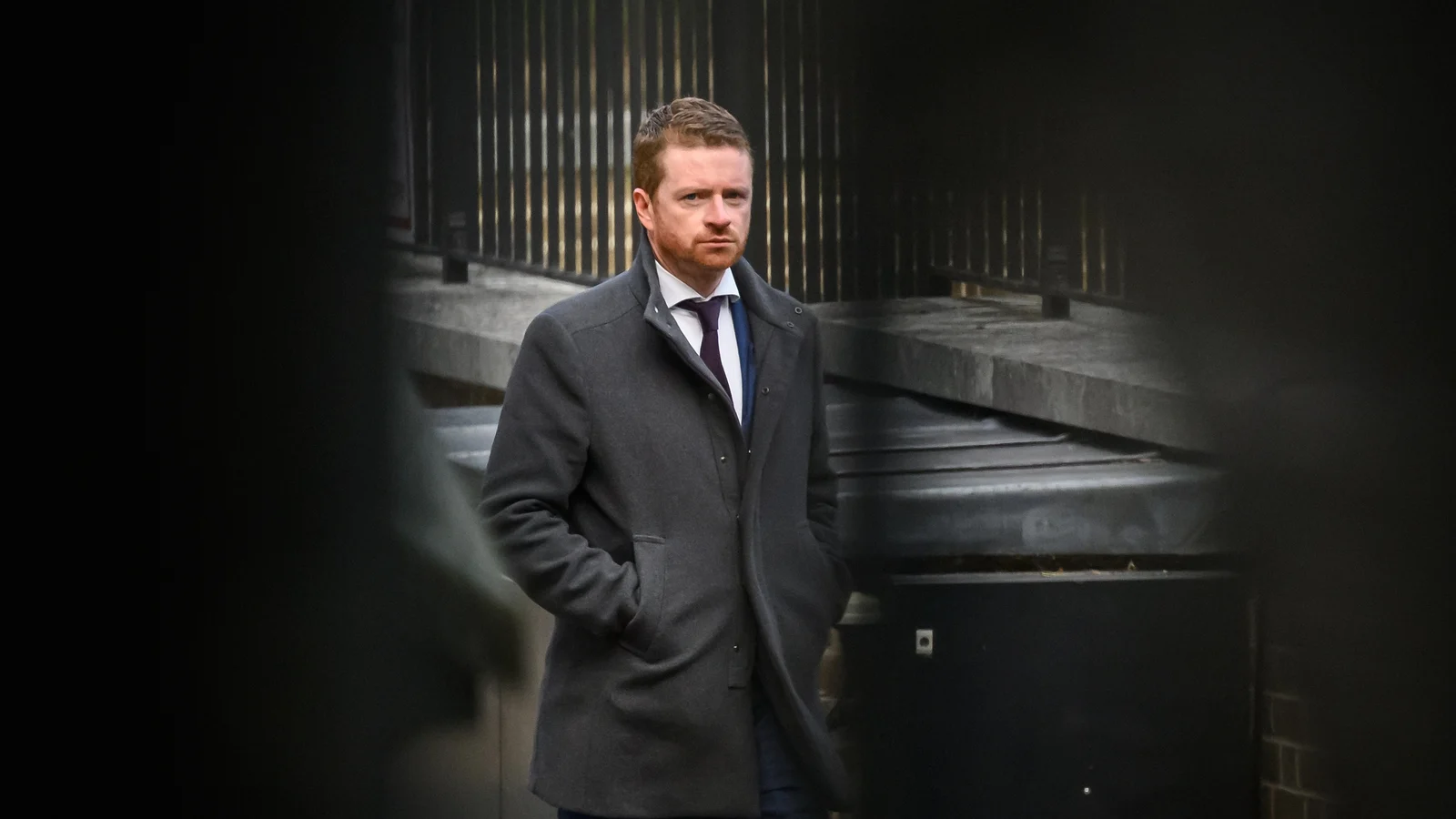
A Resignation That Feels Like an Earthquake
On a raw February morning the corridors of power seemed thinner, the atmosphere more brittle. Morgan McSweeney, the Cork-born strategist who helped shepherd Keir Starmer and Labour back into Downing Street, handed in his resignation as chief of staff — and with it, a chapter of political calm burst wide open.
This was not a neat, managerial departure. It arrived amid leaked files, a police inquiry and a swarm of questions about judgment, vetting and accountability. At the heart of the storm: the decision to nominate Peter Mandelson as Britain’s ambassador to Washington, despite newly published material that highlighted troubling links between Mandelson and the late Jeffrey Epstein.
From County Cork to No.10 — A Story of Ambition and Loyalty
Morgan McSweeney’s rise would read like a political biography: born in Macroom, Co. Cork in 1977, he left for London at 17, cut his teeth in Labour ranks after being inspired by the Good Friday Agreement and slowly became indispensable. Internships at Labour HQ, a stint running the Labour Together think tank to push the party away from the hard-left, and a central role in the election campaign that delivered one of the largest parliamentary majorities in modern British history — these are the landmarks of a career built on restless energy and strategic nous.
“Morgan was the engine,” a long-time Labour organiser who worked alongside him told me. “He was the one who made the campaign feel inevitable. He thinks like a campaigner: tidy, focused, outcome-first. That’s why this hurts.”
The Appointment That Unraveled
The US files revealed on 30 January offered a new seam of trouble. According to material now public, there were exchanges suggesting that Mandelson — a Labour veteran and minister during the financial crisis — had a pattern of communications with Epstein that raised alarms about judgment and influence. Those revelations rekindled memories of a scandal that has never quite left the public imagination.
Police have opened an investigation into potential misconduct in public office, focused on whether sensitive market information was improperly shared during turbulent financial years. For a government that has spent the past 18 months trying to repair its image and claim higher ethical standards, the headlines could not have come at a worse time.
The Parting Statement — Ownership, Remorse, and a Call for Reform
McSweeney did not duck responsibility. In a statement released alongside his resignation, he acknowledged advising the Prime Minister to nominate Mandelson. He said that was the wrong decision and that the appointment had damaged both the party’s standing and public trust in politics. He also urged a fundamental overhaul of vetting procedures.
“I advised the appointment — and I take responsibility for that advice,” he is reported to have said. “We owe it to the people harmed by Epstein’s crimes to listen, and we owe it to the public to make sure this never happens again.” Whether readers take that as sincere contrition or a well-timed escape valve depends on whom you ask.
“It’s partly courage, partly damage control,” said a senior civil servant within Whitehall. “When you’re that close to the centre and the story blows up, people fall on swords. That’s how the machine is designed. But the real question is what changes are coming to make the machine safer and more trustworthy.”
Reactions, Reprisals and the Politics of Blame
Across party lines, the fallout has been immediate. Opposition voices cheered the departure as vindication of their criticism; some on the left and in Labour’s own ranks said McSweeney’s resignation was overdue. Others suggested it was designed to draw a line under the episode and buy the Prime Minister breathing space.
“This is a reminder of how fragile public trust is,” said a former ethics adviser at a Westminster watchdog, speaking on condition of anonymity. “Resignations alone don’t rebuild faith. You need transparent processes, independent oversight and swift, visible reform.”
- Immediate political consequences: McSweeney’s exit leaves a vacuum at the heart of No.10’s political operation and forces a personnel shuffle.
- Institutional consequences: calls for vetting and due diligence reform are growing louder.
- Diplomatic consequences: the possibility of revealing private messages about UK strategy toward the US President threatens international relations.
On the Ground: Voices from Cork to the Commons
In Macroom, a town that has watched its native son climb the greasy pole of London politics, the reaction was mixed. “We’re proud of him for getting there,” said a coffee shop owner who remembers McSweeney as a teenager with a scholarship and a glint in his eye. “But nobody is untouchable. If you get something wrong, you own it.”
At Westminster, colleagues spoke of loyalty. “He has been by Keir’s side through thick and thin,” said a former aide. “There is respect for what he did during the campaign and in opposition. But respect can coexist with disappointment. The optics were dreadful.”
What Comes Next — Personnel, Process and the Bigger Questions
The immediate practical question is who steps into the chief of staff role. Vidhya Alakeson, deputy chief of staff, was mentioned in discussions; others will be quietly interviewed behind closed doors. But the larger question is whether this will force systemic change.
Vetting, once a back-office technicality, has been propelled into the political spotlight. The scandal underscores how appointees’ private connections and past associations can become national crises when not properly assessed. It’s a problem not limited to the UK — nations around the world have wrestled with the balance between political judgment and bureaucratic safeguards.
Are governments now functionally required to publish more of their internal deliberations to rebuild trust? Should there be an independent pre-appointment scrutiny body for senior diplomatic roles? These are not academic questions. They are operational decisions that will shape the public’s confidence in institutions.
Final Notes — Trust, Memory and Political Survival
Politics is a brutal test of endurance. Morgan McSweeney’s departure is both a personal fall and a symptom of a broader crisis: a party that won decisively less than two years ago now grappling with self-inflicted wounds, a veteran figure exposed to a scandal tied to one of the darkest figures of recent history, and a public that watches, increasingly sceptical.
So what should we ask ourselves? Do we demand immediate structural reform, or do we temper our appetite for upheaval with a realistic appraisal of how quickly institutions can change? How much should a leader be judged for the recommendations of trusted lieutenants?
For now, the story is unwinding. But it’s not just about one man’s fall from favour; it’s about how democracies manage messy human ties, how they protect the vulnerable whose voices were long ignored, and how they rebuild the brittle bridge between citizens and those who govern them. That, perhaps, is the true test of leadership.