The Morning After: Milan’s Glitter, Its Frayed Edges
Milan woke to a strange kind of hush — the kind that arrives after bright fireworks and darker disruptions. On the city’s gleaming boulevards and in the narrow lanes near the Duomo, volunteers in neon vests swept confetti and handed out hot espresso to early-arriving fans. Down in Cortina’s snow-sprinkled chalets, gondolas and chairlifts hummed with athletes and coaches preparing for the day’s events.
But along the margins of that celebratory bustle were scenes that felt ripped from a different script: smashed glass, the smell of smoke lingering in alleys, and a stretch of the national rail system mysteriously crippled, stranding commuters and attendees alike. The first full day of competition at Italy’s Winter Games — a moment meant to showcase the country’s cultural pride and organizational skill — was instead split between jubilation and a bristling political moment.
When Protest and Pageantry Collide
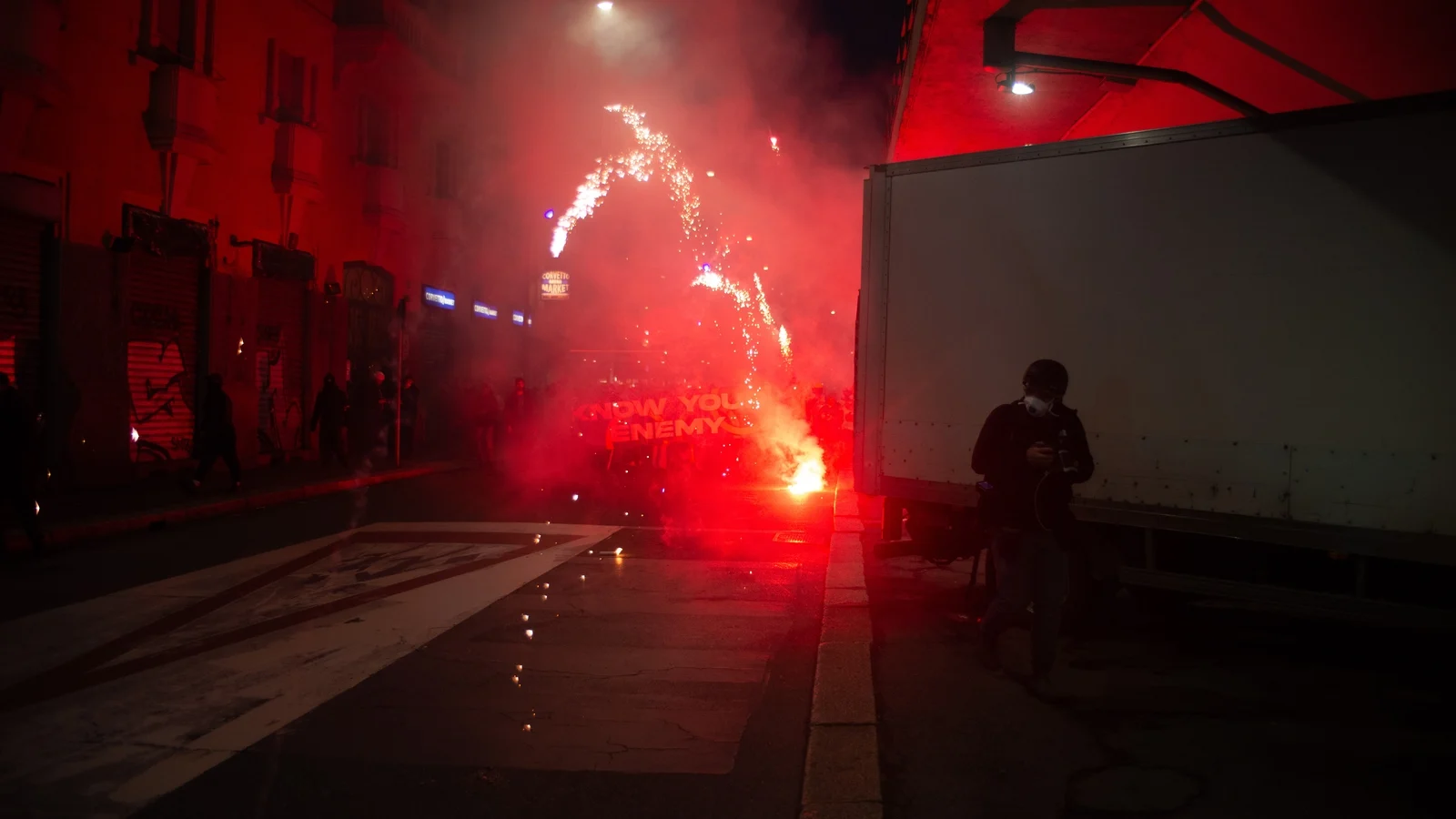
Some 10,000 people took the streets of Milan to protest — a crowd mobilized around housing affordability, environmental concerns connected to the Games, and wider grievances about the way cities change under the weight of mega-events. For many the march was peaceful, a noisy but orderly expression of dissent. For others, it ruptured into chaos.
“We came here because rents are eating us alive,” said Lucia, a 32-year-old barista who joined the demonstration with a cardboard sign. “I love sport, I love my city, but I don’t love seeing neighborhoods turned into short‑term rentals and luxury boxes overnight.”
Police say a fringe group of roughly 100 people broke off from the main march and hurled firecrackers, smoke bombs and bottles at officers. Water cannon were deployed. Six people were detained. City authorities described the troublemakers as a tiny minority whose actions jeopardized months of preparation, while protesters countered that heavy-handed policing can inflame tensions.
“We weren’t expecting to be treated like criminals,” said Matteo, who works in a nearby furniture shop and has lived in Milan his whole life. “But I also don’t agree with throwing things at police. That’s not how you build support.”
Sabotage on the Rails
As if to amplify the drama, engineers and commuters in northern Italy were jolted by deliberate damage to the rail network near Bologna. Railway operators reported three separate incidents at different locations that caused delays of more than two hours on high-speed, Intercity and regional services. No group immediately claimed responsibility for the sabotage.
“A cable cut like that is dangerous — it’s a risk to life and a blow to logistics at a time when precision matters,” said a Trenitalia worker who asked not to be named. He described technicians racing into the night to repair signaling and power systems so athletes, staff and spectators could move between Milan and the mountain venues.
Italy’s high-speed rail network — served by operators like Trenitalia’s Frecciarossa and private company Italo — forms the backbone of intercity travel. Delays ripple quickly, turning a planned two-hour journey into an uncertain odyssey. For the Games, which depend on finely timed transfers and shuttle services, any disruption threatens schedules, hospitality plans and international optics.
Politics, Performance and the Price of Image
From the marble steps of Palazzo Chigi to small cafes in the Brera district, reactions were swift and polarized. Prime Minister Giorgia Meloni publicly condemned the violence and the rail sabotage, framing the unrest as an affront to the host nation’s dignity. “There are those who want to mar Italy’s image,” a senior government source told reporters, echoing the prime minister’s rhetoric that media footage of clashes would overshadow the country’s efforts.
Opposition figures and civil liberties advocates warned against using the incidents to justify sweeping police powers. Italian law enforcement had recently received expanded authorities after violent confrontations at a hard-left protest in Turin left more than 100 officers injured. That event, and the new powers that followed it, still resonate in public debate.
“We must balance security with democratic rights,” said Dr. Elena Ferri, a political sociologist in Milan. “Mega-events always create friction: they accelerate urban change, concentrate resources, and expose social fissures. How a state responds — whether with dialogue or more repression — will be instructive for democracies worldwide.”
Voices from the Ground
Not everyone in the city shared the same view. At a small bakery by the Navigli, owner Paolo shrugged and stirred milk for cappuccinos. “I’m proud we’re hosting,” he said. “The volunteers, the athletes — it brings life back to our streets in winter. But people are exhausted. They see cranes outside the windows and ask where they fit into this new Milan.”
An activist with an environmental collective who gave her name as Sofia described why the protest drew such a diverse crowd. “We’re not protesting athletes or sport,” she insisted. “We’re protesting the model: how public money is funneled, how protected areas get compromised for temporary venues, how residents are priced out.”
What’s at Stake Beyond the Headlines
These clashes are more than a local skirmish. They are a concentrated example of global tensions playing out as cities vie to host international spectacles. From Tokyo to Rio, host cities have grappled with displaced communities, spiraling costs, and environmental trade-offs. The Winter Games in Milan-Cortina were sold as a chance to highlight sustainable alpine tourism and urban hospitality. The protests force a question: can megasporting events be retooled to empower local communities rather than marginalize them?
Consider these realities facing organizers and residents:
- Logistics: The success of the Games hinges on transportation networks that already carry millions of passengers annually. Interruptions can have outsized effects on schedules and safety.
- Housing: Short-term rental markets surge during events, often putting upward pressure on prices in already-tight cities.
- Environment: Alpine terrains are sensitive; temporary infrastructure and increased tourism have long-term footprints.
Questions for the Reader
Is there a way to host global spectacles without sidelining everyday citizens? Can authorities protect both public safety and the right to protest? As you watch highlights of the races and ceremonies, whose stories are you seeing — and whose are missing?
These are not abstract questions. They reverberate in neighborhoods where families make hard choices about rent, in villages up the mountain where businesses hope for seasonal revenue, and in trains rolling slowly back to Bologna after a delay-filled night.
After the Smoke Clears
For now, the Games continue. Volunteers are still smiling at security checkpoints; athletes still focus on times and techniques; broadcasters still frame Italy as backdrop to athletic drama. But the echoes of last night will linger: a reminder that public celebrations can coexist uneasily with public discontent.
In the end, Milan’s story this week is a story about contradiction — about a city that can dazzle the world with fashion and hospitality, and yet still wrestle with the everyday pressures of housing, transit, and civic voice. How we reconcile those forces — with empathy, accountability, and honest public conversation — may be the true legacy of these Games.