Between Ice and Iron: Why a Threat to Greenland Feels Like a Threat to the West
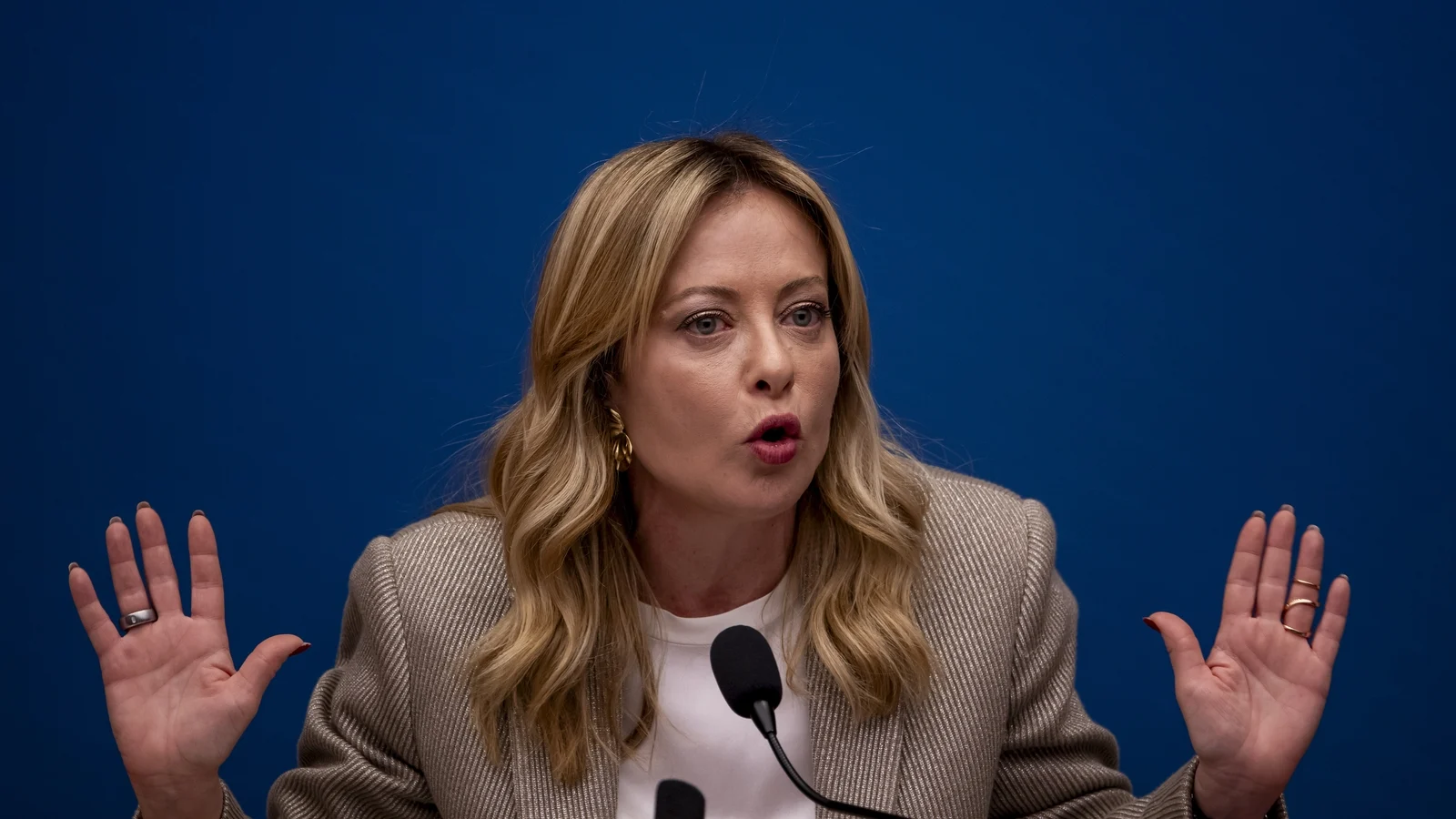
It was one of those brittle January mornings when the light seems to hang over the Mediterranean like a held breath. In Rome, the prime minister took the podium and spoke with the kind of blunt candor that has become her trademark. She did not think Washington would launch a military operation to seize Greenland. Far from a perfunctory diplomatic line, her words were threaded with an acute awareness of alliances, appetite for risk, and a worry that if a superpower chose to act unilaterally, the consequences would ripple far beyond the Arctic ice.
“I do not believe the United States would take that step,” she said at her New Year press conference, adding that such an act would not be in NATO’s interest. It was an assertion meant to steady nerves — but also an admission that the international order is fraying at the edges.
Why Greenland? Why Now?
To understand the drama, you have to look past the headlines to geography, history and climate. Greenland is an island the size of Western Europe — roughly 2.16 million square kilometres — with a population little larger than a medium-sized town, roughly 56,000 people clustered along fjords and the capital, Nuuk. It has been part of the Kingdom of Denmark for centuries, but in recent decades it has carved out increasing autonomy, including control over many domestic matters.
Its strategic significance has never matched its population. From the cold cliffs of Thule in the north to the shipping lanes that could open as sea ice retreats, Greenland sits like a gatekeeper between Europe and North America. The United States has long had a presence there: the bitter Arctic air still carries the echo of Thule Air Base, established during the Cold War, and the 1946 US offer to buy the island for $100 million is a historical footnote that frequently resurfaces in political jest — and now, in political anxiety.
Voices from Nuuk: Fear, Frustration, Defiance
In Nuuk, the capital, residents describe a mixture of exasperation and fear. “It’s annoying,” said Hans, a 49-year-old fisherman, while mending nets by the harbour. “We cooperate with Denmark and the Americans on many things — security, science, rescue. We don’t want to be the subject of talk as if we’re a chess piece.”
A retired university lecturer, whose nights have been shortened by headlines and speculation, told me, “I don’t sleep much when I think about foreign leaders talking about taking our land. It feels unreal and very real at the same time.” Others framed the issue more bluntly as a matter of dignity and self-determination: “We have our language, Kalaallisut, our culture and our children’s future here. Who do they think they are to bargain or threaten?”
Allies on Edge: NATO and the Prospect of Unilateral Action
Italy’s prime minister is not the only leader thinking about the consequences. The suggestion that any NATO ally should consider seizing a territory belonging to another member — or to the realm of a member — is a potential fault line. Diplomats and military leaders have been careful in public, emphasizing deterrence and dialogue, but privately some concede there is a scramble across capitals to better define Arctic strategy.
“If an ally were to attempt such a unilateral move,” said Marta Rinaldi, a European security analyst in Rome, “it would be a crisis of trust. NATO rests on the idea that we don’t use force against one another. That is our bedrock.”
In practical terms, several NATO members have intensified talk of reinforcing presence in the high north — more patrols, more maritime awareness, more joint exercises — arguing that a visible, collective posture would obviate unilateral adventurism. Others warn that militarizing the Arctic will only amplify tensions with other actors with Arctic interests.
Climate as Catalyst
The warming Arctic is a quiet, relentless actor in this drama. Sea ice loss — which researchers estimate has been decreasing by roughly 13% per decade in September since satellite records began — is redrawing maps that have been stable for millennia. Greenland’s ice sheet, monitored by NASA and other observatories, has lost hundreds of billions of tonnes of ice to the ocean each year in recent decades, contributing to global sea level rise.
As ice retreats, so does the old barrier to shipping and access to resources. New routes could shorten transatlantic voyages by days. Mineral and energy prospects drive speculation, and with them, strategic competition.
The Danish Dimension
Denmark, formally the sovereign authority, has been explicit in its alarm. Copenhagen warns that talk of buying or seizing Greenland — by force or by negotiation — risks tearing at NATO’s seam. Denmark’s relationship with Greenland is complex: an island with increasing self-rule but also reliant in significant ways — not least economically. Nuuk receives a sizable annual block grant from Denmark that underpins public services and infrastructure; that subsidy, estimated at several hundred million US dollars a year, remains deeply consequential to local budgets.
“People think Greenland is empty,” said Aqqaluk, a shopkeeper who remembers American military drills in the 1980s. “But we have schools and hospitals, our livelihoods are here. We’re not land you can pick up.”
What Would It Mean — Practically?
Let us imagine the contours of the problem: a wealthy nation, a sparsely populated but strategically placed island, the prospect of resource access and military leverage. Even a rhetorical threat produces uncertainty that affects fishing licenses, tourism plans and investment in local communities.
- Strategic: control of Greenland means control of new sea lanes and monitoring points between continents.
- Political: an attempt to seize territory would violate international law and the norms that underpin alliances.
- Human: it would undermine self-determination for communities with distinct culture and identity.
Military commanders insist they are prepared. A US general visiting northern Europe recently said the alliance remains capable of defending its territory. But preparedness is not the same as reassurance. The deeper worry among many diplomats is not whether military capability exists — it does — but whether the political will to use it unilaterally might ever override alliances and law.
What Comes Next?
The answer may be blunt: more talk, more posturing, and — if leaders are wise — more coordinated strategy. That means NATO allies aligning on an Arctic posture that balances deterrence with cooperation, and Denmark and Greenlanders continuing to assert their rights. It also means acknowledging that climate change is the catalyst making this conversation urgent.
So what should you, the reader, take away? Perhaps simply this: geography still matters. Islands, ice and longitudes that once felt remote are now at the center of geopolitical calculations. And while capitals debate strategy, ordinary people — fishermen, teachers, healthcare workers — carry the most immediate burden of uncertainty.
Will we let a single leader’s rhetoric override centuries of alliances and livelihoods? Or will democracies find a way to respond through law, collective security and respect for communities whose lives are anchored to the ice? The answers will shape more than Arctic policy; they will reveal whether the rules that have governed international life since World War II still hold. For Greenlanders, that’s not an abstract question. It’s the difference between being seen as a strategic line on a map and being recognized as a home.