When a Tram Lost Its Way: A Night That Shook the Heart of Milan
It was a bright, ordinary weekday in central Milan — the kind of day when office lights pulse to life, café lids flip back, and the city hums with the confident rhythm of people on the move. Then came the sound: not the soft click of shoes on cobbles, but a single, gutting crash that reversed every head and stilled a street of a million tiny energies.
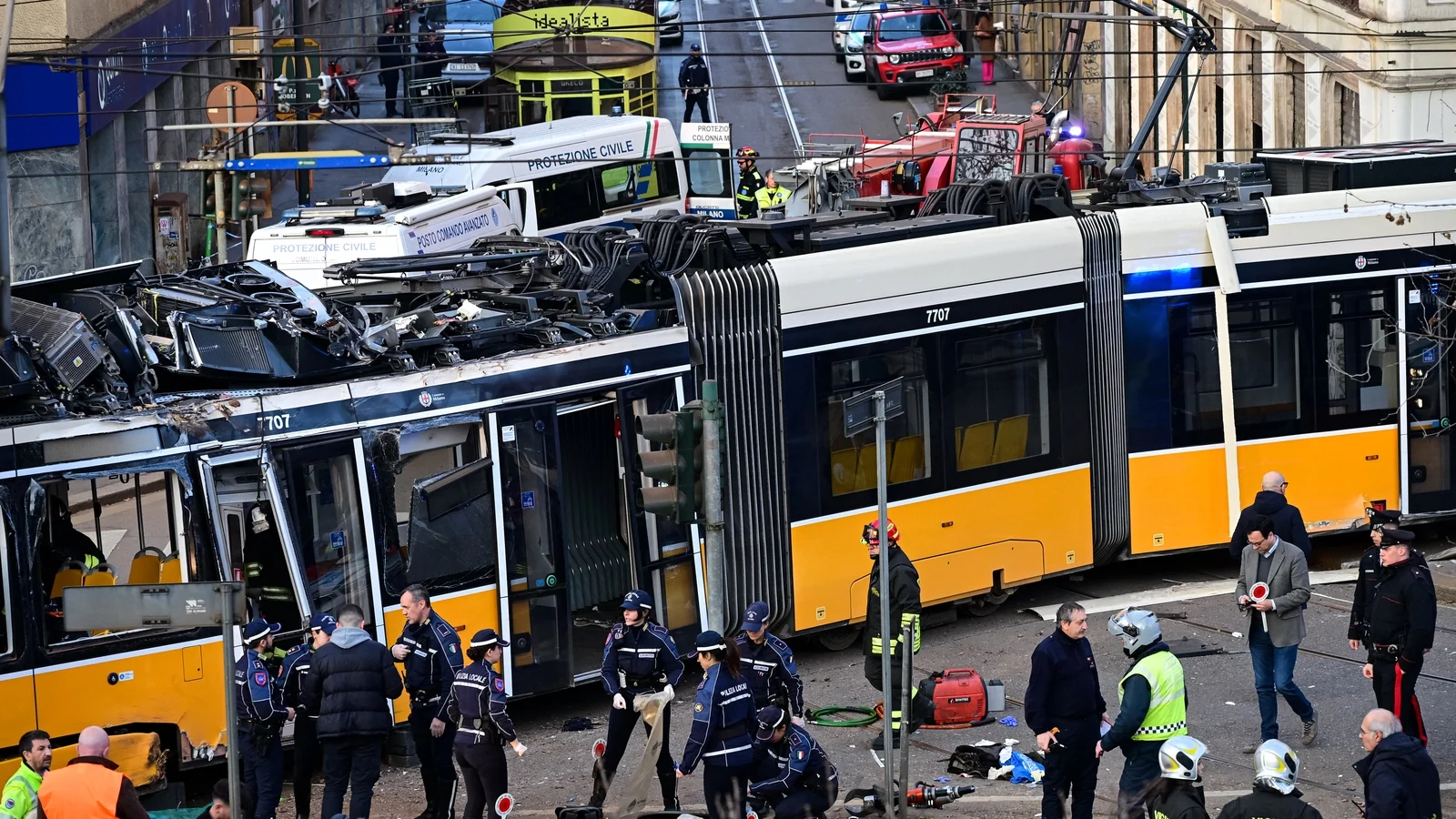
On Vittorio Veneto Street, one of the arteries that feed Italy’s fashion capital, a modern yellow-and-white tram jumped its tracks and hurtled into the shopfront of a small store. By early evening counts, a person had died and around 40 were injured, officials said; one of the wounded was listed in critical condition. Emergency services — 13 ambulances among them — swarmed the scene, while civil protection teams pitched a temporary medical tent on the pavement to triage the wounded.
Scenes from the center
The picture that unfolded was shockingly domestic. Glass glittered across the street like bad confetti. A tram, one of the newest in Milan’s fleet, lay awkwardly slung across the thoroughfare, its metal shell bitten into the façade of a shop. Passersby who had been inside offices or trapped in traffic told reporters they felt the building shudder.
“I heard this enormous bang, like thunder from below,” said Marco, a barista who stepped outside his café to find the tram half in the street and half inside a boutique. “People were screaming, but then they were helping. The women from the hairdressers were tying scarves into slings—anything to stop the bleeding.”
An onlooker who had been a passenger described the suddenness. “One moment I was sitting, looking at my phone. The next we were all on the floor, thrown forwards. For a second, I thought it was an earthquake,” she told a local reporter. The image—commuters pinned to their seats and the tram’s interior turned into a scene of chaos—has replayed in countless accounts.
Authorities respond, questions mount
The Milan transport company, Azienda Trasporti Milanesi (ATM), issued a statement expressing shock and sorrow, and said it was working hand-in-glove with judicial authorities to determine what happened. “Our hearts are with the victims,” an ATM spokesperson said. “We will support the investigation and do everything we can for those affected.”
Emergency responders and investigators face a familiar checklist: mechanical failure, human error, infrastructure defect, or an unexpected hazard on the track. But as the street was cleared and forensic teams photographed skid marks, spokes and metal sheared clean, the city found itself asking a more unsettling question: how could a vehicle built to carry dozens of people across narrow, crowd-rich streets end up embedded in a shop window?
Trams and Milan: intimacy and risk
Milan’s trams are woven into the city’s identity. Their wooden benches, the soft clatter against rails, the pale yellow livery cutting historic streets—these are images tourists bring home in glossy photos and locals take for granted. The network has been running since the 19th century and serves tens of thousands of commuters every day. On any given morning, a tram is more home than vehicle for many: a place to hold your coffee, read the headlines, or practice a quick Italian greeting with a stranger.
That intimacy, though, is a double-edged sword. Dense traffic, pedestrians, narrow lanes and tight turns all concentrate risk. Yet historically, serious tram accidents in Milan have been rare, and public transport in Italy remains an essential lifeline. Experts point out that modern trams are designed with safety features that make such derailing unusual.
“When you look at urban tram systems across Europe, they’re among the safest ways to move large numbers of people,” said Dr. Elena Rossi, a transport safety specialist at the Polytechnic University of Milan. “But safety is not just built-in hardware. It’s daily maintenance, consistent training, and—importantly—a system that allows crews to react to anomalies. That’s why investigators will be methodical here.”
Human threads and the city’s texture
Talk to Milanese and you hear the human side of the story: the shopkeepers who opened their doors to bleeding strangers; the pensioners who walked to the scene with blankets; the police officers who spent hours recording statements beneath the arches of the tramway. “It was terrible, but there was this huge wave of solidarity,” said Lucia, who runs a small family-run boutique opposite the crash. “Everyone who could lifted, carried, calmed. That’s Milan in a sentence.”
There are cultural details that anchor the event in place: the clack of heels on Vittorio Veneto’s paving, the scent of espresso drifting from a bar that refused to close, the chatter of fashion students discussing an assignment as if life would simply go on. Yet underneath the stoicism, there was shock—an expression common in cities where people are used to urban drama but not catastrophe at their doorstep.
What comes next
Investigators will comb through data from the vehicle’s black box, review CCTV footage, and interview the driver and witnesses. Regulators will ask whether the tram’s design or maintenance contributed, whether speed limits were observed in that stretch, and if signage and track conditions met standards. The judicial inquiry could take weeks or months. Families of the injured and of the deceased will seek comfort and answers, and the company faces a reputational storm as it tries to restore confidence.
Beyond the immediate questions of cause and accountability, this event nudges a broader conversation: what does safe urban mobility look like as cities densify and as we increasingly rely on shared, high-capacity transit? How do we balance the urgency of efficient movement with the patience of maintenance and oversight?
If there is a small mercy in these calamities, it is the reminder of how quickly communities can rally. Volunteers from neighborhood associations arrived to hand out water and blankets. An elderly woman who’d been waiting for the bus lent her handbag as a makeshift pillow. These are the gestures that don’t make the headlines but stitch a city back together.
Questions for the reader
As you picture that tram — rigid and bright, half in the street and half in a shop window — ask yourself: what would you do if something like this happened where you live? How do you feel about the trade-offs between modern, high-capacity transit and the complexities of historic urban fabric? And perhaps most urgently: what do we owe one another in those first chaotic hours after a public disaster?
Milan will reopen its streets, sweep away the glass, and set its trams rolling again. But the memory of that evening will linger in the city’s corners and in the hands of those who helped. For the families of the injured and the person who died, the weeks ahead will be about healing, recovery, and answers. For everyone else, it is a reminder of the fragile trust we place in the systems that move us—and the human heartbeat that keeps those systems humane.