A City in Vigil, a State in Court: Minneapolis After a Death that Changed Everything
The wind that evening carried the smell of melted wax and wet chrysanthemums. A weathered photograph of Renee Nicole Good—smiling, eyes steady—leaned against a traffic cone near a stretch of sidewalk turned suddenly into a communal altar.
People came and stood, some in silence, some talking in low, urgent voices. Candles guttered in the grey air. A woman in a knitted cap pressed her hand to the frame and said, “This could have been any of us.” It was not a slogan. It was a sentence heavy with the kind of recognition that stops conversation and starts protest.
What Happened — and Why Minnesota Is Suing
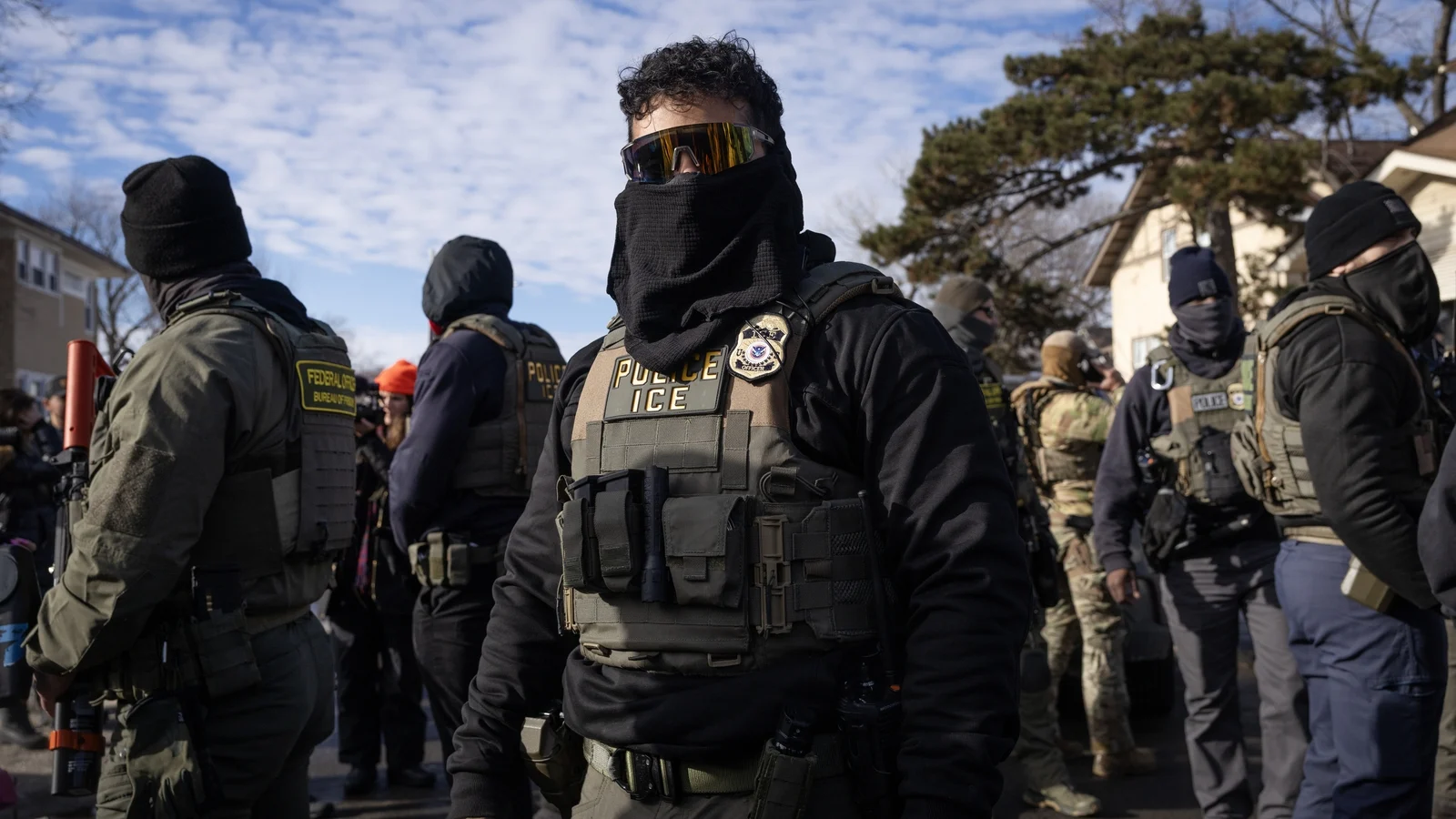
Last week, in the middle of a city that has trained the nation’s attention in past years for its fault lines—racial, political, social—an Immigration and Customs Enforcement (ICE) agent shot and killed 37-year-old Renee Nicole Good. Her death set off a cascade of grief and fury, and an escalation that moved from the sidewalk memorials to the courthouse steps.
On Monday Minnesota Attorney General Keith Ellison filed suit against the Department of Homeland Security (DHS), arguing that the federal surge of immigration officers into the state has “made us less safe.” “Thousands of poorly trained, aggressive and armed agents of the state, of the federal government, have rolled into our communities,” Ellison declared at a press conference. “This is, in essence, a federal invasion.”
Ellison’s choice of words is dramatic by design; he and his team say the lawsuit is both a legal move and a public rebuke. The claim alleges that the federal deployment targeted Minnesota not simply for enforcement, but because of its political leadership and diversity—grounds that the state says put it on a collision course with the Constitution and federal law.
Mayor Frey: “Targeted for Our Differences”
Jacob Frey, the mayor of Minneapolis, has also positioned the federal activity as political. “If the goal were simply to look for people who are undocumented, Minneapolis and Saint Paul would not be the place you would go,” he told reporters. “There are countless more people that are undocumented in Florida and Texas and Utah,” he said, pointing at a pattern—Minnesota is Democratic-led; many of those other states are not.
His words land differently depending on who’s listening. For community leaders, they confirm a sense of political targeting. For federal officials, they invite rebuttal. For families like Good’s, such legal chess feels distant. They are left with photos and civic processes and the slow work of grief.
Federal Defense and Local Doubt
From Washington, DHS Secretary Kristi Noem defended the actions of the ICE officer involved, saying the officer acted in self-defense when Ms Good’s car moved toward him. That account was met with immediate skepticism among local officials and community witnesses who say footage from the scene tells another story—one where the vehicle appears to be turning away from the agent, not toward him.
On national television over the weekend, Noem said hundreds more federal agents were en route to Minneapolis as unrest persisted, even as vigils and daily protests multiplied. “We are committed to enforcing the law,” she said. “And our personnel will follow legal standards.”
That language—“enforcing the law”—is itself freighted. Enforcement is a neutral verb that, in practice, skews heavy with decisions about who gets targeted, where resources are placed, and what tactics officers bring to neighborhoods that are already strained by trauma and distrust.
On the Ground: Voices from the Neighborhood
I spoke to a range of people in Minneapolis over two days: a barista who held a candle at the vigil, a Somali community organizer who had feared the arrival of armed agents since the first rumors of a federal surge, and a retired teacher who’d walked from her block to the memorial to “see what our city is becoming.”
“It feels like occupation,” said Malik Ahmed, a shop owner near the memorial whose mother emigrated from Somalia three decades ago. “Not because these are federal agents, but because they came in without any conversation. We weren’t asked what we needed.”
“My cousin is undocumented,” said Sofia Alvarez, 29, who works at a community health clinic. “He’s terrified. He won’t come to get his insulin. That’s not public safety.”
Experts Weigh In
A university-based immigration scholar I spoke with—who asked that her name be withheld to speak candidly—pointed out the broader pattern at work. “Data from groups like the Migration Policy Institute show that the largest populations of undocumented immigrants are concentrated in states such as California, Texas and Florida,” she said. “A federal focus on smaller, more politically liberal states like Minnesota raises questions—both about the selection logic for these operations and about the political calculations behind them.”
She added that federal interventions can have chilling public-health consequences: fewer people accessing medical care, declining attendance at community services, and a fracturing of trust between municipal authorities and residents who fear cooperating with institutions.
Legal Ripples: Illinois and Other States
Minnesota is not alone. Illinois, another Democratic-led state, filed a similar suit against the federal government. The litigation signals a growing trend of states pushing back against federal immigration tactics when those tactics intersect with local governance and civil-rights concerns.
Legal scholars say these cases could define new boundaries in federal-state relations—especially if courts rule that federal enforcement tactics violated constitutional protections or exceeded statutory authority. Yet litigation moves slowly, and for communities living day to day, the reflexive realities of policing and power arrive first.
What This Means Beyond Minneapolis
Read closely, this is not just a Minnesota story. It is a story about how we govern in a polarized era—about the tension between national priorities and local care, about which neighborhoods are deemed worthy of protection, and about how enforcement can compound the very insecurities it claims to remedy.
Consider three questions:
- Who decides where enforcement happens, and with what oversight?
- How should cities balance cooperation with federal agencies against protecting the trust of marginalized communities?
- What mechanisms exist to ensure accountability when actions by one arm of government have lethal consequences in another jurisdiction?
Small Scenes, Large Stakes
At dusk, people continued to gather near Renee’s photograph. A teenage boy handed out hand-lettered flyers calling for a community safety council. An older woman sang a hymn, voice threading through the murmur like a call. In a city that has seen too many such scenes, the ritual of vigil and protest is both a refusal and a request: do better; explain; be human.
One organizer who has been working with immigrant communities for years told me, “We don’t want fewer laws. We want better laws. Laws that respect dignity. Policies that don’t treat people like collateral in a political fight.”
That demand—quiet in its simplicity, radical in its humanity—might be the only consensus left in a conversation otherwise split by strategy and authority. How the courts answer Minnesota’s suit, how the federal government responds to public scrutiny, and how communities weather the aftermath will tell us something about where we stand as a nation.
Where Do We Go From Here?
There are no easy fixes. But there are things to watch for: transparent use-of-force reviews, independent investigations, meaningful dialogue between federal agents and community leaders, and data-driven assessments of where enforcement truly does the most good and the least harm.
As you read this, imagine your own neighborhood under similar strain. What would you want from elected officials? What would make you feel safer: more enforcement, or a different kind of investment—housing, healthcare, community policing? The answer may reveal what kind of country we intend to build: one that punishes and polices, or one that protects and heals.
For now, Minneapolis stands at a crossroads—mourning, litigating, demanding answers. The photograph of Renee remains taped to a lamppost, not merely a relic of grief but a small, persistent beacon asking a large, urgent question: whose safety are we really securing?