Night of Fire Across the Grid: Kyiv and Odesa Face Another Winter Assault
It was the sort of winter night that presses the breath from your lungs and makes the city sound thinner, more fragile. Temperatures had fallen toward -10°C, and in neighborhoods across Kyiv people wrapped themselves in blankets and coats, listening for the faintest, most dangerous sound: the wail of an air-raid siren.
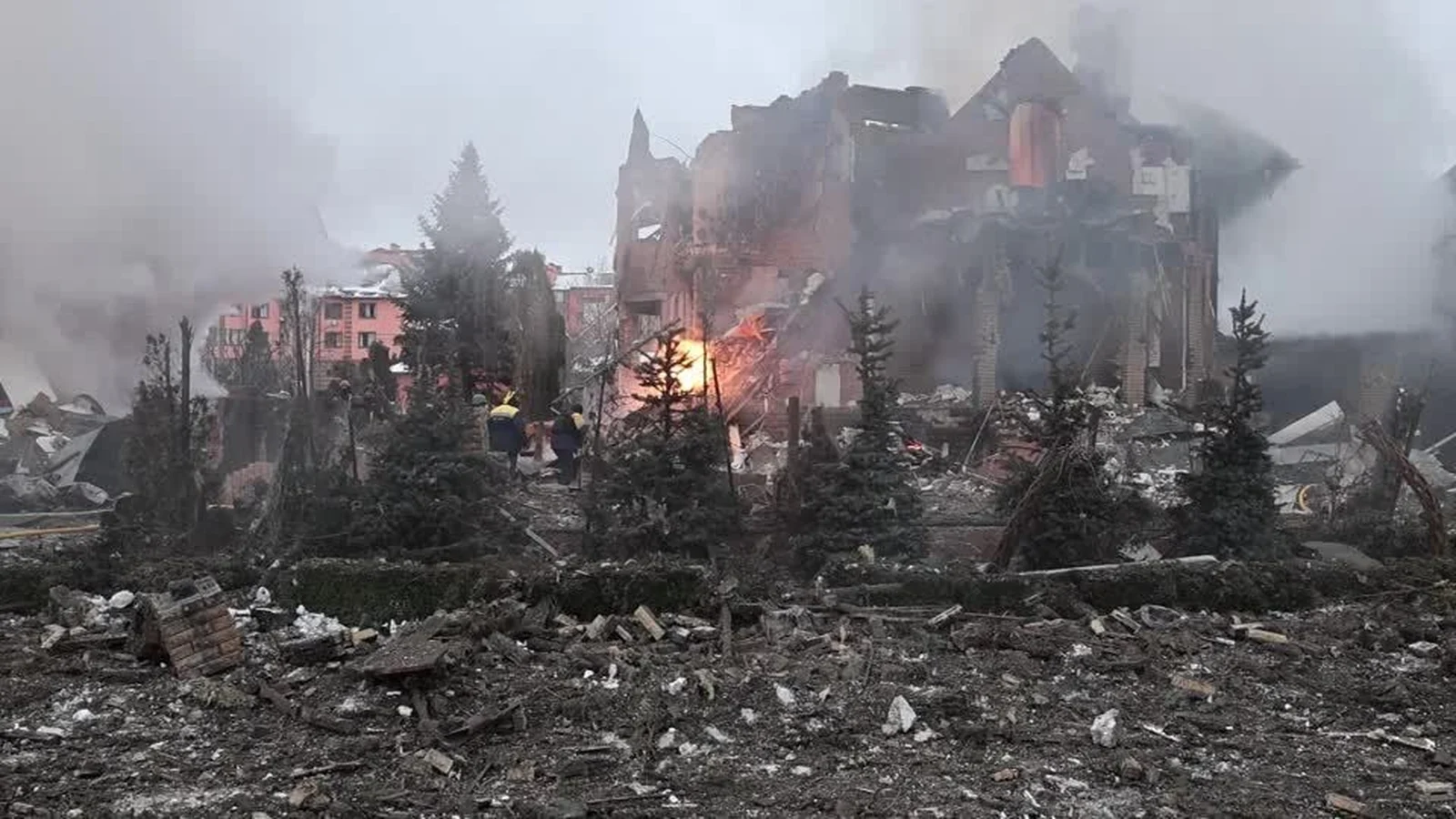
Shortly after 4 a.m., those sirens answered. A constellation of explosions followed: ballistic and cruise missiles streaking in from afar, dozens of strike drones cutting low over towns, and in the port city of Odesa, fires lighting up an otherwise black shoreline. Officials in Kyiv, Odesa and central Ukraine said the strikes targeted energy infrastructure—power plants, substations, the arteries of a country at war—as well as military sites and administrative buildings.
“They are trying to freeze us out,” said Halyna, a schoolteacher who spent the night at a neighbor’s basement, her voice still hoarse from stress. “But the kitchen stove, the electric kettle—things you take for granted—are the things they aim for. When the lights go, the fear grows.”
Damage, Disruption, and a City Forced to Adapt
Regional authorities reported damage in several Kyiv districts: more than a dozen houses were hit, roofs scorched, and at least one person injured. In Odesa, Governor Oleh Kiper wrote that a drone strike on regional energy facilities sparked fires that firefighters have since extinguished. Kyiv’s mayor, Vitali Klitschko, said two wounded people—a woman and a child—were hospitalized after strikes in the suburbs.
“The enemy is attacking the capital with ballistic weapons,” Tymur Tkachenko, head of Kyiv’s military administration, warned on Telegram. “Please stay in shelters.”
For days now, strikes on Ukraine’s grid have become almost routine. Russia’s campaign to degrade energy infrastructure—a strategy that targets thermal power plants, substations and the gas sector—has been a central element of the invasion since February 24, 2022. Experts say the aim is blunt: undermine the population’s will to resist and constrain Ukraine’s military capacity by cutting heat and electricity during a cruel winter.
People, Heat, and the Night’s Small Rituals
Outside a makeshift cluster of apartment blocks, a handful of residents gathered around an open barrel fire, hands extended to its small, merciless warmth. A young man named Dmytro tossed a warped plank into the flames and laughed, not from humor but from the brittle, fierce joy of surviving another night.
“We have to share what little we have,” he said. “There is a rhythm now: sirens, sleep, alarms, waiting, then this—talking, tending the fire. The city remembers how to come together.”
On a frozen street not far from the Dnipro River, an elderly woman shuffled out to check on the community generator. “If the lights go, we have stories,” she joked, though her knitted shawl tugged tightly around her shoulders betrayed the chill. “Stories of how we keep going.”
Human Costs Behind the Statistics
The numbers tell parts of the story: Moscow occupies close to a fifth of Ukraine’s territory, according to most assessments, and the conflict has forced millions from their homes, shattered towns and left heavy civilian casualties. President Volodymyr Zelensky said Ukrainian forces have recovered roughly 300 square kilometers during recent counterattacks—an assertion that, if confirmed, would mark the largest advances since 2023.
But numbers can obscure the grinding daily reality: bouts of blackout, the logistics of getting wood or diesel, children shivering in classrooms lit by emergency lamps. “We do not just lose electricity,” a nurse in central Ukraine told me. “We lose warmth for our patients, heat for incubators, light for operations.”
Unfolding Frontlines and the Geometry of War
The strikes came amid a broader escalation. Explosions were heard across the capital and beyond, triggering nationwide air-raid alerts as Ukraine’s air force widened warnings to reflect the missile threat. Poland’s Operational Command said it scrambled jets after detecting long-range Russian aircraft operating over Ukrainian territory, a reminder that the conflict reverberates through neighboring skies.
Hours earlier, Lviv—ever a symbol of Western Ukraine’s proximity to Europe—was rocked by blasts in a part of the country that has been comparatively safe. In Odesa, where the Black Sea roils with geopolitical significance, attacks on port infrastructure and energy sites threaten both civilian life and the country’s economic lifelines.
On the Ground: Voices from Odesa and Kyiv
“We’re used to the sirens, but not to the feeling of being deliberately targeted where we heat and cook,” said Oksana, a café owner who closed shop early after the attacks. “People ask, ‘What will they hit next?’ That uncertainty is a weapon in itself.”
Elsewhere, a local volunteer who asked to be named only as Serhiy described the logistical ballet that follows a strike. “Within an hour there are teams checking lines, volunteers running meals to shelters, and electricians trying to reroute power. It’s chaotic, but precise in its urgency.”
Technology, Aid, and the International Chessboard
This latest round of strikes also intersected with international dynamics. Ukrainian officials have made use of commercial satellite internet terminals, notably SpaceX’s Starlink, to keep communications across the frontlines. President Zelensky said that temporary outages of such terminals earlier this month—attributed to actions by their operators—had affected the pace of some counteroffensive moves, underscoring how private technology can suddenly become strategic infrastructure.
Diplomats have been busy, too. The United States and European nations continue to push for a diplomatic end to the war, even as arms and logistical support for Kyiv persists. Zelensky has signaled willingness to consult with European and Middle Eastern partners in search of deeper engagement; he is also under pressure from Western capitals to contemplate concessions to hasten an end to bloodshed.
Why It Matters to the World
Beyond the immediate tragedy and heroism, this is a story about systems—power grids, supply chains, international law—and how fragile they can be under sustained attack. It is about how a single winter missile strike can cascade into broader human suffering, and how the choices of distant leaders and corporate executives can shape the lives of families huddled by barrel fires.
Ask yourself: if key energy infrastructure in your city were suddenly gone for days, how would your routines fracture? How would communities adapt? The answers tell us not just about resilience, but about priorities—whose lives are protected, and whose are made precarious.
Looking Forward: Resilience, Reckoning, and Memory
As Ukraine marks four years since the full-scale invasion, the landscape is both familiar and unsteady. Towns bristle with fortifications; underground shelters hum with life; volunteer soup kitchens and neighborhood watch groups have become institutions in their own right.
“We measure victory not only by territory,” Zelensky said in recent remarks, “but by the endurance of our people.” Whether that endurance will be sustained through another cruel winter of attacks depends on many variables: the will of Ukrainians, the flow of international support, and the strategic calculations in Moscow.
In the end, the images linger: a child clutching a thermos by a barrel fire, an electrician unspooling cable into the cold, a mayor counting damaged rooftops in the pale light of morning. Those images are the real ledger of this conflict—messy, human, and persistent. They ask us, as distant readers, to keep seeing, to keep bearing witness, and to remember that in a war fought over maps, the small acts of keeping each other warm can be the quietest front lines of all.