They Came Home: How Artemis II Reconnected Humanity with the Moon
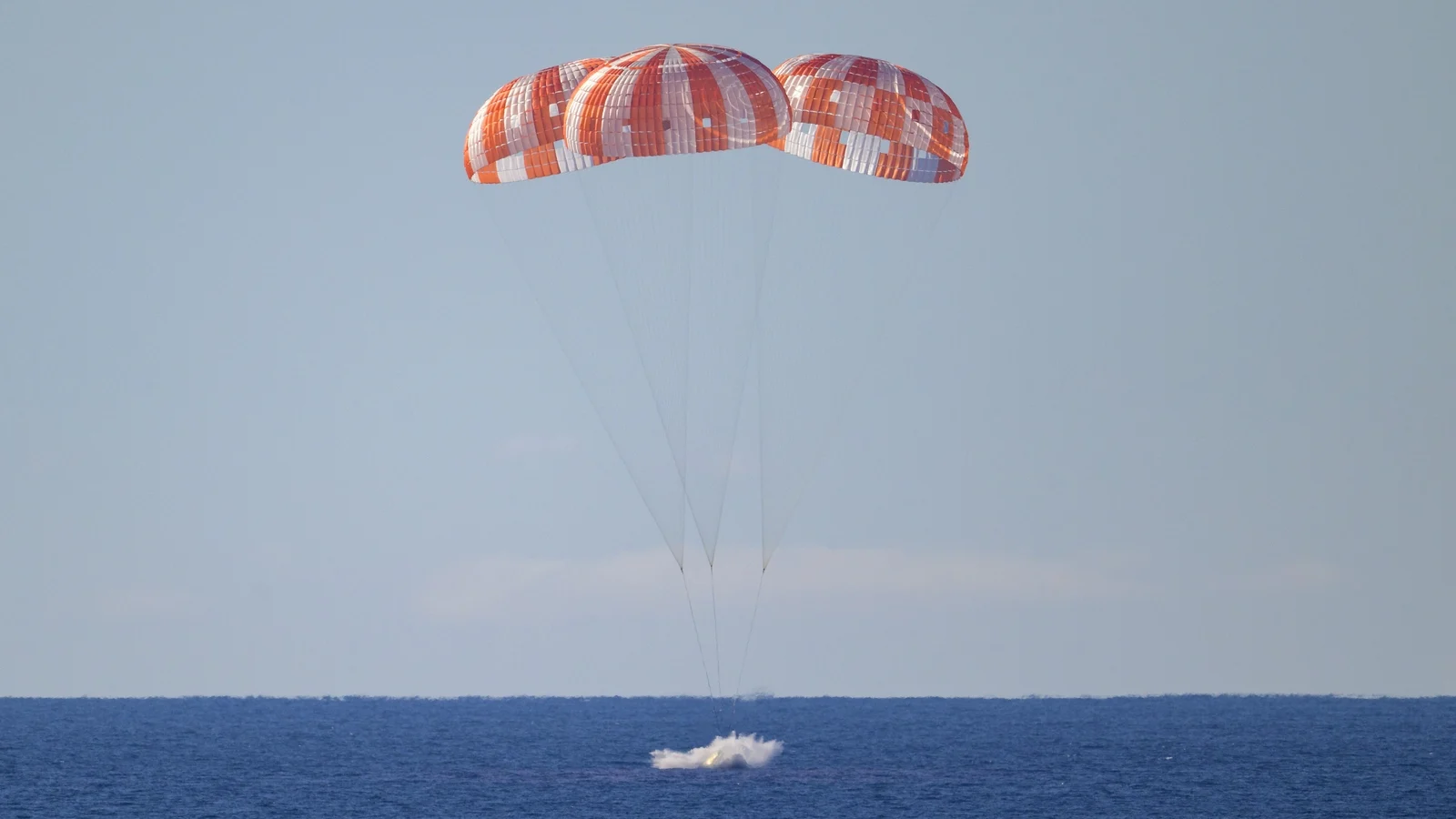
Late afternoon light gilded the Pacific as a gumdrop-shaped capsule descended toward the water, a white parachute blossoming like a slow-motion flower against the hazy Southern California sky. For nearly ten days, four people had been carried farther from Earth than any human in more than half a century. Now, as the Orion capsule nicknamed Integrity kissed the sea, cheers rose from shore, radios crackled, and a small fleet of Navy boats converged on a fragile, flaming piece of human ambition turned suddenly ordinary and buoyant.
“A perfect bull’s eye splashdown for Integrity and its four astronauts,” a NASA commentator said on the live webcast—words that landed like confetti on a mission that carried risk, hope and a lot of engineering sweat.
Ten Days, a Million Kilometres, One Moment
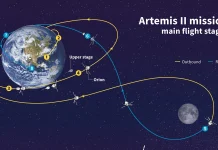
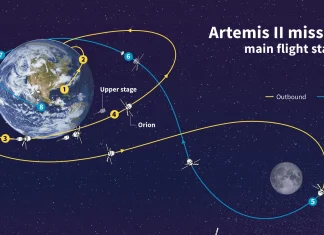
The flight had begun on 1 April from Cape Canaveral, lofted by the Space Launch System rocket, an enormous machine that has taken more than a decade and billions of dollars to mature. Over the course of the mission the crew and their capsule covered roughly 1,117,515 kilometres, looping twice around Earth before threading a daring arc around the far side of the moon—reaching a maximum distance of about 252,756 miles from home, or roughly 406,700 kilometres.
Those figures can read like numbers on a ledger. But up close, the mission felt like a story of thresholds: the first humans to ride the gravitational eddies near the moon since Apollo, the first woman, the first Black astronaut, and the first non-US citizen to be part of a lunar mission—each milestone a small reshaping of what “we” in human spaceflight now begins to mean.
Heat, Silence, and the Red Glow of Re-Entry
Re-entry was the dramatic closing act. For thirteen minutes the capsule plunged through atmosphere in a white‑hot ballet of friction and compression, its exterior temperature climbing to about 2,760°C. At the most intense moments, a sheath of ionised gas—plasma—enveloped Integrity, severing radio contact and plunging millions of watchers into breathless silence.
“You could almost feel the air around the dish swell and hold its breath,” said Dr. Leila Hassan, an aerospace engineering professor who has studied plasmas on re-entry. “The plasma blackout is terrifying on paper but it’s expected. What matters is that the heatshield did the heavy lifting—absorbing, reradiating, and protecting the people inside.”
When radio came back, mission commander Reid Wiseman’s clipped words confirmed what everyone had hoped: “We are stable one—four green crew members.” The capsule drifted at about 25 kilometres per hour under parachutes, then the Navy divers popped up, clipped a floating collar to Integrity and eased the astronauts into an orange raft.
Faces: The People Behind the Numbers
The four crew members emerged wearing those unmistakable orange flight suits, sunlight catching their helmets as they waved to cameras, to the naval helicopters that would hoist them, and to the small crowd on the deck of the amphibious transport ship John P. Murtha where they were taken for medical checks. NASA reported they were healthy—fit, smiling, a little damp, a little dazed.
“It felt like coming home on something bigger than a house,” Victor Glover said later when a nurse removed his suit, laughing as the world pressed close with questions. Christina Koch, Jeremy Hansen and Reid Wiseman echoed the same astonished gratitude: for the capsule, for the team, for what had been possible.
On the beach, near the San Diego Air and Space Museum, volunteers and families gathered. “I’ve been tracking rockets on my radio for twenty years,” Miguel Alvarez, a local fisherman, told me, drying his hands on a rag. “You think you know what Earth feels like, then you see the tiny dot and remember everything is connected. It makes you quieter.”
Recovery: A Choreography of Boats, Divers, and Helicopters
Recovery teams took less than two hours to secure Integrity and lift the crew to safety. Divers in wetsuits strapped the capsule, formed a human chain of straps and ropes, then guided the small inflatable raft under the hatch. One by one the astronauts were hoisted into Navy choppers and flown to the Murtha, then to the ship’s medical bay where doctors performed initial checks before flight to Houston and family reunions.
“This is the moment years of planning pays off,” said Commander Elise Turner, a recovery officer on the Murtha. “We practise this—over and over. But when the capsule is really there, bobbing, and you smell the sea and see them wave, it hits in a different way.”
Why This Mission Matters
Artemis II wasn’t an end; it was a rehearsal with a pulse. It proved Orion’s ability to survive the extreme rigours of a lunar-return trajectory and validated fixes engineers made after surprises during the 2022 uncrewed Artemis I flight. NASA altered the descent path for the crewed flight to reduce heat stress on the heatshield—a technical tweak that became psychological reassurance.
Beyond the hardware, Artemis is an argument about the future. The program sets its sights on returning humans to the lunar surface by the latter half of the decade, establishing a sustainable presence there as a stepping stone toward Mars. In geopolitical terms, it also exists in a new era of competition and collaboration—an echo of Apollo’s Cold War backdrop, but now with more players on a global stage.
“Space has always been a mirror for our politics—but also an amplifier for our cooperation,” said Kofi Mensah, a space policy researcher. “Artemis is multinational at its core. It’s both soft power and shared endeavour. That’s why millions watch; it’s not just about a capsule, it’s about who we are willing to put in the center of our collective imagination.”
What the Numbers Tell Us
- Mission distance: ~1,117,515 km travelled.
- Maximum distance from Earth: ~252,756 miles (~406,700 km).
- Re-entry exterior temperature: up to ~2,760°C.
- Parachute descent speed upon splashdown: ~25 km/h.
How to Read This Moment
What do you see when you imagine the moon: an empty orb, a destination, a resource, a flagpole for nations, or a laboratory where humanity learns to live beyond Earth? Artemis II forces us to pick—or at least to reckon with the idea that the moon is becoming a place we visit with intention, not just nostalgia.
For communities on the coast, it’s a spectacle and a reminder—of the Navy divers, the engineers in clean rooms, the parents who stayed awake for live webcasts. For students in classrooms, it’s a living narrative: vectors, heat shields, teamwork. For leaders, it’s a complicated ledger of budgets, partnerships and political will.
As the four astronauts head to Houston to hug families and debrief with engineers, the capsule Integrity will be examined by technicians who will comb every bolt for lessons. The mission closed a chapter and opened another: more daring tests, a return to the lunar surface planned, and a broader conversation about what exploration in the 21st century will cost—and whom it should include.
So I ask you: when you look up tonight and see the moon burn silver above the city lights, what will you imagine—the flag, the footprints, the spacecraft trailing home? What kind of future do you want us to build on that pale rock?