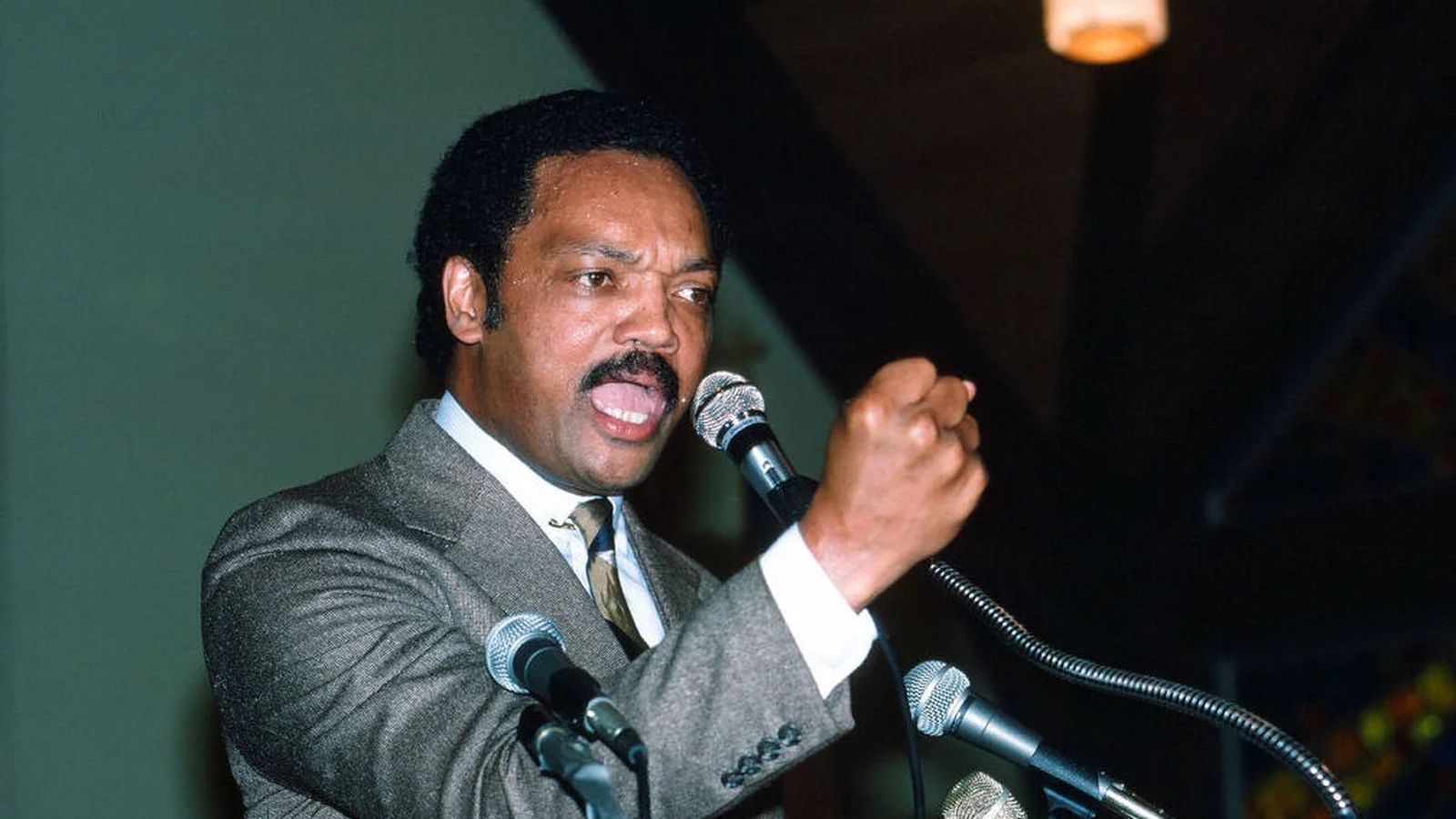
The Man Who Walked Between Pulpit and Protest: Remembering Jesse Jackson
There are mornings that crack open history like an old trunk — you lift the lid and the scent of a lifetime spills out. This was one of them: news rippling across neighborhoods from the South Side of Chicago to Dublin, Johannesburg to Washington, that Jesse Jackson had died at 84. For millions he was a galvanizer — a preacher who learned how to speak directly to power without losing the cadence of the church.
Outside a modest storefront office where the Rainbow/PUSH legacy still echoes, a line formed of people who remember him not as a headline but as a hand on the shoulder. “He made you feel seen,” said Marion Ellis, a retired schoolteacher who has worked in the neighborhood for four decades. “He didn’t offer sympathy. He offered a plan.”
A life that bridged pulpit and politics
Born into a segregated America, Jesse Jackson rose through the Black church into the national spotlight as a close aide to Martin Luther King Jr., then into the turbulence of the 1970s and beyond. He ran for the Democratic presidential nomination twice in the 1980s, an audacious bid that broadened the political map for people of color and reshaped what a national campaign might look like.
He founded organizations that sought to fuse grassroots economic activism with electoral politics; his Rainbow Coalition sought alliances across race and class lines, and his work cast an international net — from anti-apartheid campaigns in South Africa to solidarity with struggles in Northern Ireland.
“He taught a generation how to be relentless without losing their humanity,” said Dr. Lila Matthews, a historian of social movements. “Jackson turned sermons into strategy and sermons into sit-ins; he believed moral rhetoric had to have concrete form.”
Voices from around the world
Tributes poured in quickly and with a kind of global astonishment. Former US President Barack Obama captured a common refrain when he wrote that he and a nation had “stood on his shoulders” — an image that has become shorthand for how the arc of American progress often rests on the backs of earlier, tireless laborers. President Joe Biden praised his “optimism” and “relentless insistence on what is right and just.”
From the political right and left, there was recognition. President Donald Trump — posting on his platform of choice — called Jackson “a force of nature,” lamenting the loss of someone he acknowledged as an influential figure in American life.
Abroad, leaders noted Jackson’s global reach. South African President Cyril Ramaphosa singled out Jackson’s “irrepressible” opposition to apartheid, underscoring how U.S. civil rights struggles intersected with liberation movements worldwide. In Ireland, Sinn Féin leaders remembered a man who visited, listened, and lent his voice to peace and self-determination campaigns.
Closer to home, civil rights figures and lawyers whose lives he shaped shared intimate memories. “He wasn’t just an orator,” said civil rights attorney Benjamin Crump. “He was a teacher of how to translate spiritual conviction into political possibility.” Reverend Al Sharpton, who grew into national prominence alongside Jackson, called him “a movement unto himself” — a man who “carried history in his footsteps and hope in his voice.”
Why his loss feels so large
What made Jackson consequential was not just the scale of his ambitions but the texture of his methods. He mixed moral suasion with economic pressure — boycotts of retailers, negotiation for jobs and contracts, high-profile hostage negotiations overseas. He habitually walked into rooms where he would be told “no” and left with concessions. That capacity to turn moral outrage into measurable gain is rare.
Consider the landscape he helped alter: in the decades since Jackson first lit a national fuse, the visibility of Black political leadership in the United States has expanded — from local offices to the presidency itself. His efforts helped normalize the notion that candidates of color could compete for and command national coalitions. Those changes didn’t happen overnight, and they didn’t happen because of any single man — but Jackson’s energy helped accelerate the arc.
On the street — small stories, big meanings
At a church potluck a neighborhood organizer held this afternoon, the conversation pivoted between grief and a fierce, practical kind of gratitude. “He taught us to bargain for dignity,” said Malik Perez, 29, who coordinates youth outreach programs. “He didn’t just preach self-respect; he forced institutions to respect us through action.”
A choir director remembered him for his theatrical sense of ceremony. “Preaching to Jesse was like conducting a symphony,” she said. “He knew how to bring people together — and then, importantly, how to move them.”
Beyond memory: the questions he leaves us
Jackson’s death invites a series of uncomfortable, necessary questions. How do movements maintain moral clarity when they gain institutional power? How do we hold leaders accountable without losing the capacity to mobilize? And as inequality deepens globally, what tactics from his playbook still work — and which need rethinking in a digital, more fragmented era?
“Movements don’t have to worship heroes to learn from them,” Dr. Matthews said. “The task now is to extract useful tools — coalition-building, strategic disruption, moral framing — and adapt them.”
A final reckoning and a call to action
For many, Jackson’s life is less an end than a challenge to the next generation: keep building, keep bargaining, keep insisting that justice be practical as well as righteous. His legacy sits in the lives of activists who learned how to speak truth to markets as much as to legislatures, and in the slow widening of who is allowed to dream of national office.
Will the networks he helped weave continue to hold? That depends on organizers and citizens alike. It depends on people who will turn grief into commitment, and praise into policy. It depends, as Jackson insisted, on faith with feet — on faith that walks into rooms and refuses to leave until a better deal has been struck.
As you read this, take a moment: who taught you how to stand up? Who gave you the first idea that a different world was possible? In the quiet aftermath of a life like Jesse Jackson’s, memory and obligation sit side by side. One calls for remembrance; the other for work. Which will you answer?
- Notable milestones: presidential bids in the 1980s; founder of organizations that merged spiritual conviction with economic and political activism.
- Global reach: active in anti-apartheid efforts and international solidarity campaigns.
- Legacy question: how to translate moral leadership into durable political change in the decades ahead.